
24/7 Customer Support

Free returns

Same-day & Next-day Delivery

Quality Guaranteed

Unlock Your Welcome Offers: FREE Delivery | Up to 80% OFF | Free 30-day JoyPlus trial
Download the APP
Beef short ribs can produce deeply flavoured stews, quick Korean BBQ and satisfying family meals, but the wrong cut can leave you with tough meat, excessive bone or a pack that does not suit your recipe. For UK shoppers, frozen beef short ribs also require careful attention to storage, pack size and preparation instructions.
This guide explains what to check before buying, then matches several options to different cooking habits and budgets.
A thick, bone-in cut may need slow cooking, while thin flanken-cut beef ribs are designed for fast grilling or pan-frying. Treating LA ribs like braising beef can result in overcooked, dry meat; attempting to grill a thick boneless short rib quickly may leave the centre tough.
Always check the cut style and recommended cooking method rather than relying on the words “short ribs” alone.
Bone-in beef ribs contain less edible meat per gram than boneless beef short ribs. A 700g bone-in pack may suit a shared meal, but it will not provide the same quantity of meat as 700g boneless beef. For a family dinner, compare the net weight, number of pieces and whether the product includes bone.
Frozen meat is convenient, but the cold chain matters. Check that the pack is kept at -18°C or below, defrost it safely according to the label and do not refreeze after thawing unless the packaging specifically permits it. Once defrosted, many products require refrigeration and consumption within 24 to 72 hours, depending on the product.
Choose according to the dish:
Marbling is the visible intramuscular fat within the meat. A listed BMS 4 indicates a stated Beef Marbling Score, but it does not remove the need to choose the correct cooking method. Fat can render during grilling or braising, while connective tissue needs time and moisture to soften.
For slow-cook beef, look for a cut with some fat and connective tissue. For quick grilling, thin slicing is often more important than buying the largest piece.
For plain beef, the ingredients list should clearly identify the cut, such as “beef short ribs” or “beef rib finger”. Marinated products may contain soybeans, wheat and sesame, so read the bold allergen information before serving.
Also consider how the pack fits your household. A 225g pack may work for one or two people with rice and vegetables, while a 500g or 1kg pack is more practical for family cooking or batch preparation.
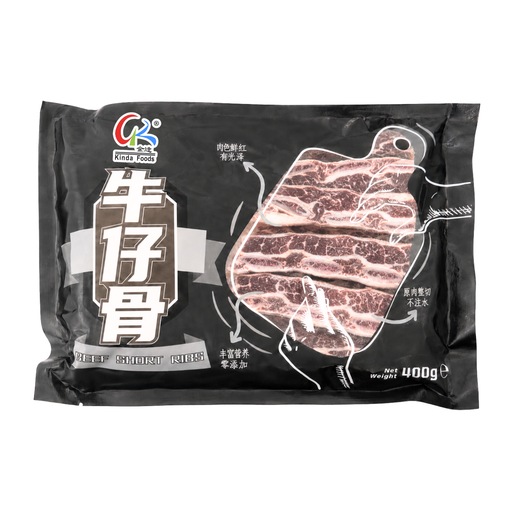
Why This Fits Their Persona: A straightforward 400g pack for UK home cooks trying slow-cooked ribs, stews or occasional grilling without committing to a larger purchase.
The product states that it is raw beef requiring cooking, with clear slow-cooking and grilling guidance rather than implying it is ready to eat.
400g net weight; listed as suitable for stewing, slow cooking and grilling; UK product origin.
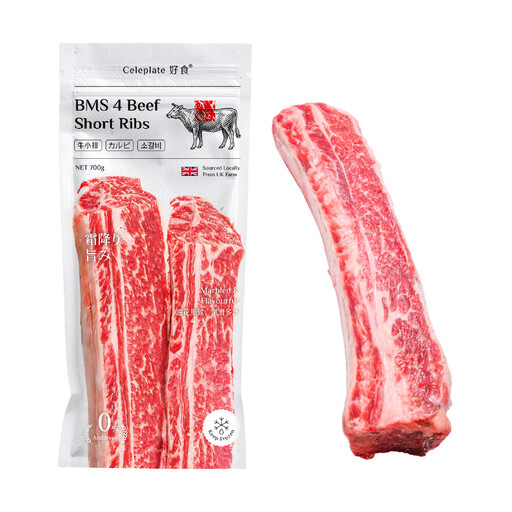
Why This Fits Their Persona: Suitable for shoppers who want a stated marbling score and a larger bone-in cut for Korean BBQ, Chinese braises or broth-based dishes.
The listing identifies the product as bone-in, gives the BMS 4 score and explains that it is frozen, helping buyers assess meat yield and cooking expectations.
700g pack; bone-in format; stated BMS 4; suitable for grilling, pan-frying, hotpot and slow simmering.
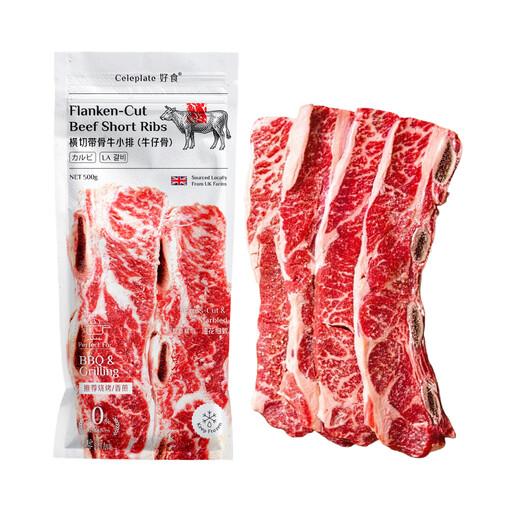
Why This Fits Their Persona: Thin LA ribs are a practical match for Korean galbi, fast pan-searing and social BBQ meals where cooking speed matters.
The flanken-cut description makes the thin, cross-bone format clear, so buyers do not mistake it for a thick braising rib.
500g pack; UK origin stated; suitable for frying and barbecuing; thin cross-sectional bone slices.
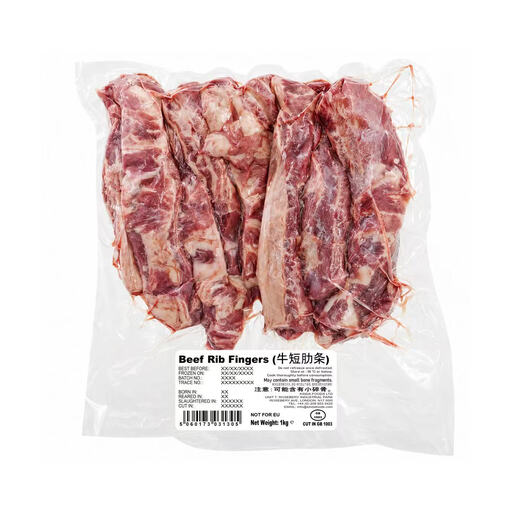
Why This Fits Their Persona: A larger boneless pack suits batch cooking, meal preparation and households that regularly make BBQ, braises or beef stews.
The boneless format removes uncertainty over bone weight, while the product instructions specify thawing and suitable low-heat methods.
1kg net weight; 100% beef listed; suitable for braising, roasting, stews, grilling and Korean-style BBQ.
We have compiled a complete, real-time list of products that fully satisfy these strict selection criteria and UK safety regulations.
Yes, thicker bone-in or boneless cuts, rib fingers and some short rib blocks are suitable for slow cooking. Use gentle heat with moisture and allow sufficient time for connective tissue to soften. Thin flanken-cut ribs are generally intended for grilling or quick frying instead.
Defrost them according to the packaging, preferably in the refrigerator, then cook thoroughly. Keep thawed meat refrigerated and follow the stated consumption window. Do not refreeze products that have been defrosted unless the label specifically says they can be refrozen.
LA ribs are usually flanken-cut beef ribs, sliced thinly across the bone for Korean BBQ and fast cooking. Boneless beef short ribs have the bone removed and are commonly thicker, making them more suitable for braising, slow cooking or portioning into stews.