Small-space hummus makers
If you make an occasional dip-sized batch, a processor that can be put away promptly may matter more than a collection of extra attachments. Check its working capacity as well as the space it occupies in a shared cupboard.


Choose a food processor with a multipurpose blade and controllable processing for beetroot hummus, then match its working capacity to the batch you intend to make. A compact model suits occasional dips when storage is tight; a larger processor makes more sense if the shared kitchen also needs regular vegetable prep. Check how the removable parts are cleaned and where the accessories will go between uses.
If you make an occasional dip-sized batch, a processor that can be put away promptly may matter more than a collection of extra attachments. Check its working capacity as well as the space it occupies in a shared cupboard.
When several people use the kitchen, removable parts, straightforward reassembly and a clear place for accessories can make the appliance easier to share. Check the cleaning instructions for the exact model rather than assuming every part can go in the dishwasher.
If beetroot hummus is one of several regular prep jobs, usable bowl capacity and tools for vegetables may justify a larger machine. The trade-off is having more equipment to wash and store after each session.
For beetroot hummus in a shared kitchen, settle the blade and processing controls first. Then compare clean-up and storage with the working capacity needed for your usual batch.
| Concern | What to check | Who this matters to |
|---|---|---|
| Controllable puréeing | Confirm that the exact model includes a multipurpose knife blade or S-blade and suitable processing controls. Check its stated batch limits. | If I mainly make hummus, I want to stop, scrape down the bowl and continue processing rather than rely on slicing discs. Around 38% of consumers would put texture control first. |
| Clean-up and storage | Check which removable parts are dishwasher safe, how blades and lids are cleaned, and where accessories can be stored. | In a kitchen used by several people, I need to leave the processor clean and its parts easy to find. For around 31% of consumers, shared-kitchen clean-up and storage would be the primary concern. |
| Capacity and other uses | Compare working capacity with bowl volume, then check whether you would use the included slicing, grating or other tools. | When I prepare dips or vegetables for a group, I care more about a practical batch size than the smallest possible footprint. Capacity and wider prep uses would come first for around 31% of consumers. |
Bowl volume is not necessarily the amount you can process in one run. Kenwood lists a 1.3 L bowl but a 0.75 L working liquid capacity for the MultiPro Go FDP23.140GR; its MultiPro Express FDP65.860WH has a 3.0 L bowl and a 1.5 L working liquid capacity.
Compare the exact model’s working capacity and manual limits with the amount of hummus you plan to make.
Blades, lids and other removable parts still need to be cleaned according to their instructions and returned to the right place. Where users handle different ingredients, cleaning also matters for allergen cross-contact; Food Standards Agency guidance addresses this risk in food establishments.
Check the instructions for each part, agree a cleaning routine with other users and let components dry before storing them.
Slicing, grating and other tools can broaden a processor’s uses, but each adds another item to clean and put away. They do not replace checking the blade needed for hummus.
Prioritise the main processing blade and a realistic batch size; choose additional tools for jobs your household expects to do regularly.
Food-business guidance should not be applied automatically to a private shared home. Preparing hummus as part of a food business raises a different question: the Food Standards Agency says businesses starting or taking over food operations must register with the local authority at least 28 days before trading or operations begin.
If the hummus will be supplied as a food-business activity, establish the applicable requirements before starting; otherwise, focus on appropriate household cleaning and shared use.
These product lines illustrate different capacity and storage approaches; the specifications below relate to the named models, not every processor from each brand.
The MultiPro Go and MultiPro Express lines offer a choice between compact storage and a larger bowl for more varied preparation.
The 5KFP0921 is a 2.1 L option for households that want to make dips and use additional preparation tools.
The 4200XL is a higher-capacity option to examine if several people regularly share vegetable and dip preparation.
These choices include a larger multi-tool processor and food choppers or processors to consider for dip preparation. Before choosing one for beetroot hummus, compare the exact blade and controls with your recipe, and check its usable batch limits and cleaning instructions.
 No image available
Consider this model if hummus is one of several food-preparation jobs in the shared kitchen.
The product name specifies a 3 L bowl, 1000 W motor, eight accessories and an integrated digital scale. Confirm the included processing blade, working capacity and storage dimensions against your intended batches and cupboard space.
 No image available
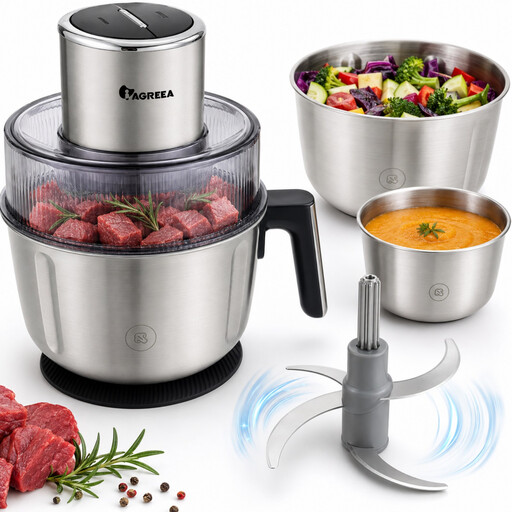
Consider the nesting bowls if keeping separate vessels together would help organise shared-kitchen storage.
The product name specifies 2.5 L, 2.2 L and 1.8 L bowls, a 350 W motor, two speeds and triple-curved blades. Check the working quantities and cleaning instructions for the bowls and blades before using it for hummus.
 No image available
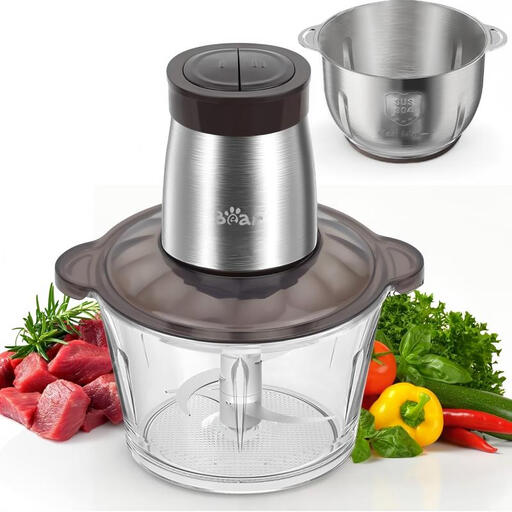
The two containers may suit shared preparation when users want distinct vessels for different ingredients.
The product name specifies a 300 W motor, two speed settings and four stainless-steel blades. Check the manual for usable batch quantities, cleaning instructions and the correct continuous operating limit before use.
 No image available
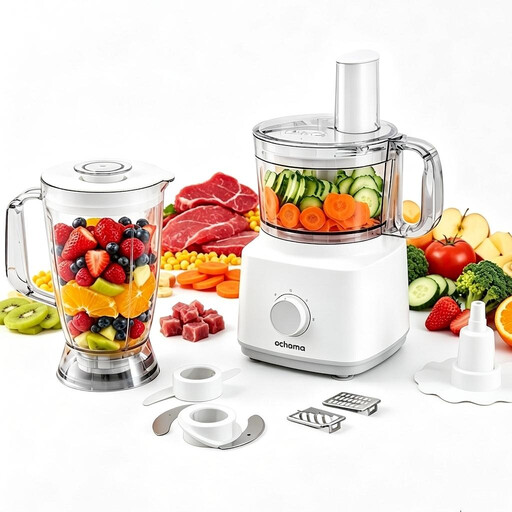
Consider this processor if you also expect to slice or grate vegetables, provided its main processing setup suits hummus.
The product name lists slicing, shredding and grating discs and detachable parts. Check the exact blade and controls for puréeing, along with working capacity and part-by-part cleaning instructions.
No: a compact processor can suit an occasional single batch if it has an appropriate blade and processing controls. Check its working capacity against your recipe; a larger bowl becomes more relevant when you regularly prepare several portions or use the machine for other jobs.
Check the cleaning instructions for the bowl, lid, blade and any accessories you expect to use. A dishwasher-safe claim for some parts does not establish that every component can be washed the same way, so agree how cleaned parts will be dried and stored.
Yes, ingredients handled by different users can come into contact through inadequately cleaned equipment. Food Standards Agency guidance for food establishments identifies equipment cleaning as part of controlling allergen cross-contact; in a private shared kitchen, agree a thorough cleaning routine suited to the ingredients being used.
Private household cooking and starting a food business are different situations. If you start or take over a food business, the Food Standards Agency says to register with the local authority at least 28 days before trading or food operations begin; assess the applicable requirements if you plan to supply hummus as a business activity.