Regular beetroot juice drinkers
If beetroot juice is part of your routine, consider how you will feed firm roots, manage pulp and clean the machine after each use.


Consider a cold-press juicer if you regularly juice beetroot and value pulp control; a centrifugal model may suit you better if quick batches and straightforward cleaning take priority. Neither mechanism alone establishes how well a particular machine handles beetroot, so check its feed instructions, filter-cleaning steps and electrical specifications before choosing.
If beetroot juice is part of your routine, consider how you will feed firm roots, manage pulp and clean the machine after each use.
If you juice beetroot alongside other fruit and vegetables, batch preparation and a manageable clean-up may matter more to you than cold-press features.
If cutting ingredients is the part of juicing you want to reduce, compare chute dimensions with each model’s instructions for preparing root vegetables.
Start with how you want to feed and clean beetroot, then compare the exact models rather than choosing by juicer mechanism or wattage alone.
| Concern | What to check | Who this matters to |
|---|---|---|
| Handling firm beetroot | Check the manual’s permitted piece size and feeding method, plus the filter and any anti-clog provision. | When I juice firm beetroot regularly, I want a feeding process I can follow without relying on wattage as a performance guarantee. Around 33% of consumers put dependable handling of hard roots first. |
| Cleaning after use | Check how to clean the filter and which removable parts, if any, can go in a dishwasher. | If I juice often, clearing pulp and washing the parts must fit my routine. For around 27% of consumers, manageable clean-up is the primary concern. |
| Ingredient preparation | Compare the chute opening with the manual’s instructions for cutting and feeding root vegetables. | I would rather spend less time chopping beetroot, but I still need to follow the machine’s feed limits. Reducing preparation is the first priority for around 20% of consumers. |
| Ownership value | Check included filters and accessories, and distinguish motor cover from parts cover in the written warranty. | Before committing to a machine for regular use, I want to know what comes with it and what support applies to its parts. Around 20% of consumers put these ownership questions first. |
Philips specifies an 800 W motor for the HR1855/70, but its rating does not establish beetroot yield or cleaning effort against a different juicer design.
Compare the exact model’s feed instructions, filter arrangement and cleaning method alongside its power rating.
A larger opening does not remove soil from beetroot or establish that every whole root is suitable for the machine.
Wash off visible soil and follow the manufacturer’s instructions for cutting and feeding hard vegetables.
Claims about nutrient preservation on a slow-juicer product page are not proof of a particular nutritional or medical benefit from beetroot juice.
Base the appliance choice on practical features you can check, such as chute size, cleaning arrangements and the written warranty.
A similar model name does not establish that the supplied appliance has the plug, voltage or warranty arrangements you need.
Confirm the exact version’s electrical rating, plug and after-sales terms before ordering.
The JC151UK is a cold-press model with an anti-clog filter; Two pulp-filter options are listed for this model.
The centrifugal HR1855/70 has an 800 W motor and Philips QuickClean features.
The EVO820S is a whole slow juicer with an 82 mm feed chute listed by Kuvings UK.
Model 18082 is listed with a wide feed chute, pulp container and Quiet Mark accreditation.
These choices cover a centrifugal juicer and a masticating juicer. Compare their feed instructions and cleaning requirements against the way you plan to prepare beetroot.
 No image available
A centrifugal option to consider if a wider feed opening matters to your routine.
The named variant has an 800 W rating and a 1.5 L pulp basin. Check which components the dishwasher-safe description covers, and confirm the supplied unit’s voltage and UK plug before ordering.
Follow the exact model’s instructions for preparing beetroot; chute width alone does not establish whole-root suitability.
 No image available
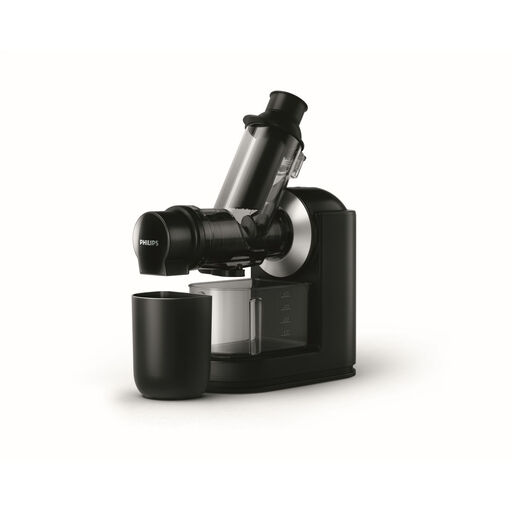
A masticating option if you prefer a slow-juicing routine.
Check the HR1889/71 manual for the permitted size and preparation of beetroot before use; do not assume whole roots can be fed into it.
No. Consider cold pressing if features such as the Ninja JC151UK’s pulp-filter choices matter to you; consider a centrifugal model if its batch and cleaning arrangements better fit your routine. Neither mechanism on its own establishes a beetroot-yield advantage.
Yes. Remove visible soil before preparing beetroot. Food Standards Scotland explains that produce washing helps remove soil and other material; also keep the knife, chopping board and juicer parts clean.
Not necessarily. Kuvings lists an 82 mm chute for the EVO820S, but the opening alone does not establish that a particular whole beetroot is suitable. Follow the exact model’s instructions for washing, cutting and feeding hard vegetables.
Compare filter-cleaning steps, access to the pulp container and which parts can go in a dishwasher. Dishwasher-safe removable parts are listed for the Ninja JC151UK, while Philips describes QuickClean features for the HR1855/70; check the instructions for the model you choose.
Confirm the exact supplied version’s plug and voltage, then check its written warranty and service arrangements. Do not assume that an appliance with a similar model name has the same electrical specification or cover.