
24/7 Customer Support

Free returns

Same-day & Next-day Delivery

Quality Guaranteed

Unlock Your Welcome Offers: FREE Delivery | Up to 80% OFF | Free 30-day JoyPlus trial
Download the APP
Choosing among Belling cooker hoods involves more than matching the finish to your kitchen. The wrong width can leave parts of the hob uncovered, while an unsuitable ventilation method may allow moisture and odours to linger. Before buying, UK homeowners should check the hood’s dimensions, airflow information, installation requirements and ongoing filter costs.
A 90cm cooker hood, 100cm cooker hood or 110cm cooker hood needs enough wall space, clearance and suitable ducting behind it. A hood that is too large may interfere with wall units, while one that is too narrow may not cover a wide hob or range cooker effectively.
Measure the available wall area, chimney height and depth before ordering. Also check the manufacturer’s stated minimum clearance above the hob, particularly where a gas hob is installed.
A ducted cooker hood sends filtered air outside through ducting. A recirculating cooker hood passes air through grease and carbon filters before returning it to the room.
Recirculation is useful where an external wall outlet is impractical, but it does not remove moisture from the kitchen in the same way as external extraction. Carbon filters are also usually an additional purchase and need periodic replacement. Confirm whether the required filters are supplied before calculating the total cost.
A high extraction figure can be useful during frying or wok cooking, but it is not the only relevant specification. Noise level, speed control, duct diameter, filter access and lighting all affect everyday usability.
For example, the Belling COOKCENTRE CHIM 100T STA lists a maximum extraction rate of 580m³/h, with noise levels from 46dB to 65dB depending on the setting. Comparing both airflow and sound output gives a more realistic picture than looking at maximum power alone.
For a standard hob, a 60cm cooker hood may be appropriate if the surrounding cabinetry and cooking area are compact. A 90cm model is commonly considered for wider hobs, while 100cm and 110cm models are designed for large cooking surfaces and range-style cookers.
The Belling CHIM 603PYR STA measures approximately 59.8cm wide and has a maximum extraction rate of 600m³/h. By comparison, the Belling COOKCENTRE CHIM 110PYR STA measures approximately 109.8cm wide, making it suitable for larger hobs or range cookers. Always compare the hood width with the actual cooking surface, not just the cooker’s overall external dimensions.
Check whether the model supports a 120mm or 150mm duct, and whether your existing outlet matches. Narrow or unnecessarily long duct runs may restrict airflow and increase noise. If a new external route is needed, account for wall access, bends and installation labour.
A Belling chimney cooker hood generally needs secure wall mounting and sufficient vertical space for its adjustable chimney sections. An integrated cooker hood, such as the Belling CANOPY 603INT STA, is designed to sit beneath a cabinet, making it suitable for streamlined kitchen layouts where a prominent chimney hood is not wanted.
Electrical connections and wall mounting should follow the supplied installation instructions. Where required, use a suitably qualified installer, particularly when the hood is positioned above a gas hob.
Removable metal or aluminium grease filters help capture cooking grease before it reaches the motor and ducting. Washable grease filters reduce the need for frequent replacement, although they still require regular cleaning according to the instruction manual.
Also compare control layouts. Push buttons are straightforward and practical, while touch controls can create a cleaner appearance. Cooker hoods with LED lighting provide direct illumination over the hob, which can be useful where ceiling lighting leaves shadows.
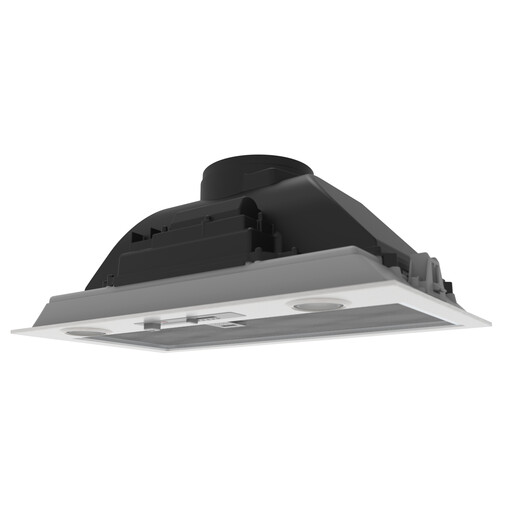
Why This Fits Their Persona: Its low-profile undermount design suits smaller kitchens, refurbishments in rented properties and homeowners who want ventilation without a visible chimney structure.
The 50cm integrated format makes the required footprint clear, while ducted and recirculating operation gives flexibility where an outside outlet is unavailable.
Stainless steel canopy, removable washable grease filters and compatibility with 120mm or 150mm ducting.
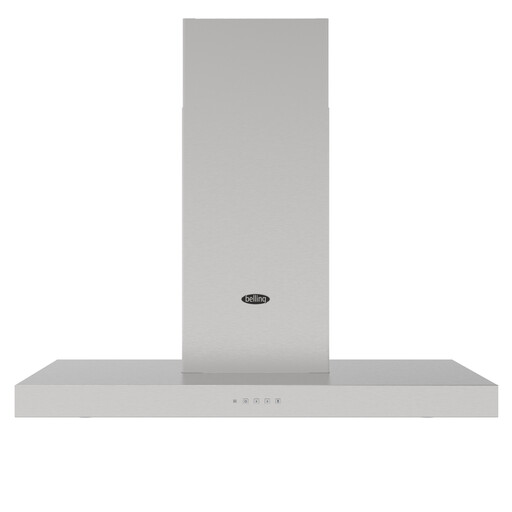
Why This Fits Their Persona: The stainless steel finish and 90cm chimney format suit homeowners updating a visible focal point above a broad hob or range-style cooker.
It specifies three speed settings, LED lighting and washable aluminium grease filters rather than relying on vague performance language.
Ducted or recirculation installation, push-button controls and a 90cm stainless steel canopy.
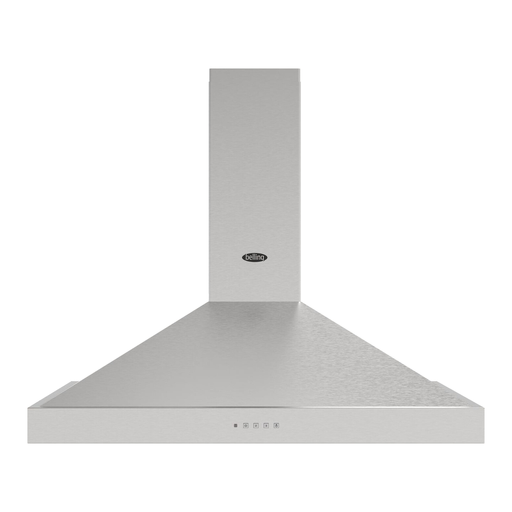
Why This Fits Their Persona: Its 110cm coverage is intended for larger hobs and range cookers used frequently for frying, boiling and multi-pan cooking.
The stated 600m³/h extraction rate, three speeds and defined 80cm-to-114cm adjustable chimney help clarify the practical installation requirements.
Two LED spotlights, dishwasher-safe aluminium filters and both ducted and recirculation modes.
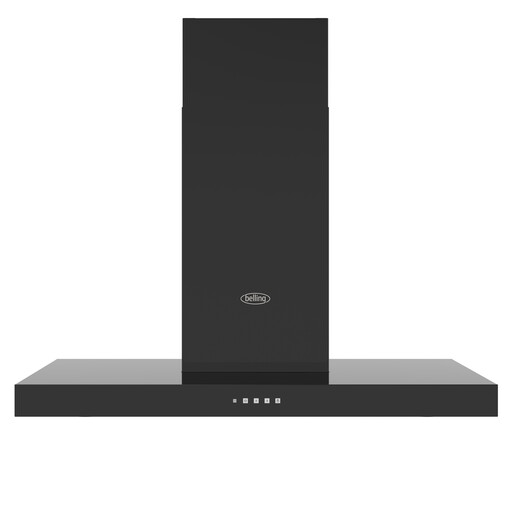
Why This Fits Their Persona: The black finish and 100cm width work with contemporary kitchens featuring large hobs or range-style cooking areas.
The three-speed control, adjustable chimney and dual installation modes make the specification more useful than finish-led marketing alone.
100cm coverage, LED lighting, touch controls and removable aluminium grease filters.
We have compiled a complete, real-time list of products that fully satisfy these strict selection criteria and UK safety regulations.
Usually, a 90cm hood is a logical size match, but check the actual canopy width and the hob layout. Pan placement, surrounding cupboards and the manufacturer’s clearance instructions also matter. A slightly wider hood may be suitable where wall space allows.
Recirculation can be simpler to install because it does not require an external wall route. However, it requires carbon-filter replacement and does not expel kitchen moisture outside. Ducted extraction may involve higher installation costs but avoids regular carbon-filter purchases. Compare the installation work and ongoing maintenance before deciding.
Grease filters should be cleaned regularly, with frequency depending on how often you fry or cook with oil. Washable aluminium filters can normally be removed for cleaning; follow the appliance instructions for suitable cleaning methods. Carbon filters used in recirculation systems are not generally washable and need replacement according to the manufacturer’s guidance.