
24/7 Customer Support

Free returns

Same-day & Next-day Delivery

Quality Guaranteed

Unlock Your Welcome Offers: FREE Delivery | Up to 80% OFF | Free 30-day JoyPlus trial
Download the APP
A Beneunder UV protection umbrella can be useful on bright commutes, holidays, outdoor events and unpredictable UK days. However, choosing one by appearance alone can lead to an umbrella that is awkward to carry, too small for practical coverage or unsuitable for wind and rain.
Before buying, look beyond labels such as “blackout”, “cooling” or “wind-resistant”. The useful questions are: how much UV protection is specified, how large is the canopy when open, how compact is it when folded and what materials support the frame?
UPF 50+ is a familiar sun-protection rating, while some Beneunder models list UPF 2000+. These figures should be read as the product’s stated specification rather than a guarantee of complete protection in every situation. Coverage also depends on the canopy angle, gaps around the edges and reflected light.
A black-coated canopy can reduce the amount of sunlight passing through the fabric, but it does not replace sensible sun habits. For prolonged outdoor use, combine an umbrella with suitable clothing, shade and other personal sun-protection measures.
A lightweight pocket umbrella may fit neatly into a handbag or work bag, but a small folded size usually means a more modest open diameter. For example, the Beneunder BM666 opens to 35 inches, while the BM398 and BM397 models open to 39 inches.
A full-body sun protection umbrella is more appropriate if you want shade reaching towards your legs or need to share cover with a child. It will generally take up more room on public transport and weigh more than a five-fold travel design.
Fibreglass ribs and an aluminium frame can help balance weight and flexibility, but no portable parasol should be treated as storm equipment. Wind ratings and reinforced construction are useful comparison points, not permission to use an umbrella in dangerous gusts.
For UK conditions, select a frame suited to your normal routes and fold it away when winds become difficult to control. Proper drying also matters: storing a damp canopy can affect the fabric, coating and frame over time.
Look for a clearly stated rating such as UPF 50+ or UPF 2000+, alongside information about the canopy. Beneunder models use black-coated fabrics, with some options adding a double-layer sun umbrella construction.
The BM666 uses a 20D lightweight black-coated canopy and lists UPF 50+ protection. The BM398 combines a polyester canopy, black coating and a double-layer design, with a stated UPF 2000+ specification. These are different formats: the former prioritises slim portability, while the latter gives more fabric and shade coverage.
A five-fold umbrella is usually selected for compact storage, but the folding mechanism can make it less convenient to open and close repeatedly. A six-fold umbrella may offer a different balance between folded size, handle design and canopy diameter.
Check the actual folded measurements rather than relying on terms such as “mini” or “capsule”. The BM666 folds to approximately 6.1 by 2.6 inches and weighs 5.99 oz. The BM01b six-fold model weighs 255 g and folds to approximately 8.66 by 2.76 inches. Pouches, shoulder straps and crossbody options can make a noticeable difference when commuting or travelling.
If you want a sun and rain umbrella, check whether the product specifies water-repellent or quick-dry features. The BM528 lists a lotus-leaf-inspired water-repellent finish, while the BM666 is described as quick-drying and suitable for both sun and rain.
For stability, look for details such as fibreglass ribs, aluminium shafts or a carbon-fibre aluminium alloy frame. These materials can reduce weight, but the canopy still needs to be fully dried after rain. Avoid putting any wet umbrella straight into a closed pouch.
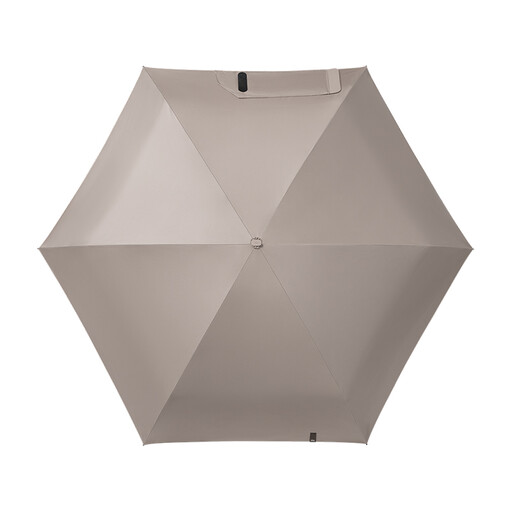
Why This Fits Their Persona: A practical starting point for commuters who want one compact umbrella for bright days and light rain without carrying a full-size parasol.
Its stated 35-inch open diameter and 6.1-inch folded length make the coverage-to-portability trade-off clear.
UPF 50+ specification, 20D canopy, aluminium shaft and a handheld/crossbody pouch.
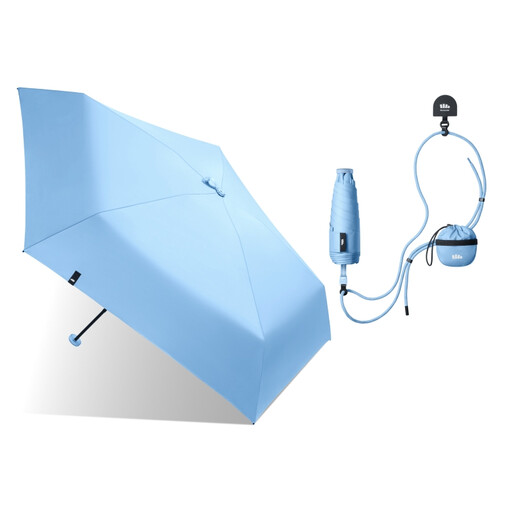
Why This Fits Their Persona: Suitable for shoppers, travellers and office commuters who value a slim profile and lighter carry weight.
The listed approximately 150 g weight and approximately 5 cm slim profile help set realistic expectations for portability.
UPF 50+ specification, carbon-fibre aluminium alloy frame and multifunctional carry cord.
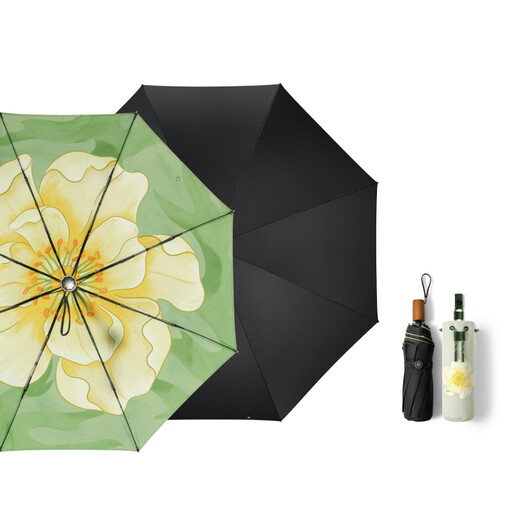
Why This Fits Their Persona: Designed for extended outdoor activities, garden use, travel days and anyone prioritising a larger area of shade over minimal folded size.
Its 39-inch canopy and double-layer construction make it a clearer choice for coverage than a pocket-sized design.
UPF 2000+ specification, 370 g weight and fibreglass-aluminium alloy frame.
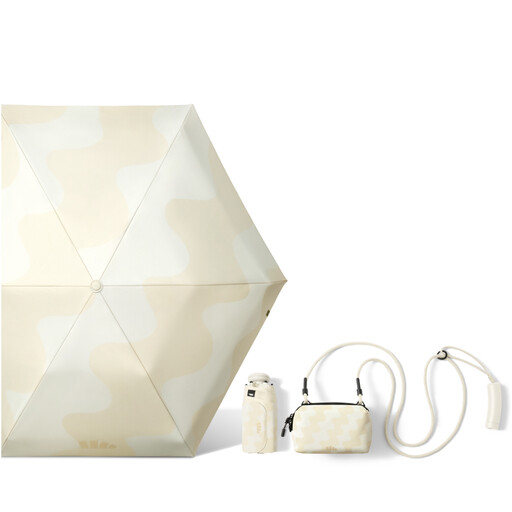
Why This Fits Their Persona: A useful option for holidays, day trips and city walking where a carry strap and compact storage pouch simplify transport.
The 255 g weight, stated dimensions and expandable pouch show how it balances portability with storage practicality.
UPF 2000+ specification, 36.61-inch open diameter and adjustable shoulder strap.
We have compiled a complete, real-time list of products that fully satisfy these strict selection criteria and UK safety regulations.
Several listed models are designed for dual sun-and-rain use, with features such as quick-dry fabric or a water-repellent finish. They should still be dried completely after use. A sun umbrella is not a substitute for a large storm umbrella during severe weather.
Service life depends on frequency of use, wind exposure, storage and care. Allowing the canopy to dry, avoiding forceful opening and storing it correctly can help preserve the coating and folding mechanism. There is no universal lifespan that applies to every user or model.
No electricity or consumable refills are required. The ongoing costs are limited to the original purchase and any replacement needed if the canopy, ribs or folding mechanism becomes damaged. For value, choose the smallest open diameter and feature set that genuinely suits your routine.