
24/7 全天候客户支持

免费退货

当日/次日达

品质保障

开启新人专享福利: 全场免邮 | 低至 2 折 | 免费试用 30 天 JoyPlus 会员
下载 Joybuy
Having access to 220V mains power when you're away from the grid is no longer a luxury; it's a practical necessity. Whether you're fitting out a campervan for a cross-country tour, need to run power tools on a remote job site or want a reliable emergency backup power source at home, a power inverter is the key. But with so many options, how do you choose the right one?
This guide is designed to help you understand the essential features of a 12v to 220v pure sine wave inverter. We'll cut through the technical jargon and focus on what truly matters, helping you find a dependable off-grid power solution that meets your needs.
Before looking at specific models, it's helpful to understand a few core concepts. Getting these right will ensure you invest in a device that performs safely and effectively for years to come.
You will see two main types of inverters: modified sine wave and pure sine wave. While modified wave inverters are often cheaper, they can cause problems for sensitive electronics. They may create a humming sound in audio devices, cause glitches in laptops or even damage delicate equipment like medical devices or digital clocks.
A pure sine wave inverter produces clean, stable electricity that is identical to what you get from a standard wall socket. This makes it the only sensible choice for powering modern appliances, from laptops and TVs to coffee machines and power tools. It ensures your devices run smoothly, efficiently and without risk of damage.
Inverter power is described with two numbers: rated and peak wattage.
For example, a 2000w pure sine wave inverter can continuously run appliances that add up to 2000 watts, but it might offer a 4000-watt peak to handle the initial startup demand of a power-hungry tool.
A quality car power inverter or inverter for campervan must have a robust set of safety features. Look for models with built-in protection against overload, over-temperature, short circuits and low/over-voltage. These features protect both the inverter and your connected devices.
For any inverter rated above 150W, it is essential to connect it directly to your 12V battery terminals using the correct gauge of cables. Using a cigarette lighter socket for high-power applications is unsafe and can lead to overheating or damage to your vehicle's wiring.
Here are our recommendations for reliable pure sine wave inverters, selected for their performance, features and suitability for common UK applications.
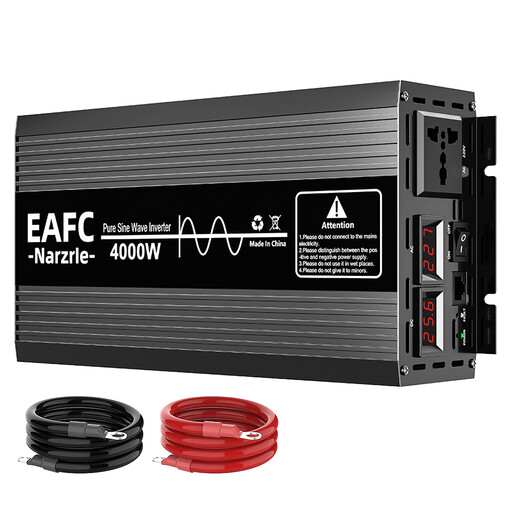
Why It Stands Out: This model offers a great balance of power and practical features. The 2000W rated power is sufficient for most campervan and trade applications, easily handling items like coffee makers, small microwaves and power tools. The dual digital displays are a standout feature, allowing you to monitor both input battery voltage and output voltage in real-time, giving you a clear picture of your power system's health.
Pros:
Who is it for? This is an excellent all-rounder for campervan owners, tradespeople and those needing a solid emergency backup power source that can run multiple household appliances.
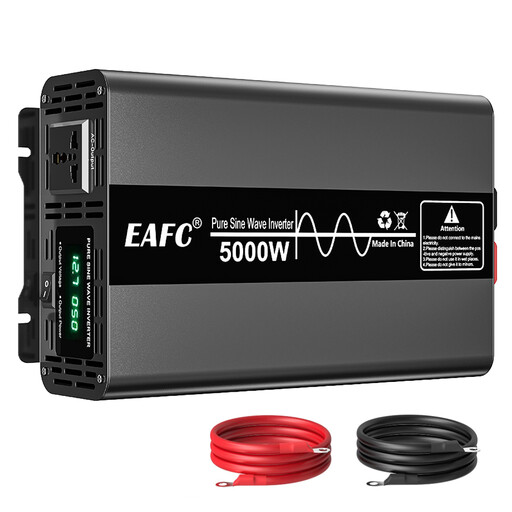
Why It Stands Out: For those with higher power demands, this unit's 2500W continuous output and 5000W peak capacity provide serious capability. It's built to handle more demanding loads, such as running a small air conditioner, a refrigerator and power tools simultaneously. Its ability to operate in a wide temperature range (-30°C to +60°C) makes it a particularly robust choice for year-round use in the UK.
Pros:
Who is it for? Ideal for full-time van-lifers, professional tradespeople operating from their vehicles or for a more substantial off-grid power solution at a cabin or workshop.
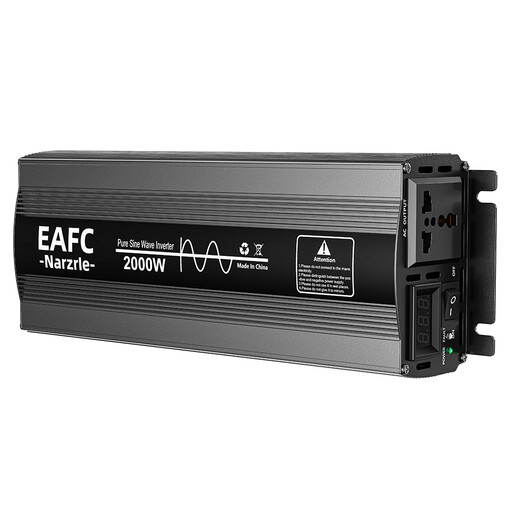
Why It Stands Out: If your power needs are more modest, this compact and efficient inverter is a superb choice. With 1000W of continuous power, it's perfect for running essentials like laptops, camera chargers, lights and a small fan. Its smaller footprint and quiet, temperature-controlled fan make it an unobtrusive addition to a smaller vehicle or for occasional weekend camping trips.
Pros:
Who is it for? Perfect for weekend campers, festival-goers or anyone needing to power basic electronics like laptops, drones and lighting on the go.
Your power requirements are unique. If the models above don't quite match your specific needs, whether you require more power or a more compact unit, there are many other options to consider.
Explore our full range of AC to DC power inverters to find the ideal match for your setup.
Yes, you can. The key is to choose an inverter that can handle both the fridge's continuous running wattage and its much higher startup (peak) wattage. A pure sine wave inverter with at least 1500W-2000W rated power is generally a safe bet for most modern, efficient campervan fridges.
For light loads, like charging a phone or laptop, you can use the inverter for a short time without the engine running. However, for any high-draw appliance (like a kettle, microwave or power tool), it is strongly recommended to have the engine running. This prevents the inverter from draining your vehicle's starter battery.
A comprehensive safety system is vital. Look for an inverter that includes protection against overload, over-temperature, short circuits and low/over-voltage. These features will automatically shut the unit down before any damage can occur to the inverter, your battery system or your appliances. Proper ventilation around the unit is also a critical safety consideration.