
24/7 Customer Support

Free returns

Same-day & Next-day Delivery

Quality Guaranteed

Unlock Your Welcome Offers: FREE Delivery | Up to 80% OFF | Free 30-day JoyPlus trial
Download the APP
Finding a straightforward, reliable microwave can feel surprisingly complicated. The market is filled with models boasting features you may never use, all while hiding design flaws that only become apparent after a few weeks of use. For those of us with limited kitchen space in a UK flat or starter home, choosing the right compact appliance is crucial. As a Joybuy Product Recommendation Officer, my role is to help you navigate past the marketing jargon and focus on what truly matters.
Before you commit, be aware of these common pitfalls that lead to buyer's remorse:
To make a smart purchase, focus on the core specifications that directly impact daily use. Ignore the flashy extras and verify these three non-negotiable factors.
The wattage of a microwave determines how quickly and evenly it heats food. For a 20L solo microwave, you will typically find models between 700W and 900W.
The control interface is a matter of personal preference, but it affects functionality.
This is where practicality truly comes into play for a small microwave for kitchen use.
Based on these practical criteria, we have identified several models that align with the needs of different UK households.
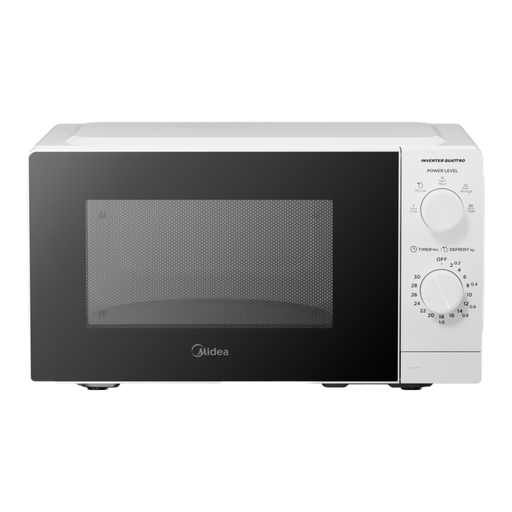
Why This Fits Their Persona: Ideal for students, first-time renters or anyone needing a simple, no-fuss appliance. Its manual controls are intuitive and reliable for essential tasks like reheating a cuppa or a plate of leftovers.
This model avoids the trap of overpaying for complex features. It is a pure solo microwave, focusing its value on core heating and defrosting functions without the added cost of a grill.
Its key advantage is simplicity and reliability. The manual rotary dials are durable and easy to operate, and the inverter technology provides more even heating than typical budget models.
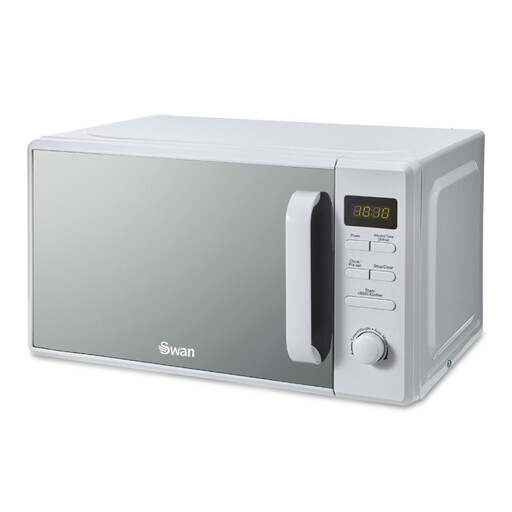
Why This Fits Their Persona: Perfect for couples or small families who need a bit more power and precision. The 800W output speeds up meal prep, and the digital controls allow for accurate defrosting and reheating, making daily kitchen tasks more efficient.
It avoids the "capacity vs. usability" trap by confirming its 20L cavity fits a standard 10-inch dinner plate, ensuring the advertised space is genuinely practical for everyday UK dishes.
The combination of 800W power and a precise 95-minute digital timer provides excellent control. The dedicated defrost function is a significant step up from basic manual models.
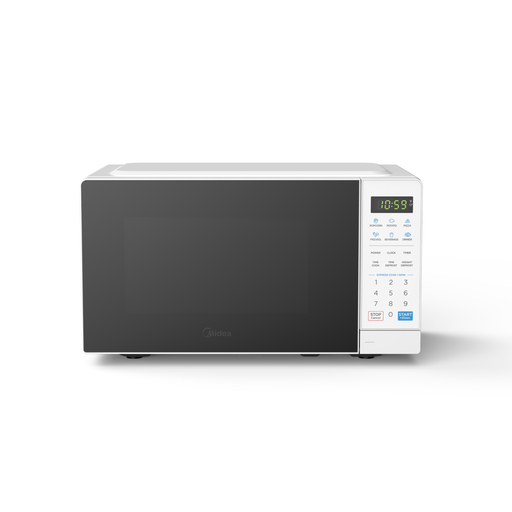
Why This Fits Their Persona: Designed for those in open-plan flats or anyone sensitive to noise. Its clean, **compact white microwave** aesthetic fits modern decor, while its engineering focuses on quiet operation.
This model directly counters the "overlooked noise" pitfall. It specifies a low operating noise level of 57 dB(A), making it a verifiable choice for a quiet kitchen environment.
Its main advantage is the combination of inverter technology for even cooking and its focus on quiet performance. The 245mm turntable is also a practical size for a compact unit.
We have compiled a complete, real-time list of products that fully satisfy these strict selection criteria and UK safety regulations.
For safety and performance, most manufacturers recommend leaving adequate clearance around the appliance. A good rule of thumb is to allow at least 10 cm (4 inches) of space at the back and on top and 5 cm (2 inches) on the sides. This ensures proper airflow and prevents the unit from overheating, which can shorten its lifespan. Always check the specific model's user manual for precise requirements.
Generally, the difference in energy consumption between digital and manual controls is minimal during operation. The main factor is the microwave's wattage and how long it runs. However, some digital models feature an "eco" or energy-saving standby mode that reduces power consumption when the appliance is not in use. Manual microwaves, having no digital display, consume virtually no power on standby.
With proper care and regular cleaning, a good quality solo microwave can be expected to last between 7 to 10 years. The lifespan is often determined by the magnetron (the component that generates microwaves). To maximise its life, avoid running the microwave empty, use microwave-safe cookware and keep the interior clean from food splatters, which can cause damage over time.