
24/7 Customer Support

Free returns

Same-day & Next-day Delivery

Quality Guaranteed

Unlock Your Welcome Offers: FREE Delivery | Up to 80% OFF | Free 30-day JoyPlus trial
Download the APP
For enthusiast gamers, the monitor is the window to digital worlds. A high-end graphics card and processor are only part of the equation; without a display that can keep up, you're leaving performance and immersion on the table. The market for premium displays can be a confusing landscape of technical jargon and ambitious marketing claims. This is particularly true when searching for a top-tier 32 inch 4K QD-OLED gaming monitor, a category that represents the pinnacle of current display technology.
As a Joybuy Product Recommendation Officer, my role is to help you navigate these options. This guide offers practical advice and highlights some standout models to help you make an informed decision, ensuring your investment delivers the visual experience you expect.
Before diving into specific products, it's useful to understand the key technologies that define a premium gaming display in 2026.
The heart of any monitor is its panel. For years, gamers have chosen between IPS (great colours), VA (great contrast) and TN (great speed). OLED technology changed the game with its per-pixel lighting, enabling perfect black levels and infinite contrast.
QD-OLED (Quantum Dot Organic Light Emitting Diode) is the next evolution. It combines an OLED panel with a quantum dot layer. In simple terms, this allows for the perfect blacks of OLED while producing higher peak brightness and a wider, more vibrant range of colours. For gaming, this means more lifelike images, incredible detail in dark scenes and HDR content that truly pops.
A 4K 240Hz monitor offers an incredibly smooth and responsive experience, but only if your hardware can support it. To achieve this, connectivity is crucial.
HDMI 2.1 is essential for modern gaming. It provides the necessary bandwidth to run games at 4K resolution with a high refresh rate (above 120Hz). This makes it a must-have for anyone with a high-end PC graphics card or for console players wanting to get the most out of their hardware, positioning it as the ideal HDMI 2.1 monitor for PS5 and Xbox Series X. Paired with adaptive sync technologies like NVIDIA G-Sync, you get a fluid, tear-free picture even during the most intense action.
High Dynamic Range (HDR) enhances the contrast and colour of a display, making visuals more realistic. However, not all HDR is created equal. The VESA DisplayHDR True Black 400 certification is specifically for emissive displays like OLED. It guarantees deep, true black levels and a high contrast ratio, resulting in breathtaking dynamic range. When a game supports it, the difference is night and day, with highlights that are brilliantly bright and shadows that are rich with detail.
Here are our recommendations, selected to meet the demands of dedicated gamers and power users.
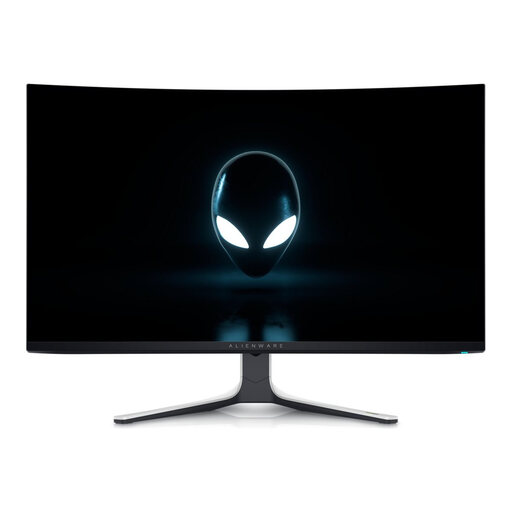
Why It Stands Out
The Alienware AW3225QF is a flagship display that ticks every box for a no-compromise gaming experience. It combines a 32-inch 4K QD-OLED panel with a blistering 240Hz refresh rate and a near-instantaneous 0.03ms response time. As a curved QD-OLED monitor, its subtle 1800R curve gently wraps the expansive 4K image around your field of view, enhancing immersion without causing distortion. This is a true G-Sync 4K gaming monitor, delivering exceptionally smooth and clear motion.
Pros
Who is it for? This monitor is for the enthusiast gamer or content creator who wants a definitive visual experience. If you have a high-end PC and want to push games to their absolute limits in 4K, or if you're a console gamer seeking the ultimate display for your PS5 or Xbox Series X, the AW3225QF is a leading contender.
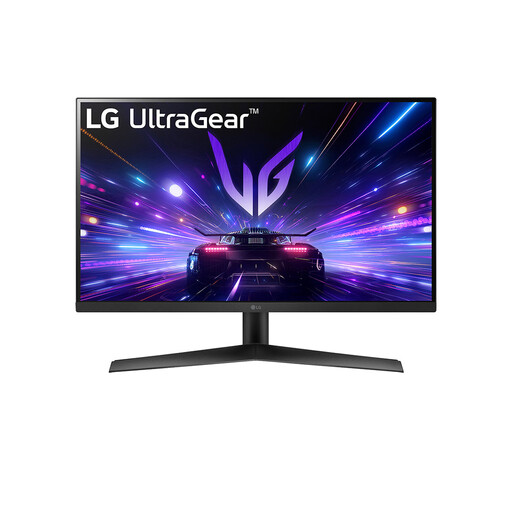
Why It Stands Out
Not every gamer prioritises 4K resolution. For competitive players in titles like Valorant or Counter-Strike, maximising frame rates is key. The LG UltraGear 27GS60F focuses on speed, offering a 180Hz refresh rate and 1ms response time on a crisp 27-inch 1080p IPS panel. It provides an exceptionally fluid and responsive feel without requiring a top-of-the-line graphics card to drive it.
Pros
Who is it for? This monitor is ideal for esports enthusiasts and gamers who prioritise refresh rate and response time over pixel density. It's a practical choice for those with mid-range gaming PCs who want a competitive edge.
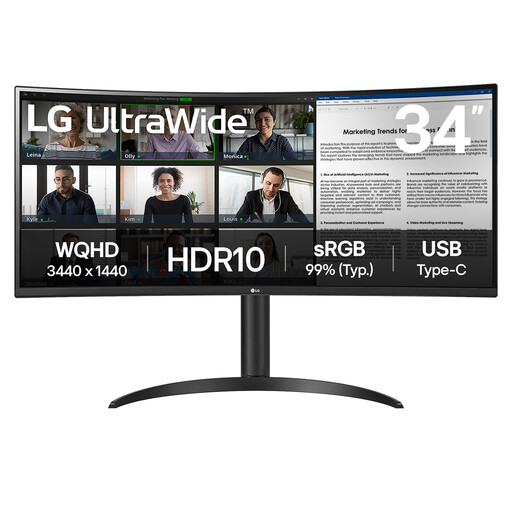
Why It Stands Out
For those who use their desk for more than just gaming, an ultrawide monitor can be a game-changer. The LG 34WR55QK offers a massive 34-inch 21:9 canvas with a 1440p resolution, perfect for multitasking with multiple windows side-by-side. Its 100Hz refresh rate still provides a smooth experience for casual gaming and media, while the USB-C port with 65W power delivery can charge your laptop with a single cable.
Pros
Who is it for? This is for the user who balances work and play. If your day involves spreadsheets and documents but your evening involves exploring vast open-world games, this monitor offers the versatility to do both well.
The world of monitors is vast, with options to suit every need and budget. From ultra-fast esports panels to expansive ultrawides, you can explore our full collection of energy monitors to find the perfect fit for your desk.
Yes, for many users, it is. While both offer perfect blacks, QD-OLED panels can typically achieve higher overall brightness and display a wider range of colours. This makes them particularly effective for HDR content, where the added brightness and colour volume create a more impactful and vibrant image.
This often comes down to personal preference, but there are objective benefits. A gentle curve, especially on a larger screen (32 inches and above), can enhance immersion by filling more of your peripheral vision. It can also improve viewing comfort by keeping the edges of the screen at a more consistent distance from your eyes.
Not entirely, but they still benefit greatly. The PS5 and Xbox Series X currently max out at 4K 120Hz. A 4K 240Hz monitor is therefore more than capable of handling anything the consoles can output. By choosing a monitor with HDMI 2.1, you ensure you can run supported games at their maximum performance target of 4K at 120 frames per second, which is a superb experience.