
24/7 Customer Support

Free returns

Same-day & Next-day Delivery

Quality Guaranteed

Unlock Your Welcome Offers: FREE Delivery | Up to 80% OFF | Free 30-day JoyPlus trial
Download the APP
Navigating the world of 360-degree action cameras can feel overwhelming. With specifications like 8K resolution, advanced stabilisation and countless software features, it's easy to get lost in the technical jargon. Whether you're a vlogger, an action sports enthusiast or simply want to capture your adventures in a more immersive way, choosing the right device is crucial.
This guide is designed to cut through the marketing hype. We'll focus on the practical features that matter for capturing high-quality footage across the UK, from the Scottish Highlands to the Cornish coast. We will look at key considerations and present a selection of standout models to help you make an informed decision.
Before diving into specific models, let's outline the core features you should be analysing. Understanding these will help you match a camera to your specific needs.
The headline feature for many new models is an 8K 360 video camera. While 8K offers incredible detail and flexibility for reframing your shots in post-production, it also creates very large files. A camera offering 5.7K or even 4K resolution can still produce excellent, sharp footage that is more manageable for editing and storage. Higher frame rates (60fps or 120fps) are important for creating smooth slow-motion clips, a popular effect in action sports content.
For any kind of action footage, an action camera with stabilisation is non-negotiable. Modern 360 cameras use sophisticated electronic image stabilisation (EIS) systems to produce incredibly smooth, gimbal-like video, even during bumpy activities like mountain biking or skiing. A related feature, 360-degree horizon locking, keeps the horizon perfectly level no matter how much the camera rotates, giving your footage a professional, cinematic feel.
If you plan to use your spherical camera for sports or outdoor vlogging in the UK, durability is key. Look for a rugged build and a clear waterproof action camera rating. Many modern cameras are waterproof to depths of 10 metres without an external case, making them suitable for surfing, kayaking or simply shooting in the rain without worry.
Here are a few models that stand out in the current market, each offering a different combination of features to suit various users.
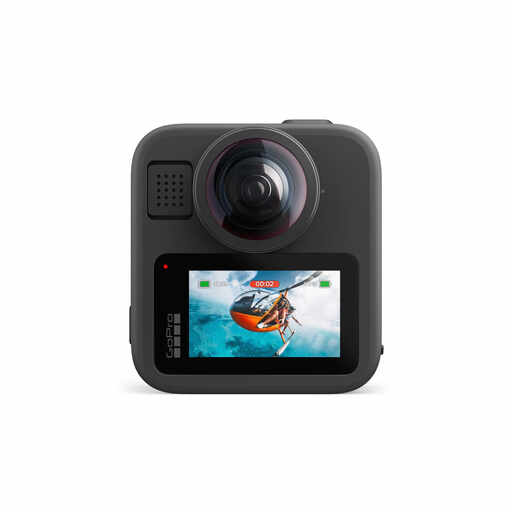
Why It Stands Out The GoPro Max 2 steps up the game with 8K 360 video capture at 30fps, providing exceptional detail for reframing. Its Max HyperSmooth 360 stabilisation and full 360-degree Horizon Lock work together to deliver remarkably steady footage. The six-microphone array captures immersive spatial audio that intelligently follows the reframed video, creating a more engaging viewing experience.
Pros
Who is it for? Action sports enthusiasts and content creators who prioritise maximum image quality, top-tier stabilisation and proven durability from a leading brand.
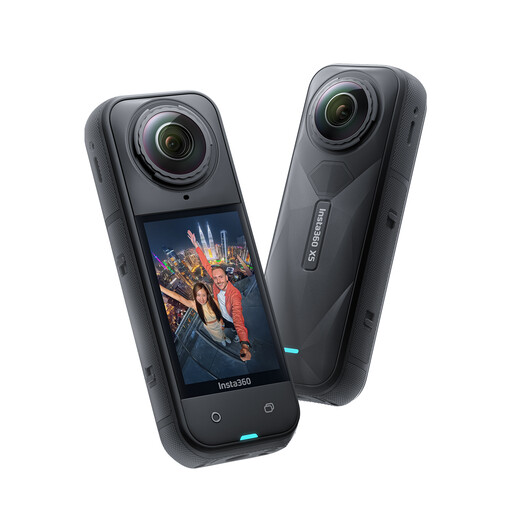
Why It Stands Out The Insta360 X5 is a strong contender, also offering 8K30fps 360° video. It distinguishes itself with user-friendly features like replaceable lenses for peace of mind during intense action. The brand's FlowState Stabilisation and 360° Horizon Lock ensure smooth shots, while the AI-powered software suite and InstaFrame mode make it simple to create shareable flat videos, making it a great 360 camera for vlogging.
Pros
Who is it for? Content creators and vloggers who value creative flexibility, a streamlined editing workflow and the practicality of replaceable lenses.
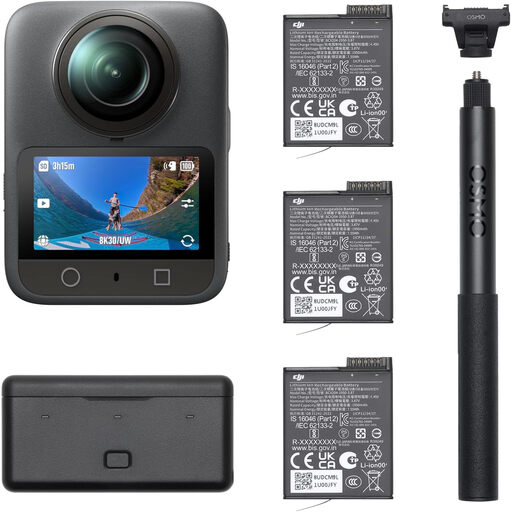
Why It Stands Out DJI's offering focuses on image quality in varied conditions, featuring a large 1-inch 360° imaging sensor for improved low-light performance. It captures 8K 360° video and impressive 120MP 360° photos. The Adventure Combo is particularly appealing as it includes three batteries and a multifunctional battery case, addressing the common issue of power anxiety during long shoots.
Pros
Who is it for? Prosumers and adventurers who prioritise low-light image quality and need an all-in-one package with extended battery life for long days of filming.
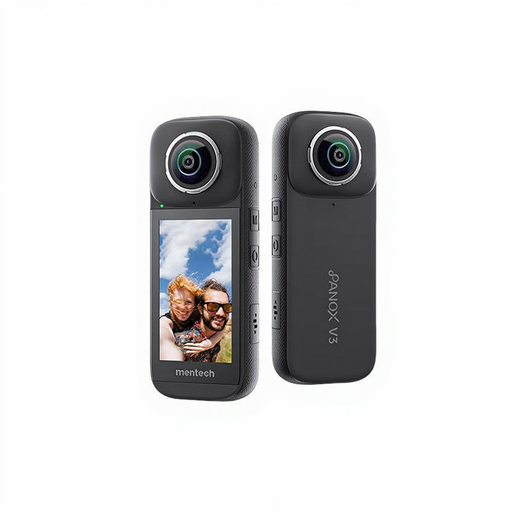
Why It Stands Out The Mentech PanoX V3 provides a compelling feature set, including 5.7K 360° video and 12K photo resolution. Its most notable feature is the large 3.0-inch tempered glass touchscreen and the ability to perform in-camera editing, allowing you to trim and set keyframes without needing a phone or computer. It's also waterproof up to 10 metres and comes with a 128GB memory card included.
Pros
Who is it for? Users looking for an all-in-one solution with a large, intuitive interface and the convenience of on-the-go editing, offering great value straight out of the box.
While these models represent some of the most compelling choices available, the market is full of great devices. If you're looking for different features or a camera that fits a specific budget, you can explore a wider selection.
Discover more in our full range of waterproof video cameras.
The primary advantage is the "shoot first, frame later" workflow. A 360 camera captures everything around you simultaneously. During editing, you can choose the most interesting angles and create a traditional flat video, ensuring you never miss the action because the camera was pointing the wrong way. You can also produce immersive, spherical videos for VR headsets or interactive platforms.
While not strictly necessary for all users, 8K resolution provides a significant benefit for reframing. When you crop a 360-degree video to a standard 16:9 frame, you are only using a small portion of the total resolution. Starting with an 8K source ensures that the final, reframed video remains sharp and detailed, often at 1080p or higher quality.
Both the GoPro Max 2 and Insta360 X5 are top-tier options in the 360 camera UK market, and a direct comparison often comes down to specific priorities.