
24/7 Customer Support

Free returns

Same-day & Next-day Delivery

Quality Guaranteed

Unlock Your Welcome Offers: FREE Delivery | Up to 80% OFF | Free 30-day JoyPlus trial
Download the APP
Navigating the market for a 4K dash cam can feel overwhelming. With countless models all promising crystal-clear footage and complete security, it's easy to make a purchase you later regret. As a Joybuy Product Recommendation Officer, my role is to help you see past the marketing jargon and focus on what truly matters for UK drivers. Before you spend your hard-earned money, let's look at the common pitfalls that catch many buyers out.
The most frequent issues stem from three areas:
To ensure you get a device that performs reliably, focus on these core specifications. They are the true indicators of quality and suitability for UK roads.
The first decision is how much coverage you need. A standard dash cam front and rear setup is sufficient for many drivers, capturing events ahead of and behind your vehicle. However, for complete peace of mind, a 3 channel dash cam is becoming the standard. These systems add an interior-facing camera, providing a full record of events inside the car. This is particularly valuable for professional drivers and is often referred to as a rideshare camera UK setup, offering protection against false passenger claims and disputes.
A video file alone only tells part of the story. A car camera with GPS embeds crucial data into your recordings, including your vehicle's precise location, speed and the time. In the event of an incident, this information provides indisputable context for insurance claims or police reports.
When evaluating a dash cam with parking mode, look for models that include the necessary hardwire kit or offer it as a clearly explained option. A quality kit will have an adjustable voltage cut-off to prevent battery drain, automatically switching the camera off if your car's battery level drops too low.
For some users, a dedicated dash cam might not be the only option. A modern action camera for car use can offer superior image stabilisation and higher frame rates (e.g., 60fps), resulting in smoother footage. Many action cameras also feature a "Car Mode," which enables them to function like a dash cam by automatically starting and loop recording when powered on. This makes them a great dual-purpose device for motoring enthusiasts who also want a motorcycle camera or a camera for vlogging and holidays.
Based on a careful analysis of features that address the common pitfalls, here are several options suited to different types of UK drivers.
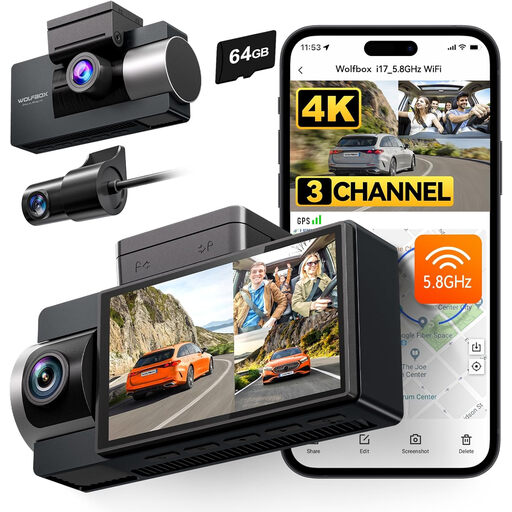
Why This Fits Their Persona: This model is built for professionals who need indisputable, all-around evidence. The three-channel system covers the road ahead in 4K, the rear in 1080p and the cabin in 1080p, which is essential for private hire and taxi drivers in the UK.
It directly counters the "poor night vision" pitfall with a dedicated infrared (IR) interior camera, ensuring clear footage of passengers even in complete darkness without being distracting.
Built-in GPS logs speed and location data directly onto the video file. The 5.8GHz WiFi allows for fast footage transfer to a smartphone app without needing to remove the memory card.
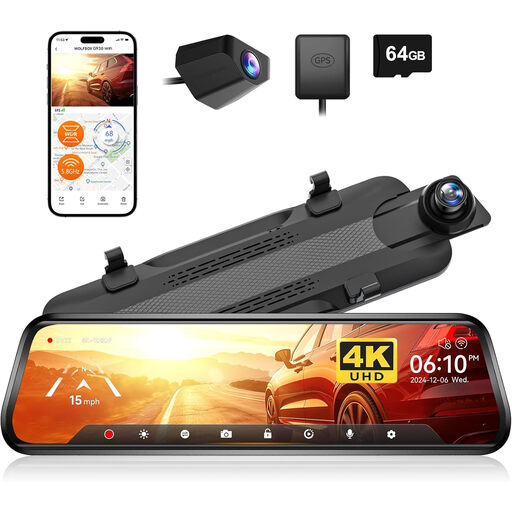
Why This Fits Their Persona: For drivers who want a discreet, factory-fitted look, this rear view mirror camera is an excellent choice. It replaces the existing mirror, reducing windscreen clutter and providing a large, clear 10-inch touch screen display.
It avoids the "fake 4K" trap by using a high-quality sensor for its front-facing 4K camera, while WDR technology ensures the rear camera provides balanced exposure, preventing licence plates from being washed out by headlights.
The large screen doubles as a superior reversing camera with dynamic guidelines that move as you steer. The external GPS logger ensures a strong, stable signal for accurate data recording.
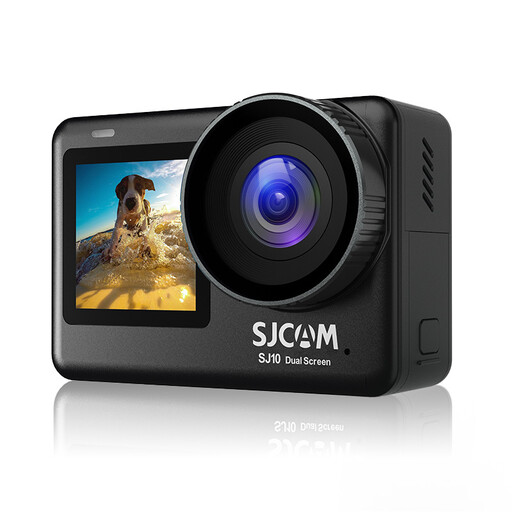
Why This Fits Their Persona: This is for the user who wants more than just a security device. As a versatile action camera for car and motorcycle camera use, its primary strength is capturing high-quality, dynamic footage of scenic drives, track days or off-road adventures.
It offers true 4K recording at up to 60 frames per second, far exceeding the quality of interpolated cameras. The 6-axis gyro stabilisation produces smooth video, a feature often lacking in basic dash cams.
Its dual-screen design is great for vlogging and its rugged, waterproof body (with case) means it can be used in any weather. The "Car Mode" allows it to function as a dash cam, making it a true all-in-one solution.
We have compiled a complete, real-time list of products that fully satisfy these strict selection criteria and UK safety regulations.
A 64GB card is a good starting point for a 4K dash cam. It will typically hold several hours of footage before the loop recording function begins overwriting the oldest files. For a 3 channel dash cam or for those who drive long hours, a 128GB or 256GB card is a worthwhile investment. Always choose a "High Endurance" microSD card, as they are specifically designed for the constant rewriting that dash cams perform.
A properly installed dash cam should not drain your battery. When using parking mode, it is crucial to use a hardwire kit with a configurable low-voltage protection feature. This allows you to set a threshold (e.g., 11.8V or 12.0V), at which point the camera will automatically shut down to preserve enough power for you to start your car. This is especially important during colder UK winters when battery performance can be reduced.
Yes, it is legal to use a dash cam with an interior-facing camera in your own vehicle. However, if you are operating as a private hire driver or taxi, you have a responsibility to inform your passengers that they are being recorded. A simple, visible sticker is usually sufficient to comply with privacy considerations and GDPR. The footage is for your security and should not be shared publicly without consent.