
24/7 Customer Support

Free returns

Same-day & Next-day Delivery

Quality Guaranteed

Unlock Your Welcome Offers: FREE Delivery | Up to 80% OFF | Free 30-day JoyPlus trial
Download the APP
Choosing the best 4K vlogging camera is less about chasing the highest number on a product page and more about matching the camera to how you actually film. A compact camera for travel vlogging has different priorities from an outdoor adventure camera, while a vlogging camera for YouTube may need a flip screen, reliable autofocus and a microphone connection.
Before buying, look beyond headline resolution. The following guide explains the main traps, the specifications worth checking and our top recommendations for different types of UK users.
4K describes the recording resolution, but it does not tell you everything about image quality. Sensor size, lens aperture, stabilisation, autofocus and recording frame rate all affect the finished video.
A small action camera may be ideal for cycling or skiing but produce a different look from a camera with a larger sensor. Similarly, a camera advertising 5K or 8K may not offer better results in poor light if the lens and sensor are limited.
Shaky footage can make walking videos difficult to watch. Look for a camera with image stabilisation, but check whether it uses electronic stabilisation, optical stabilisation or a mechanical gimbal. These systems have different effects on cropping, movement and battery use.
Audio is another frequent compromise. Built-in microphones can be suitable for casual clips, but wind on a British beach or traffic in a city centre can quickly reduce clarity. A 3.5mm microphone input, wireless microphone support or direct transmitter compatibility may be more useful than an extra image mode.
Water resistance has limits. Some models are waterproof without a case, while others require a sealed housing. Check the stated depth, whether the rating applies without accessories and whether all port covers are closed correctly.
For example, the SJCAM C300 is rated for up to 30 metres with its included waterproof case. This is not the same as using the camera bare in water. Saltwater users should rinse equipment with fresh water and dry it after filming.
For most YouTube, social media and travel content, 4K at 30fps provides detailed footage without creating exceptionally large files. If you want a slow-motion camera, check the frame rate at the required resolution. Some models offer 4K at 120fps, while others provide 1080p at 120fps or lower-resolution slow motion.
A high frame rate also requires faster memory cards and uses more storage. A compatible U3 or V30 microSD card is a sensible choice for many 4K cameras, although you should follow the individual manufacturer’s card specification.
A larger sensor can help with low-light scenes and background separation, while a wide lens is useful for selfie filming and landscape shots. Action cameras commonly use ultra-wide lenses, such as the 154° lens on the SJCAM C300, which can capture more of a scene but may introduce fisheye distortion.
For a camera for photography and video, also consider still-image resolution, lens flexibility and autofocus. Interchangeable-lens models offer more creative options but add cost, weight and the need to carry additional lenses.
Battery claims depend on settings, temperature, stabilisation and screen use. Extended filming in cold Scottish or Welsh conditions can reduce runtime. Removable batteries are useful for long days, while built-in storage can provide convenience when a memory card is forgotten.
A camera with Wi-Fi can transfer clips to a phone, but connection speed and app compatibility vary. Check whether the required app is available for your device and whether it must be downloaded directly from the manufacturer’s website.
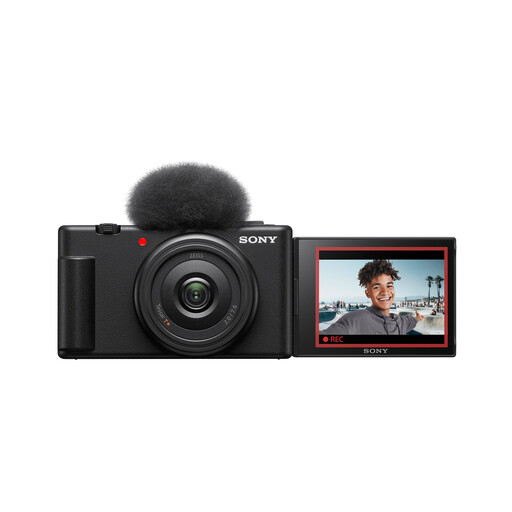
Why This Fits Their Persona: A compact option for students, beginners and creators filming indoor videos, product clips or everyday travel content around the UK.
Its 1-inch sensor, built-in image stabilisation, directional microphone and 3-inch vari-angle screen address common beginner concerns without requiring interchangeable lenses.
4K recording, 20mm f/2.0 lens, Wi-Fi, Bluetooth and a 3.5mm microphone jack in a 229g body.
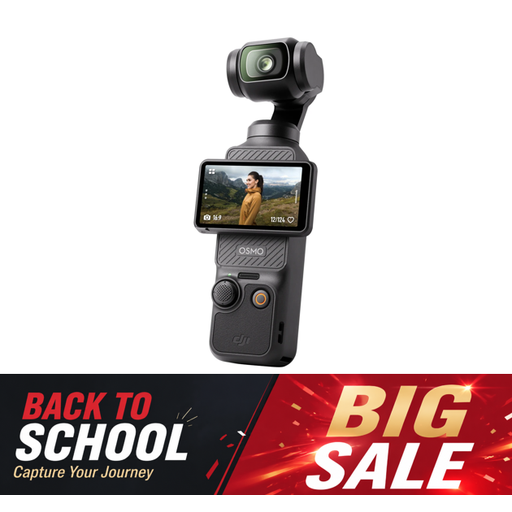
Why This Fits Their Persona: Suits creators who want a pocket-sized video camera with smooth movement for walking tours, family footage and YouTube production.
Its 3-axis mechanical stabilisation avoids relying solely on electronic correction, while ActiveTrack helps keep a moving presenter in frame.
1-inch CMOS sensor, 4K/120fps recording, 2-inch rotatable touchscreen and direct support for selected wireless transmitters.

Why This Fits Their Persona: Designed for outdoor adventurers, sports users and travel vloggers who need extended filming and equipment that can handle changing conditions.
The variable f/2.0–f/4.0 aperture, cold-resistant design and claimed four-hour normal-use battery figure provide more flexibility than a basic action camera setup.
1/1.1-inch square sensor, 4K recording, 50GB internal storage and an Adventure Combo with three batteries.
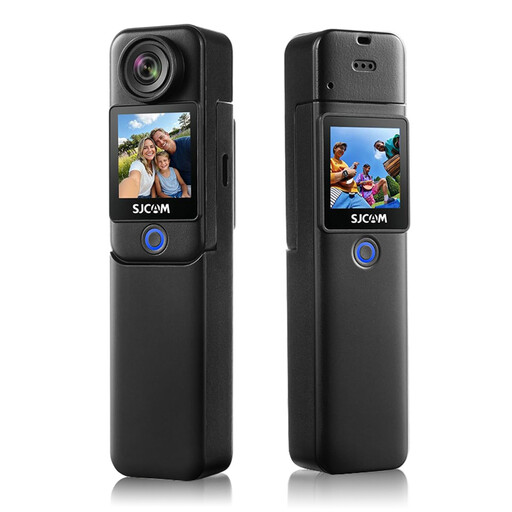
Why This Fits Their Persona: A practical choice for cycling, fishing, skiing, motorcycling and family trips where a small, mountable outdoor adventure camera is useful.
Its 6-axis electronic stabilisation, included waterproof case and supplied 64GB memory card cover several accessories that buyers may otherwise need to source separately.
4K/30fps, 1080p/120fps, 154° lens, dual-band Wi-Fi and up to 30 metres underwater with the case.
Before filming, format the memory card in the camera, fully charge the battery and check the available storage. High-bitrate 4K footage fills cards quickly, so spare batteries and a card reader may be worthwhile for travel.
Do not charge a warm battery immediately after intensive recording. Keep lithium-ion batteries away from excessive heat and follow the supplied charging instructions. For waterproof cameras, inspect seals before use and rinse away salt or sand afterwards.
We have compiled a complete, real-time list of products that fully satisfy these strict selection criteria and UK safety regulations.
It can be, particularly for walking, cycling and outdoor footage. However, a compact vlog camera or gimbal camera may provide a more natural field of view, stronger low-light performance and easier subject tracking for indoor presenter videos.
Runtime varies with resolution, frame rate, stabilisation, temperature and screen brightness. Treat advertised figures as conditions-dependent. For full-day filming, choose removable batteries, a charging case or USB-C power support and carry more storage than you initially expect to need.
A camera with a flip screen can simplify self-recording because you can check framing and whether your face is in focus. It is particularly useful for solo creators, product demonstrations and tutorials. If you mainly film scenery or action from a helmet or handlebar, waterproofing and stabilisation may matter more.