
24/7 全天候客户支持

免费退货

当日/次日达

品质保障

开启新人专享福利: 全场免邮 | 低至 2 折 | 免费试用 30 天 JoyPlus 会员
下载 Joybuy
The search for the ideal keyboard often comes down to a compromise between desk space and functionality. For many, the custom 75% mechanical keyboard has emerged as the perfect solution. It retains the essential function row and arrow keys that are often sacrificed on smaller boards, while still offering a compact footprint that frees up valuable desk real estate for mouse movement.
Whether you are a competitive gamer, a programmer who types all day or a hybrid worker refining your home office setup, the 75% layout offers a compelling blend of performance and practicality. This guide is designed to help you navigate the key features and identify a model that aligns with your specific needs, from typing feel to connectivity.
Choosing the right keyboard involves more than just picking a colour. Here are a few key considerations to help you make an informed decision.
Your daily use case will largely determine the best connection type for you. A traditional wired keyboard offers a stable, zero-latency connection, which is often favoured for competitive gaming. However, for those who value a clean, cable-free desk or need to switch between multiple devices (like a laptop, tablet and PC), a 75 percent wireless keyboard is invaluable. The most versatile option is a tri-mode keyboard, which provides three connection methods: low-latency 2.4GHz wireless for gaming, Bluetooth for multi-device pairing and a detachable USB-C cable for charging and a reliable wired connection.
The internal construction of a keyboard significantly impacts its feel and sound. A gasket mount keyboard is a popular choice among enthusiasts. In this design, the plate holding the switches is suspended between silicone or rubber gaskets, creating a cushioned, flexible typing experience that can reduce finger fatigue and produce a deeper, more satisfying sound profile.
Furthermore, a hot swappable mechanical keyboard offers the ultimate customisation. It allows you to change the mechanical switches without any soldering, making it easy to experiment with different switch types (e.g., linear, tactile or clicky) to find the precise feel and sound you prefer.
Modern mechanical keyboards are increasingly incorporating features that boost productivity and convenience. A mechanical keyboard with knob is a prime example, providing instant, tactile control over system volume or media playback. Some advanced models even allow you to customise the knob's function. This, combined with the efficient layout of a compact gaming keyboard, ensures you have all the controls you need without cluttering your workspace.
Here are a few standout models that cater to different preferences and priorities, from premium customisation to accessible performance.
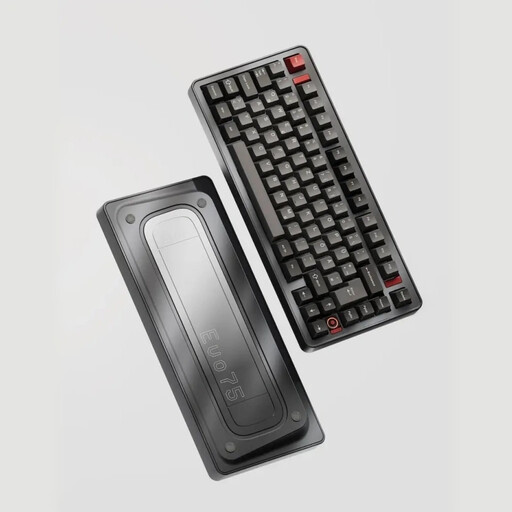
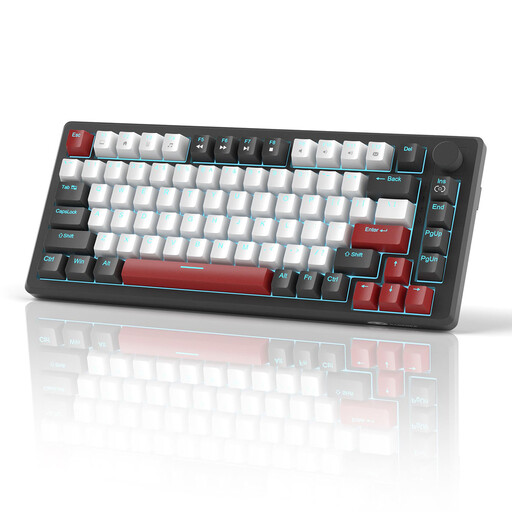
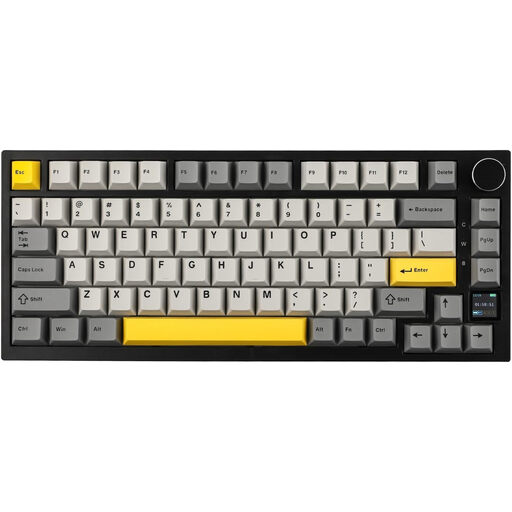
These recommendations represent just a fraction of the exciting world of 75% mechanical keyboards. Every user has unique preferences for sound, feel and aesthetics. If you're looking for a different switch type, colourway or layout, there are many other excellent choices available.
Explore our full range of fully assembled keyboard models to find your perfect match.
A 75% mechanical keyboard is a compact layout that typically includes 80-84 keys. It is distinguished from smaller 60% or 65% boards by its inclusion of a full function row (F1-F12) and a dedicated set of arrow keys. This makes it a popular choice for users who want to save desk space without sacrificing critical keys needed for productivity and gaming.
Whether a gasket mount keyboard is "better" is subjective and depends on personal preference. However, this mounting style is highly regarded for creating a softer, more cushioned typing feel compared to more rigid mounting methods like tray mount. The gaskets absorb the impact of each keystroke, which can reduce finger fatigue during long typing sessions and produce a deeper, less harsh sound profile that many find very pleasant.
A hot swappable mechanical keyboard is ideal for anyone who wants the freedom to customise their typing experience. It allows you to change the mechanical switches under the keycaps without any soldering. This is perfect for trying out different switch types (e.g., smooth linears, bumpy tactiles or loud clickies) to discover what you like best. It also makes repairs simple, as a faulty switch can be pulled out and replaced in seconds.