
24/7 Customer Support

Free returns

Same-day & Next-day Delivery

Quality Guaranteed

Unlock Your Welcome Offers: FREE Delivery | Up to 80% OFF | Free 30-day JoyPlus trial
Download the APP
Driving at night or in poor weather with standard halogen bulbs can often feel like a compromise. The dim, yellowish light can reduce visibility, making it harder to spot hazards on the road. If you're looking for a straightforward way to improve your night-time driving experience, upgrading to 9005 LED headlight bulbs is one of the most effective changes you can make.
As the Joybuy Product Recommendation Officer, my role is to help you navigate the options. This guide is designed to provide clear, practical advice on what to look for in a car headlight replacement and to highlight some notable choices for your vehicle this year.
Before you make a purchase, it's helpful to understand a few key features. This will ensure you select a product that not only fits your car but also meets your expectations for performance and safety.
The most critical factor in any headlight upgrade is the beam pattern. A well-designed LED bulb should replicate the exact pattern of the original halogen bulb it replaces. This ensures the light is focused on the road ahead, illuminating your path without creating glare that can dazzle oncoming drivers. A poor beam pattern is not only unsafe but could also be a reason for an MOT failure. Look for bulbs that specify a "1:1 halogen design" or "perfect beam pattern" to ensure a clean, focused cut-off.
Most 9005 car light bulbs in the LED category are offered in a 6000K or 6500K colour temperature. This produces a crisp, cool white light, similar to daylight, which can improve contrast and make road signs and markings appear clearer. While manufacturers often state high lumen (LM) figures to indicate brightness, the real-world performance is determined by the chip quality and the bulb's ability to project that light effectively. These bright 9005 bulbs offer a significant upgrade in visibility over their halogen counterparts.
For most car owners, a simple plug and play headlight upgrade is the goal. The best options are designed to be a direct replacement for your existing bulbs, with no need for complex wiring or modifications. However, modern vehicles often use a CANbus (Controller Area Network) system to monitor the car's electrics. Because LEDs use less power than halogens, the system can sometimes mistakenly report a "burnt-out bulb" error. To avoid this, look for CANbus ready LED bulbs that have built-in drivers or resistors to communicate correctly with your vehicle's computer.
Here are a few 9005/HB3 LED bulb options that stand out based on their features and design.
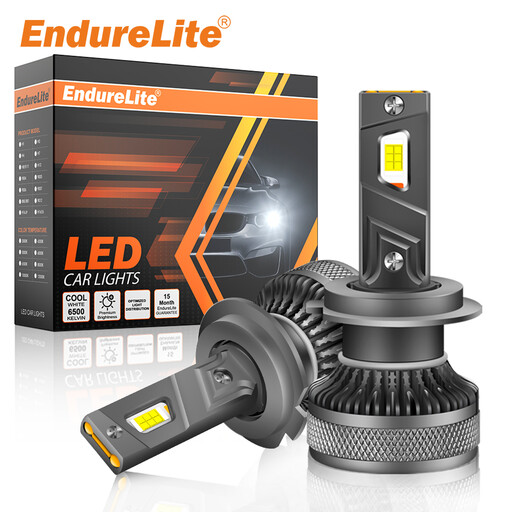
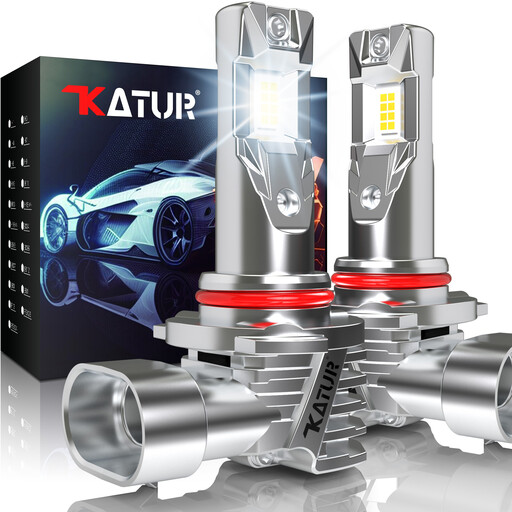

If the products above aren't quite what you're looking for, or if you need a different bulb type for your vehicle, there are many other lighting solutions available.
? Explore our full range of automotive Fans and Lights to find the perfect fit for your car.
Yes, 9005 and HB3 are different names for the same type of bulb fitting. They are completely interchangeable. You will often see them listed together as "9005/HB3" to avoid confusion.
It depends on your vehicle. Many modern cars (typically from 2007 onwards) use a CANbus system. While many CANbus ready LED bulbs have built-in components to prevent errors, some sensitive vehicles may still require an additional decoder or resistor. It's always a good idea to check if your specific car model is known for being sensitive to LED upgrades.
For most vehicles, replacing 9005 bulbs is a straightforward task. These bulbs are designed for a plug and play headlight upgrade, meaning you simply unplug and remove the old halogen bulb and then insert and connect the new LED bulb. No special tools or wiring are usually required. However, access to the headlight housing can vary between car models, so it's wise to consult your vehicle's manual first.