
24/7 Customer Support

Free returns

Same-day & Next-day Delivery

Quality Guaranteed

Unlock Your Welcome Offers: FREE Delivery | Up to 80% OFF | Free 30-day JoyPlus trial
Download the APP
From capturing a thrilling mountain bike descent in the Peak District to documenting a family holiday on the Cornish coast, the right action camera makes all the difference. These compact, durable devices are designed to go where your smartphone cannot. But with so many features and specifications on the market—from 4K resolution to advanced stabilisation—choosing the right one can feel overwhelming.
This guide is designed to help you understand the key features to look for in an action camera. We will cut through the marketing hype to provide clear, practical advice and offer a few recommendations to match your specific needs and budget, whether you're a seasoned vlogger, a weekend adventurer or simply looking to capture life's moments in motion.
Before diving into specific models, it helps to understand the core features that define a quality action camera. Focusing on these three areas will ensure you find a camera that performs well for your intended use.
While many cameras now offer 4K recording, not all 4K action camera models are created equal. The sensor size plays a significant role in image quality, especially in low-light conditions. A larger sensor can capture more light, resulting in clearer, less grainy footage at dawn, dusk or indoors. Also, consider the frame rates available. A higher frame rate (like 60fps or 120fps) allows for smooth slow-motion playback, which is excellent for highlighting key moments in your action sequences.
For any kind of moving shot, a camera with image stabilisation is essential. Electronic Image Stabilisation (EIS) is a common feature that smooths out bumps and shakes, which is crucial when using a sports camera for activities like cycling, skiing or as a motorcycle camera.
Durability is another key factor. Look for a camera that is built to withstand the elements. Many models are now natively waterproof, but the depth rating can vary. A waterproof camera rated to 10 metres is fine for snorkelling, but for deeper dives, you will likely need an additional housing. Check for dust and shock resistance if you plan to use it in particularly rugged environments.
An action camera is only useful if it has the power to capture your adventure. Battery performance can vary significantly based on the recording resolution, temperature and whether you are using features like Wi-Fi. Some models offer extended-life batteries or bundles with multiple batteries, which are ideal for long days of filming.
Features like dual screens (one on the back for control and one on the front for framing selfies or vlogs) and intuitive touchscreen menus can make a camera much easier to use on the go. For a vlogging camera, good audio capabilities and the option to connect an external microphone are also important considerations.
After analysing the current market, we have selected a few standout models that offer a great combination of features, performance and value for different types of users in the UK.
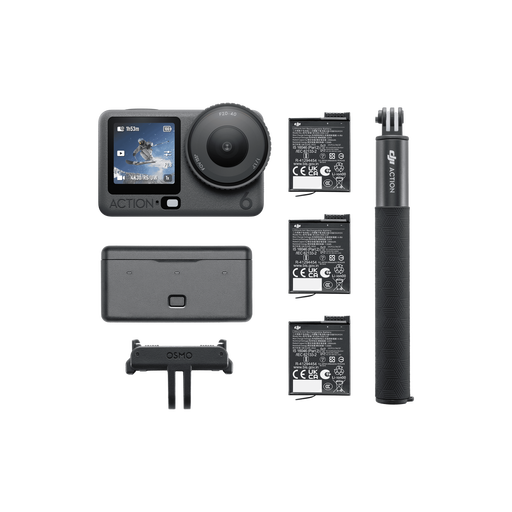
DJI Osmo Action 6 Adventure Combo Action Camera
Why It Stands Out: The DJI Osmo Action 6 is a versatile powerhouse, particularly for those who film in varied lighting. Its variable aperture (f/2.0–f/4.0) and large 1/1.1″ square sensor work together to deliver clear, vibrant footage whether you are shooting in bright sunlight or during the golden hour. The Adventure Combo is especially practical, providing three batteries to ensure you have enough power for extended outdoor filming sessions. Its ability to easily connect to two DJI microphone transmitters also makes it a strong contender for vloggers seeking high-quality audio.
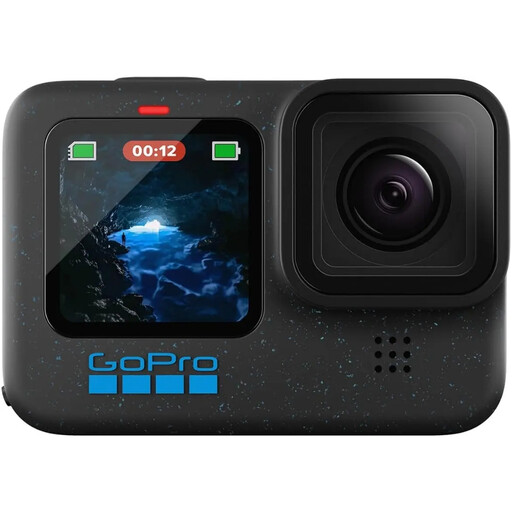
Why It Stands Out: The GoPro HERO12 Black continues to set a high standard for action cameras, particularly with its stabilisation technology. The HyperSmooth 6.0 system provides incredibly smooth footage, and the 360° Horizon Lock keeps your video level even if the camera rotates completely. It captures stunningly detailed video up to 5.3K resolution and introduces HDR (High Dynamic Range) for more vivid colours. Its rugged body is natively waterproof to 10 metres, making it a reliable underwater camera for snorkelling and water sports without needing an extra case.
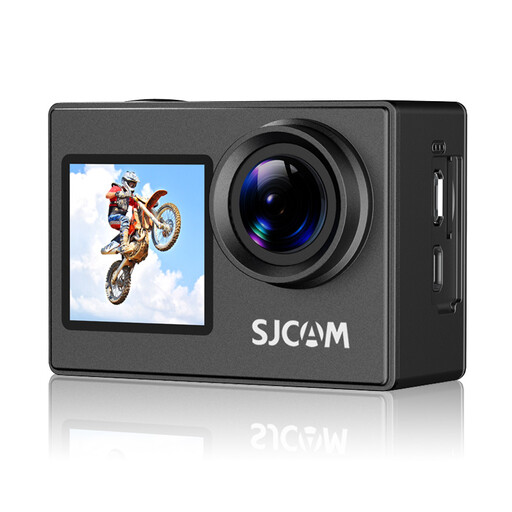
SJCAM SJ4000 Dual Screen Action Camera
Why It Stands Out: For those looking for a capable camera without a premium price tag, the SJCAM SJ4000 is an excellent entry point. It offers features found in more expensive models, such as dual screens for easy framing and 4K video (interpolated). It is incredibly compact and lightweight, and the included waterproof case allows for use down to 30 metres, making it a great choice for diving holidays. While its stabilisation and image quality may not match the premium models, it offers fantastic value for casual use.
If our top recommendations don't quite fit your needs or if you're interested in exploring cameras with different features, why not browse our wider collection? Discover a variety of models in our Bluetooth digital camera category.
What is the most important feature in an action camera? This depends entirely on your primary use. For fast-moving sports like mountain biking or skiing, image stabilisation is crucial for usable footage. For vlogging or more cinematic shots, overall image quality (driven by the sensor, lens and processing) is more important. For diving, a robust waterproof camera rating and good low-light performance are non-negotiable.
Do I really need a 4K action camera? While 1080p is sufficient for many social media platforms, a 4K action camera provides significant benefits. It captures far more detail, which gives you the flexibility to crop, zoom and reframe your shots in editing without a noticeable loss in quality. It also helps to future-proof your footage as 4K screens become increasingly common.
How deep can an underwater camera go? This varies by model. Many modern action cameras are natively waterproof to a depth of around 10 metres (33 feet), which is suitable for swimming, snorkelling or poolside fun. For deeper activities like scuba diving, you will almost always need a dedicated waterproof housing. These cases can extend the depth rating to 30, 40 or even 60 metres. Always check the manufacturer's specifications for both the camera and any housing you plan to use.