
24/7 Customer Support

Free returns

Same-day & Next-day Delivery

Quality Guaranteed

Unlock Your Welcome Offers: FREE Delivery | Up to 80% OFF | Free 30-day JoyPlus trial
Download the APP
As a cyclist in the UK, you know that visibility is just as important as impact protection, especially during those early morning commutes, late evening rides or on overcast days. Choosing the right helmet is a critical safety decision. An adult cycling helmet with a light offers an integrated solution, making you more visible to others on the road.
This guide is designed to help you navigate the key features to look for. We'll break down what matters in a modern helmet and share some of our top recommendations to help you find a model that suits your cycling needs.
Before choosing, it's helpful to understand a few key features. Considering these points will ensure you select a helmet that offers protection, visibility and comfort for your rides.
A helmet's primary job is protection. In the UK, helmets should meet specific safety standards. Look for certifications like CPSC (U.S. Consumer Product Safety Commission) or ASTM (American Society for Testing and Materials), which indicate the helmet has passed rigorous impact testing. Some helmets also feature a MIPS (Multi-directional Impact Protection System). This is a low-friction layer inside the helmet designed to reduce rotational forces on the brain during an angled impact, offering an additional layer of protection.
The main advantage of these helmets is the built-in light. Consider the following:
A helmet is only effective if it's worn correctly and is comfortable enough for regular use. An adjustable bike helmet is essential. Look for a dial-fit system at the back to fine-tune the circumference and adjustable chin straps for a secure fit. Good ventilation, achieved through multiple air vents, is also crucial for keeping you cool on longer or more strenuous rides.
Here are a few helmets that balance visibility, protection and practical features for different types of riders.
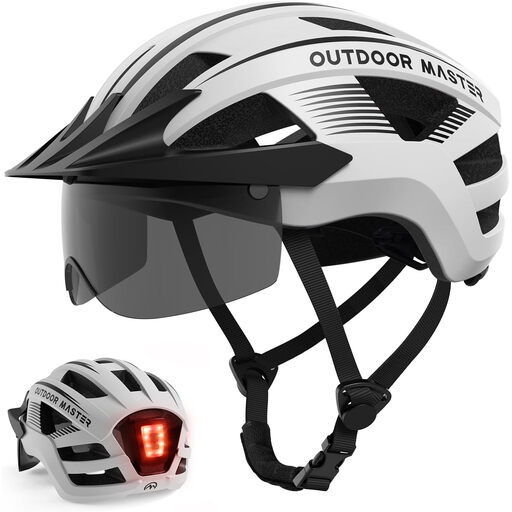
Why It Stands Out: This helmet is a complete package for the urban commuter or e-bike rider. It combines safety certifications with practical add-ons like magnetic goggles and a sun visor, alongside an integrated rear light for visibility.
Pros:
Who is it for? This is a strong choice for daily commuters and e-bike helmet users who value convenience and having visibility, eye protection and sun shielding all in one product.
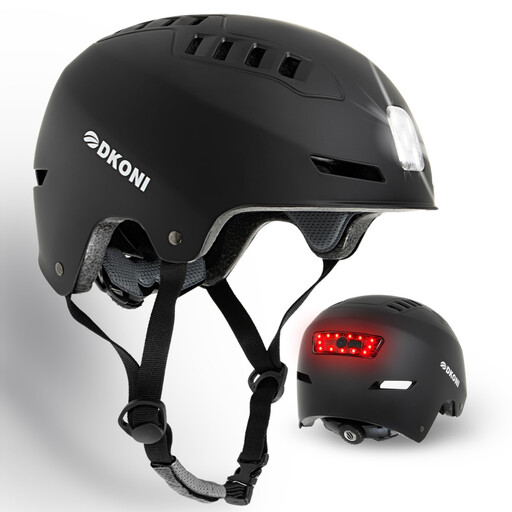
Why It Stands Out: The DKONI HS-158 focuses squarely on 360-degree visibility, featuring both front and rear LED lights. This makes it particularly suitable for navigating busy city streets at any time of day.
Pros:
Who is it for? Ideal for the safety-conscious urban cyclist who rides in heavy traffic or low-light conditions and wants to ensure they are seen from all angles.
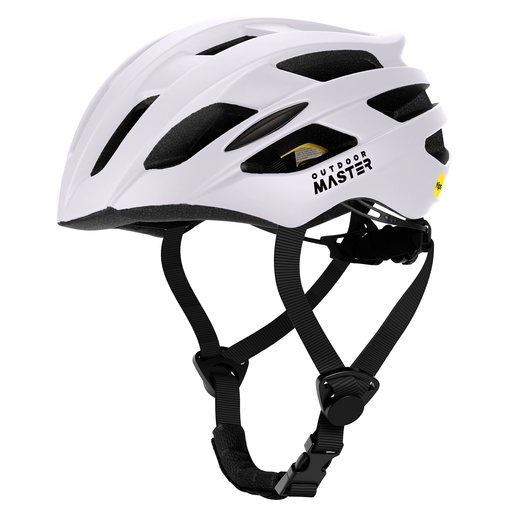
Why It Stands Out: While this helmet does not have an integrated light, it is included here for riders who prioritise the highest level of impact protection. Its key feature is the MIPS technology, which is a leading system for managing rotational forces during a crash.
Pros:
Who is it for? This helmet is for the dedicated road cyclist or enthusiast who prioritises MIPS protection and may prefer to use their own high-powered, separate lighting setup for tailored visibility.
If you haven't found the perfect fit for your needs, or if you're interested in exploring different styles and features, there are many other helmets available.
Explore our full collection of cycling headwear to see more choices.
1. Are cycling helmets with built-in lights worth it? For many cyclists, especially commuters, the answer is yes. They offer a convenient, all-in-one solution to enhance visibility. An integrated light is always on your helmet, so you never forget it, and it's positioned high up, making you more noticeable in traffic.
2. What is MIPS in a cycling helmet and do I need it? MIPS stands for Multi-directional Impact Protection System. It's a technology within the helmet designed to reduce the rotational motion transferred to the brain from angled impacts. While all certified helmets provide good protection, a MIPS cycling helmet is considered to offer an additional measure of safety, which many riders find valuable.
3. How do I find the right size for an adjustable bike helmet? To find your size, use a flexible measuring tape to measure the circumference of your head. Wrap it about one inch above your eyebrows and ears, keeping the tape level from front to back. Compare this measurement in centimetres to the sizing guide provided for the specific helmet you are considering. A proper fit should be snug but not tight.