Choose a compact desk circulator if you can place it securely and direct air around the room; consider a height-adjustable pedestal model when several occupants need airflow across different areas. A cordless compact fan makes more sense when storage and socket access limit placement, but check whether it can serve everyone who needs the airflow. None of these fans supplies fresh outdoor air or lowers the room’s overall air temperature like an air conditioner.
Who needs which kind of airflow?
Light sleepers and home workers
If the same room is used for sleep, calls and focused work, consider noise at the speed you will actually use, not just the advertised minimum. A choice of lower speeds, a timer and controls you can reach from a bed or desk may matter. Which? assesses fan noise, airflow settings and ease of use in its UK fan testing.
People sharing one small room
Air aimed continuously at one chair may not suit someone working elsewhere or resting nearby. Look at where the fan can stand and whether tilt or oscillation lets you direct airflow across the occupied areas without leaving one person in a constant draught.
Renters short of space or sockets
A fan that moves between a desk, bedside surface and storage space needs a suitable footprint and stable placement. If a socket is not available where you need the fan, check its charging arrangement and runtime at the speed you expect to use.
What matters when choosing?
Start with where the fan can stand and who needs to feel the airflow. Then check its direction controls and noise at a useful speed; if the underlying problem is stale air or room temperature, consider whether a circulator addresses it at all.
| Concern |
What to check |
Who this matters to |
| Noise during sleep and work |
Compare speed controls, timers and noise information for the setting that provides enough airflow; a minimum dB figure describes only a low setting. |
If I work or sleep in the room, I need air movement without a distracting sound at the speed I use. Around 36% of consumers put quiet, usable airflow first. |
| Airflow across occupied areas |
Check tilt, horizontal and vertical oscillation, and whether the fan can stand high enough to direct air past furniture. |
When someone else uses the sofa or bed, I want air to move beyond my own seat without directing a constant breeze at them. For roughly 29% of consumers, distributing airflow is the primary concern. |
| Footprint and portability |
Measure the intended space and check the base, storage size and power arrangement; for cordless use, check runtime at the intended speed. |
My fan needs to move between limited surfaces or be put away when the room is in use. Around 21% of consumers place space and portability first. |
| The right appliance for the problem |
Decide whether you need moving air, fresh-air ventilation, filtration or a lower room temperature before comparing fan features. |
If the room stays stuffy or too hot, moving its existing air may not solve what bothers me. Roughly 14% of consumers primarily need to establish whether a circulator is the right appliance. |
Buying pitfalls
-
Using a fan in place of ventilation
A circulator moves air already in the room. Department for Education guidance describes ventilation as bringing in fresh outdoor air and removing stale indoor air; a recirculating fan does not do that by itself.
If persistent stuffiness is the problem, check the room’s windows, vents and installed ventilation rather than relying on fan placement alone.
-
Choosing by the lowest advertised noise figure
Manufacturers’ minimum dB figures relate to low settings and do not tell you how loud a fan will be when it moves enough air for several people.
Compare the available speeds and controls, and look for noise information at the setting you expect to use for sleep or calls. Which? includes noise measurements in its UK fan testing.
-
Forgetting the pedestal base and cable
An adjustable-height fan may direct air past furniture, but its base and cable also need room in a narrow living or sleeping area.
Measure the proposed floor space and plan a stable position that does not obstruct movement. Follow the Health and Safety Executive’s advice to take portable electrical equipment out of use if its plug or cable is damaged.
Brands to consider for these fan formats
Meaco
Its cited range includes a desk circulator and a compact battery model, relevant to different space and socket constraints.
- Meaco lists 12 speeds and horizontal and vertical oscillation for the MeacoFan 1056 desk model. It lists the portable Sefte 6 at 1.7 kg.
- Meaco’s quoted 29 dB minimum for the 1056 and 22 dB minimum for the Sefte 6 do not establish noise at the speed needed in your room.
Duux
The Whisper 3 is a pedestal option when adjustable height and airflow direction matter more than keeping floor space clear.
- Duux lists 26 settings, a height range of 73–95 cm, remote control and horizontal and vertical oscillation for the UK Whisper 3.
- Its quoted 13 dB minimum is a manufacturer figure for a low setting; check the noise you can expect at a useful airflow level.
Dreo
The TurboPoly 508S is a pedestal circulator to examine if you need adjustable height and directional control.
- Dreo lists horizontal and vertical oscillation of 120 degrees, nine speeds, a remote and a timer of up to 12 hours for the 508S.
- The stated noise level as low as 20 dB is a manufacturer claim, not a like-for-like comparison with other fans at the airflow you need.
Dyson
The Purifier Cool PC3 belongs to a different category: consider it only if filtration is an explicit requirement alongside airflow.
- Dyson specifies HEPA H13-grade filtration and oscillation of up to 350 degrees for the PC3.
- A purifying fan still does not bring fresh outdoor air into the room. Check the filter requirements and whether filtration addresses your concern before choosing this category.
Compact cordless options on Joybuy
These two portable fans are options to examine when a small surface, easy relocation or charging away from the intended position matters most. For shared-room airflow, check their direction controls and reach before relying on either to serve several occupied areas.
 No image available
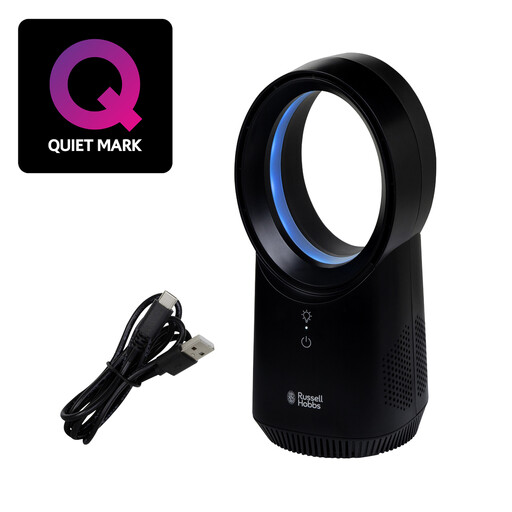
Russell Hobbs RHBLDLUSB25B Wireless Bladeless Desk Fan, Black
A desk-format option for personal airflow where surface space and moving the fan between positions matter.
The product name specifies three speeds and USB charging. Check its airflow direction and reach if more than one person needs the breeze, and its runtime and noise at your intended speed if you plan to use it overnight or during calls.
View on Joybuy
 No image available
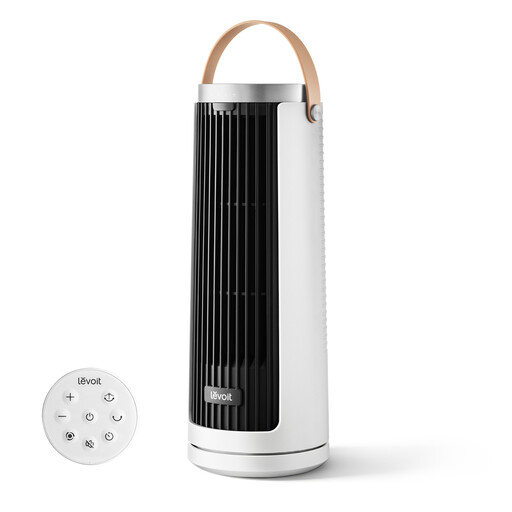
Levoit Windi Mini Plus Portable Tower Fan
A portable tower-format option to consider when you want to relocate airflow between limited spaces.
The product name specifies USB Type-C recharging and multiple airflow modes. Check its dimensions, direction controls and reach for your intended position, plus runtime and noise at the setting you would use for sleep or work.
View on Joybuy
Frequently asked questions
Will an air circulator lower my room’s temperature?
No: a fan moves air and may make you feel cooler, but it does not lower the room’s overall air temperature like an air conditioner. If reducing room temperature is the requirement, consider whether you can accommodate a portable air conditioner’s exhaust hose and window arrangement, as Joybuy Insights explains in its UK fan guidance.
Can a circulator fix a stuffy room?
Not on its own: a recirculating fan does not bring in fresh outdoor air or remove stale air. Department for Education guidance describes those exchanges as part of ventilation, so check the room’s windows, vents and installed ventilation if stuffiness is your main concern.
What should I check before cleaning a mains-powered fan?
Switch it off and unplug it before cleaning, following the product’s instructions. Check the plug and cable before use; the Health and Safety Executive advises taking portable electrical equipment out of use if a plug or connector is damaged.


