
24/7 Customer Support

Free returns

Same-day & Next-day Delivery

Quality Guaranteed

Unlock Your Welcome Offers: FREE Delivery | Up to 80% OFF | Free 30-day JoyPlus trial
Download the APP
Choosing the best air purifier for home use is less about selecting the model with the biggest number on the box and more about matching filtration, airflow and controls to your room. UK homes can face pollen near open windows, cooking odours, pet hair, condensation-related mustiness and smoke from nearby roads or neighbours.
Several common buying traps can lead to wasted money:
Clean Air Delivery Rate (CADR) indicates how quickly a purifier delivers filtered air, measured in cubic metres per hour. A higher CADR generally suits a larger room or a household that wants faster air circulation.
For a bedroom or small office, around 120–160m³/h may be suitable depending on the room dimensions and ceiling height. Medium rooms may benefit from 200–300m³/h, while a large-room air purifier with 450m³/h or more can be more appropriate for bigger living areas.
Do not rely solely on a manufacturer’s stated floor area. Measure the room, consider open doorways and remember that a purifier in one room will not clean an entire multi-room home equally.
A practical air purifier with activated carbon filter combines particle filtration with a carbon layer designed to help reduce household odours from cooking, pets and smoke. A pre-filter can capture larger dust and hair before they reach the main filter.
An H13 HEPA air purifier can be attractive for households prioritising fine-particle filtration, but check the complete system rather than the H13 label alone. Some models use H12, H11 or proprietary filtration, and performance also depends on airflow, sealing and filter condition.
Check:
For bedrooms, look for a quiet air purifier for bedroom use with a published sleep-mode noise figure. Remember that the quietest setting may provide less airflow than the maximum setting.
An air purifier with air quality sensor can automatically adjust fan speed in response to detected particles. PM2.5 displays are useful for tracking changes after cooking, cleaning or opening windows, but sensor readings are not a substitute for professional indoor-air assessment.
A smart air purifier with Wi-Fi control can be convenient if you want to schedule operation, check air quality remotely or connect the appliance to a smart-home routine. If you prefer simple operation, touch controls, auto mode and a timer may be enough.
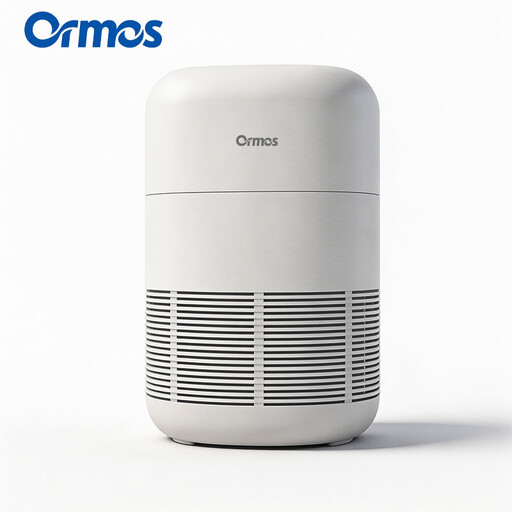
Why This Fits Their Persona: A practical starting point for a bedroom, study or smaller living room where straightforward controls and air-quality feedback matter.
Its listed CADR, H12 HEPA and activated carbon filtration provide clearer specification details than relying on vague “fresh air” wording alone.
150m³/h CADR, TVOC and PM2.5 sensor, auto and sleep modes, with stated operation as low as 36dB.
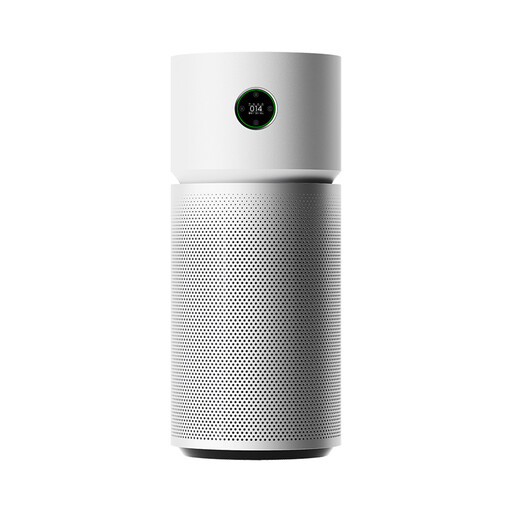
Why This Fits Their Persona: Designed for households wanting high airflow, detailed monitoring and app or voice control across a larger indoor space.
Its product details specify particle and pollen CADR figures, sensor types, filter compatibility and operating modes.
600m³/h particle CADR, PM2.5/PM10 sensing, activated carbon filtration, app control and a stated sleep-mode figure of 20.2dB(A).
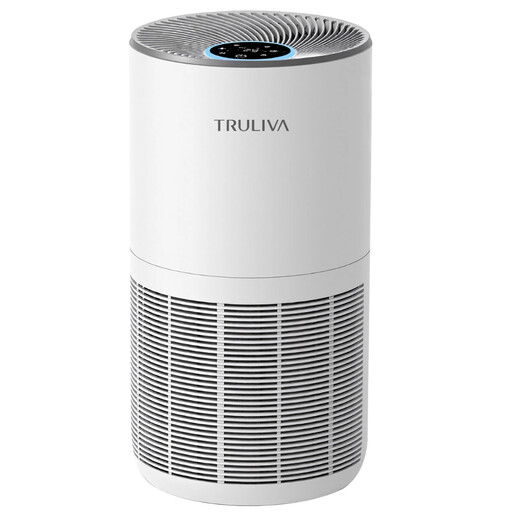
Why This Fits Their Persona: A suitable direction for larger living rooms, pet areas or homes where higher airflow and odour-focused filtration are priorities.
The listing gives a CADR of 450m³/h and a stated working area of 32–55m², rather than presenting an unsupported room-size promise.
H13 HEPA and activated carbon filtration, PM2.5 display, 360-degree air intake, timer and child-lock functions.
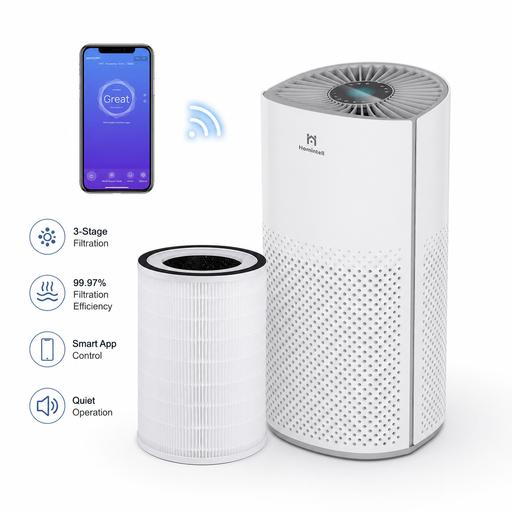
Why This Fits Their Persona: Useful for renters, families and office users who want remote scheduling and phone-based monitoring in a room up to the listed size.
It combines Wi-Fi control with stated CADR, sensor and filter information, so app functionality does not replace core product specifications.
200m³/h CADR, H13 HEPA and activated carbon filter, PM2.5 display, Wi-Fi app control and a stated sleep-mode figure as low as 20dB.
Place the purifier on a stable surface with clear space around its inlet and outlet. Avoid positioning it behind curtains, under shelves or directly against furniture. Remove all plastic packaging from a replacement filter before switching the appliance on.
For lower running costs, use auto mode where available and reserve high speed for cooking, cleaning or smoky conditions. Vacuum or wash only the parts the manual identifies as washable. Main HEPA and carbon filters usually require replacement rather than washing.
Before buying, check the appliance’s rated power, timer options and replacement-filter price. A model using around 23–60W may have different running costs depending on daily use, fan speed and the household electricity tariff.
We have compiled a complete, real-time list of products that fully satisfy these strict selection criteria and UK safety regulations.
An air purifier for allergies and pets can capture airborne particles such as dust, pollen and pet dander when correctly sized and maintained. It will not remove allergens from carpets, bedding or upholstery, so regular cleaning and ventilation remain important.
Many households use sleep mode overnight, particularly with a quiet air purifier for bedroom use. Check the stated noise level, fan setting and timer. Keep the unit away from bedding and ensure the air vents remain unobstructed.
The interval varies with usage, indoor pollution and filter design. Product listings may state periods such as several months or a number of operating hours. A filter reminder is helpful, but reduced airflow, visible loading or persistent odours can also indicate that the filter needs attention.