
24/7 Customer Support

Free returns

Same-day & Next-day Delivery

Quality Guaranteed

Unlock Your Welcome Offers: FREE Delivery | Up to 80% OFF | Free 30-day JoyPlus trial
Download the APP
Choosing the best air purifier for home use is less about buying the most expensive model and more about matching airflow, filtration and maintenance to the room where it will operate. UK homes vary widely, from compact bedrooms and rented flats to open-plan living spaces with pets, cooking odours or traffic-related pollution.
Marketing descriptions can make every appliance sound equally capable. However, a few details determine whether an air purifier is practical for everyday use.
Coverage figures can be misleading because manufacturers may use different assumptions about ceiling height and air changes per hour. A purifier described for a large room may only achieve that figure at a lower air-change rate.
Use CADR, or Clean Air Delivery Rate, as a more useful comparison. Measured in cubic metres per hour, CADR indicates how quickly filtered air is delivered. For a bedroom or office, a lower CADR may be sufficient; open-plan areas usually need substantially more airflow.
A HEPA air purifier can help capture fine airborne particles, but the filter is only one part of the system. A washable or replaceable pre-filter catches larger dust and hair, while an activated carbon filter is more relevant to household odours and some gases.
Check whether replacement filters are available and how often they should be changed. A low-priced purifier can become costly if compatible filters are difficult to source.
Noise figures normally refer to sleep mode or the lowest fan speed. Maximum output can be considerably louder. If you need an air purifier for bedrooms, compare both minimum and maximum noise levels where the information is available.
Also consider display brightness, night-light features and whether the purifier remembers its last setting after being switched off.
Match the purifier to the room rather than the entire property. A practical approach is to prioritise the room where you spend the most time, such as a bedroom, lounge or home office.
Keep doors and windows closed while the purifier is operating if you want it to clean the room efficiently. It should not replace normal ventilation or address the source of persistent damp, mould or smoke.
For pollen, dust and pet dander, look for a stated H13 HEPA filter or equivalent particulate filtration specification. For a home with cats or dogs, a pre-filter that captures hair can help reduce the load on the main filter.
An air purifier for pets should also include activated carbon if odours are a concern. Remember that carbon performance depends on the quantity and design of the carbon layer, not simply the words “carbon filter” on the packaging.
A smart air purifier with Wi-Fi control may be useful if you want to adjust settings remotely or connect the appliance to a voice assistant. Built-in PM2.5 sensors and colour indicators can show changes in air quality, but sensor readings should be treated as guidance rather than a complete assessment of indoor air.
To estimate electricity cost, use:
Power in kW × hours used × your electricity tariff
Filter replacement is another ongoing cost. Check the filter-change reminder, expected replacement interval and whether the manufacturer specifies an original replacement filter.
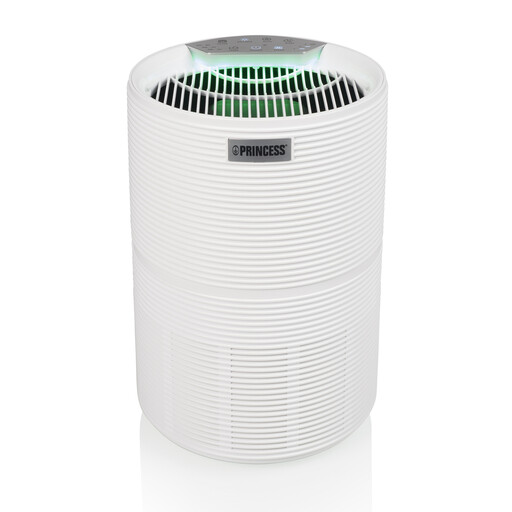
Why This Fits Their Persona: A compact option for renters, bedrooms and medium-sized rooms, with app control and a 2-year manufacturer’s warranty.
Its stated CADR of 160m³/h gives a clearer basis for room matching than relying only on promotional coverage wording.
3-in-1 pre-filter, activated carbon and H13 HEPA system; app and voice-control compatibility.
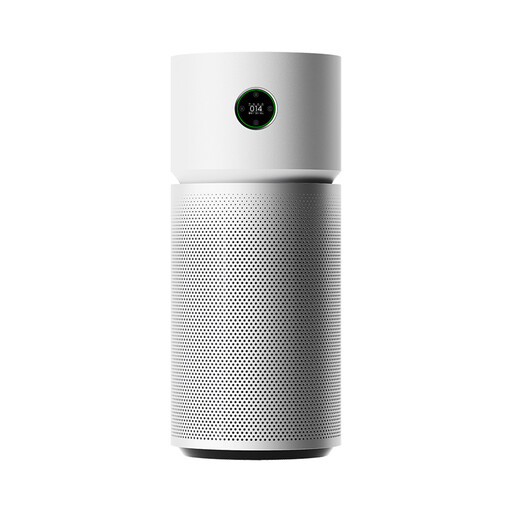
Why This Fits Their Persona: Suited to larger UK living spaces where strong airflow, remote monitoring and detailed sensor information are priorities.
Its 600m³/h particle CADR is clearly stated, while the 125m² coverage figure includes specific air-change assumptions.
PM2.5/PM10 sensing, OLED display, activated carbon filtration and Xiaomi Home app control.
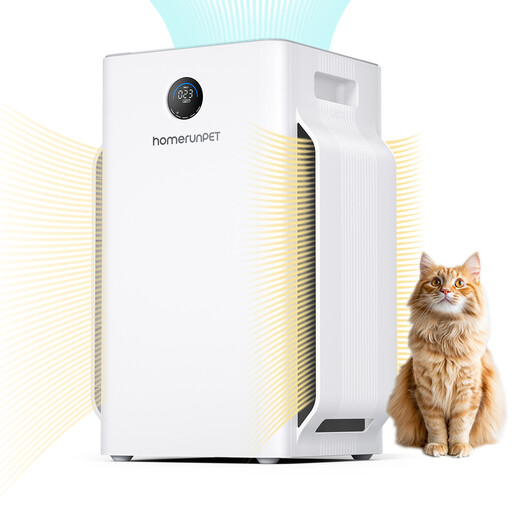
Why This Fits Their Persona: Designed around pet households, especially where hair, dander and everyday odours require regular attention.
It specifies a washable pre-filter and recommends cleaning it every two weeks, helping address the maintenance demands of pet homes.
CADR up to 40m², activated carbon filtration, air-quality monitoring and sleep mode as low as 25dB.
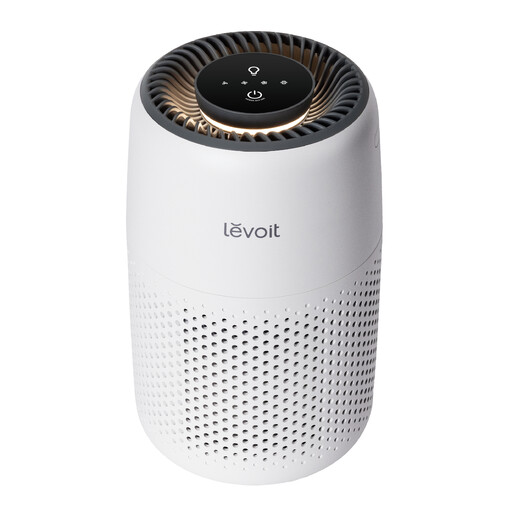
Why This Fits Their Persona: A small personal purifier for a bedside table, nursery or home office where low power use and compact placement matter.
Its stated room size is up to 15m², making it less likely to be overextended in a large lounge.
3-stage filtration, noise from 25dB and approximately 7W power consumption.
We have compiled a complete, real-time list of products that fully satisfy these strict selection criteria and UK safety regulations.
Place the appliance on a stable, level surface with clear space around the inlet and outlet. Follow the product manual’s clearance guidance; several models specify at least 20–50cm from walls, curtains and furniture.
Clean a reusable pre-filter as directed, but do not wash a non-washable HEPA or carbon filter. Always unplug the appliance before cleaning or replacing filters. If choosing an air purifier with UV sterilisation or an ioniser, read the safety instructions carefully and use the feature only as intended.
It can be practical if the purifier has a suitable sleep mode, a clearly stated low noise level and a timer or automatic mode. Check the room size and keep the unit away from the bed’s immediate edge, curtains and other obstructions.
It depends on usage, indoor dust levels, pets and the filter design. Many products indicate approximately six to twelve months, while some use running-hour reminders. Follow the product manual rather than waiting for a noticeable odour or drop in airflow.
Wi-Fi connectivity has a small electrical demand, but fan speed generally has a greater effect on consumption. Compare the appliance’s rated wattage and estimate costs using your electricity tariff. Automation may also reduce unnecessary high-speed operation when used correctly.