
24/7 Customer Support

Free returns

Same-day & Next-day Delivery

Quality Guaranteed

Unlock Your Welcome Offers: FREE Delivery | Up to 80% OFF | Free 30-day JoyPlus trial
Download the APP
With concerns about pollen, city pollution and indoor allergens on the rise, many of us are looking for ways to improve the air quality within our homes. An air purifier can be a significant step towards creating a cleaner, more comfortable living environment. However, the market is filled with technical jargon and a vast array of models, making it difficult to know where to start.
As the Joybuy Product Recommendation Officer, my role is to help you navigate these choices. This guide will break down the key features to consider and present a selection of air purifiers suited to different needs and spaces, helping you find a practical solution for your home.
Before diving into specific products, let's cover a few essential factors to consider during your search. Understanding these will help you select an air cleaner that effectively meets your household's requirements.
One of the most important specifications is the Clean Air Delivery Rate (CADR). This metric, measured in cubic metres per hour (m?/h), tells you how quickly the purifier can clean the air in a specific room size. A higher CADR is necessary for a large room air purifier, while a smaller unit will suffice for a bedroom or home office. As a general rule, look for a CADR that can process the air in your room approximately five times per hour for effective cleaning.
The heart of any air purifier is its filter. The most common and widely recognised standard is the HEPA air purifier. HEPA (High-Efficiency Particulate Air) filters are designed to capture at least 99.97% of airborne particles down to 0.3 microns in size. This includes common irritants like dust, pollen, pet dander and mould spores, making them an excellent choice for an air purifier for allergies. Many units also include an activated carbon filter, which is particularly effective at absorbing odours, gases and volatile organic compounds (VOCs), making them a good option as an air purifier for smoke.
If you plan to use the device in a bedroom or office, a quiet air purifier for bedroom use is essential. Check the noise level, measured in decibels (dB), especially for the lowest fan setting or a dedicated 'sleep mode'. Modern units can operate at whisper-quiet levels. Additionally, a smart air purifier can offer convenience through app control, automatic fan speed adjustments based on real-time air quality sensors and filter life monitoring, providing a more hands-off experience.
Based on their features, intended use and specifications, here are our recommendations to help you start your search.
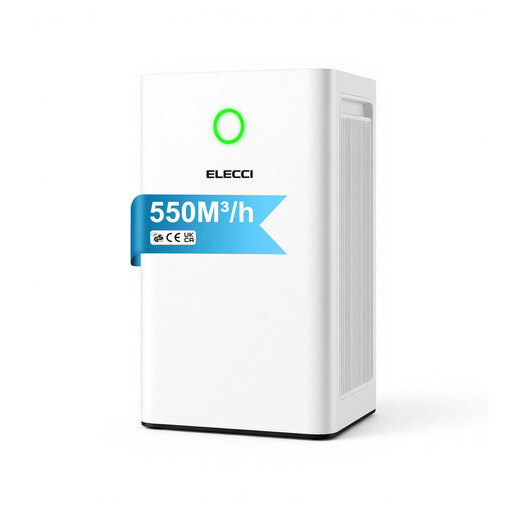
Why It Stands Out: The ELECCI model is built for performance in substantial areas. Its impressive CADR of 550m?/h allows it to efficiently circulate and clean the air in rooms up to 120m?, making it suitable for open-plan living rooms, large offices or homes with high ceilings.
Pros:
Who is it for? This unit is an excellent choice for households with large, open living areas or for individuals who need to manage significant airborne contaminants, such as smoke or high concentrations of allergens from pets.
View Details for the ELECCI Air Purifier
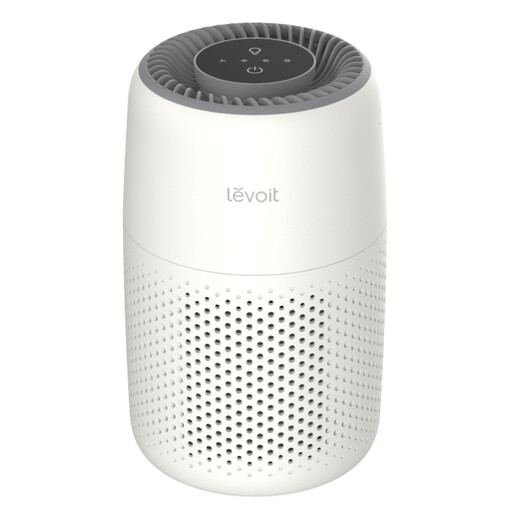
Why It Stands Out: The Levoit Core Mini prioritises a compact footprint and quiet performance without compromising on filtration. Its small size allows it to fit discreetly on a nightstand or desk, and the integrated aroma pad is a unique feature for personalising your space.
Pros:
Who is it for? This is a great option for anyone needing an air cleaner for dust and pollen in a personal space. Its quiet operation makes it particularly well-suited for bedrooms and nurseries.
View Details for the Levoit Core Mini
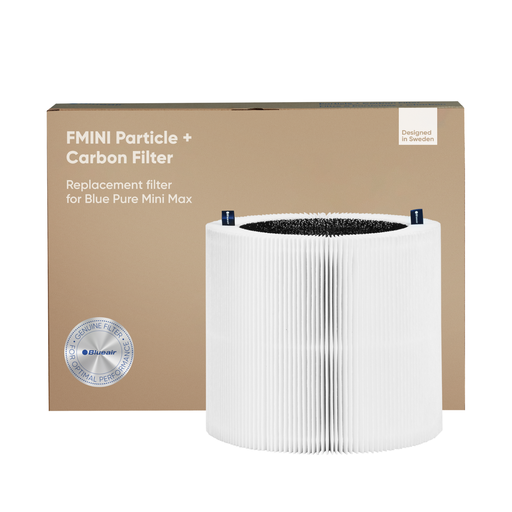
Why It Stands Out: The BLUEAIR 511i Max combines intelligent features with efficient filtration and a stylish, Scandinavian-inspired design. Its smart capabilities allow for automated, hassle-free air purification tailored to your home's conditions.
Pros:
Who is it for? This smart air purifier is ideal for tech-savvy individuals who appreciate automated control and want a device that integrates seamlessly into their smart home ecosystem for medium-sized rooms.
View Details for the BLUEAIR 511i Max
While these recommendations cover a range of common needs, your specific requirements might call for a different solution. If you're looking for different sizes, features or replacement filters, there are many other models to consider.
For a wider selection of filtration solutions, explore our full range of HEPA filters and purifiers to find the perfect match for your home.
1. Do air purifiers really work for allergies? Yes, they can be very effective. An air purifier for allergies equipped with a HEPA filter is specifically designed to capture tiny airborne allergens such as pollen, dust mites, mould spores and pet dander. By removing these particles from the air, it can help reduce allergy symptoms and create a more comfortable indoor environment.
2. How often do I need to change the filter in an air purifier? Filter lifespan varies depending on the model, air quality and how often you use the purifier. On average, most HEPA and carbon filters require replacement every 6 to 12 months. Some models, like the BLUEAIR 511i Max, feature smart tracking that will notify you when it's time for a change. Always refer to the manufacturer's guidelines for your specific unit.
3. Can an air purifier remove mould? An air purifier can capture airborne mould spores, preventing them from circulating in your home and potentially settling on surfaces. However, it cannot eliminate the source of the mould, which is typically caused by dampness or a leak. It is a tool for managing the air quality, but the underlying moisture problem must be addressed separately to solve a mould issue completely.