
24/7 Customer Support

Free returns

Same-day & Next-day Delivery

Quality Guaranteed

Unlock Your Welcome Offers: FREE Delivery | Up to 80% OFF | Free 30-day JoyPlus trial
Download the APP
Choosing the best air purifier for UK homes is not simply a matter of selecting the highest number on a product page. Room size, airflow, filter design, noise and replacement costs all affect whether a purifier remains useful after purchase.
At Joybuy, the Product Recommendation Officer’s approach is straightforward: separate measurable specifications from promotional language, then match each model to the way it will actually be used.
A product may advertise a high particle-capture percentage, but this does not show how quickly it cleans a room. CADR (Clean Air Delivery Rate) measures the volume of filtered air delivered per hour. A HEPA filter with a low airflow rate may take longer to circulate air throughout a larger living room.
Coverage figures can be calculated using different room heights and air-change assumptions. A purifier listed for 50m² may perform differently in an open-plan home, a room with high ceilings or a space with doors and windows frequently open. Compare the stated CADR, not just the headline coverage area.
A purifier that is too loud for a bedroom may end up switched off overnight. Equally, an inexpensive appliance can become costly if replacement filters are difficult to find. Check sleep-mode noise, filter-change reminders and the ongoing availability of compatible filters before buying.
A HEPA air purifier is designed to capture fine airborne particles such as dust and pollen. Several products listed below use H13-grade filtration, while others combine a pre-filter, particle filter and activated carbon layer.
An air purifier with activated carbon filter can help reduce household odours from cooking, pets and smoke. Carbon filtration is not the same as particle filtration, so a useful design combines both rather than relying on either layer alone.
For homes with pets or seasonal sensitivities, look for:
CADR is one of the most practical comparison points:
For example, the Homintell 300m³/h model lists coverage of up to 36m², while the Xiaomi model lists a 600m³/h particle CADR and coverage of up to 125m² based on its stated testing conditions. These figures should be treated as product specifications rather than a guarantee for every home layout.
A quiet air purifier for bedroom use should offer a dedicated sleep mode. Published minimum noise levels vary, but remember that maximum-speed noise can be considerably higher.
An air purifier with air quality sensor can automatically adjust fan speed or show changing conditions through a display or colour indicator. Wi-Fi is useful if you want an air purifier with Wi-Fi control that can be managed remotely, but it is not essential for effective manual operation.
Before use, place the unit on a stable surface with clear space around the air inlet and outlet. Follow the supplied instructions, use the correct UK power connection and unplug the appliance before cleaning or changing its filter.
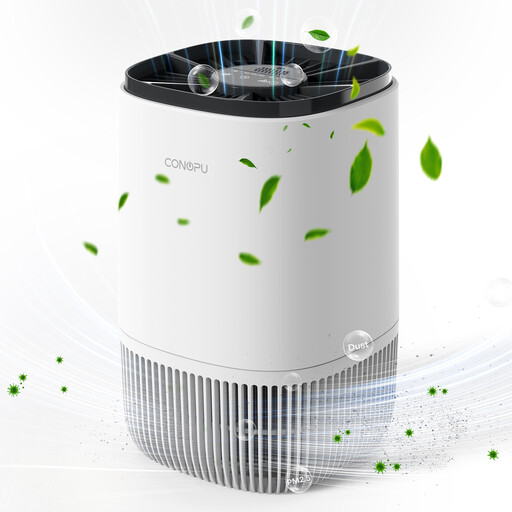
Why This Fits Their Persona: Its compact format is suitable for people starting with a bedroom, office or smaller living space purifier and wanting to move it between rooms.
The product specifies a three-stage system with a pre-filter, HEPA filter and activated carbon layer rather than relying on a single filter type.
Compact 170 × 170 × 260mm design, 5W power rating and portable use. It also includes an aroma pad and replaceable filter.
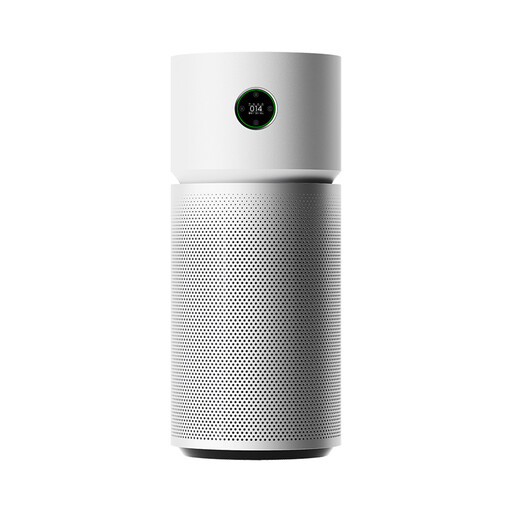
Why This Fits Their Persona: A suitable option for larger UK homes, open living areas or households wanting app and voice control alongside detailed monitoring.
Its specification includes particle and pollen CADR figures, PM2.5/PM10 sensing and a replaceable filter, making airflow and maintenance easier to assess.
600m³/h particle CADR, activated carbon filtration, Xiaomi Home App control and a stated 20.2dB(A) minimum sleep-mode level.
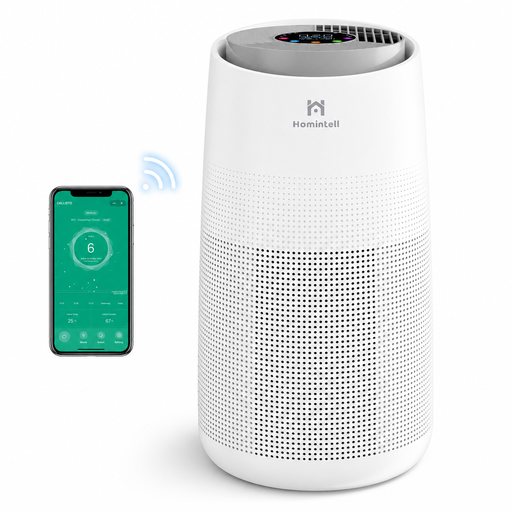
Why This Fits Their Persona: Designed for medium-sized rooms up to the stated 36m², with app control, automatic operation and monitoring features for frequent daily use.
The product gives a 300m³/h CADR, filter replacement reminder after 2,200 hours and four operating speeds, rather than only quoting a broad room-size claim.
Wi-Fi control, H13 HEPA and activated carbon filtration, air-quality sensing, child lock and a stated 26dB sleep mode.
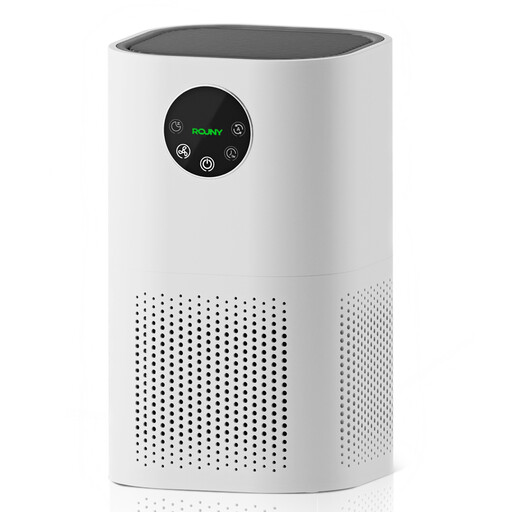
Why This Fits Their Persona: Its compact dimensions, timer and low-noise sleep mode suit bedrooms, home offices and pet areas where uninterrupted operation matters.
The specification states both a 150m³/h CADR and a sleep-mode noise level of no more than 25dB, helping shoppers compare airflow with bedroom comfort.
H13 HEPA filtration, four fan speeds, green/yellow/red air-quality indicators and 2-, 4- and 8-hour timer settings.
We have compiled a complete, real-time list of products that fully satisfy these strict selection criteria and UK safety regulations.
Running cost depends on the appliance’s wattage, operating hours and electricity tariff. A 5W or 7.5W compact model generally uses less electricity than a 60W large-room purifier, although actual cost depends on usage. Check the product’s rated power and consider sleep mode or timer settings.
Many people use a purifier overnight, particularly in bedrooms, but select a model with a suitable sleep mode and follow the manufacturer’s instructions. Keep the air inlet and outlet unobstructed, place the appliance away from water and do not use it with a damaged cable or plug.
Replacement intervals vary with usage, dust levels, pets and indoor air quality. Some models provide a reminder after a stated number of operating hours, while others suggest replacement every six to eight months. Inspect the filter according to the manual and use the specified replacement type rather than washing a non-washable filter.