
24/7 Customer Support

Free returns

Same-day & Next-day Delivery

Quality Guaranteed

Unlock Your Welcome Offers: FREE Delivery | Up to 80% OFF | Free 30-day JoyPlus trial
Download the APP
Watching your baby struggle with discomfort after a feed can be a distressing experience for any new parent. If you've noticed your little one is frequently fussy, gassy or unsettled, you might be looking for solutions. An anti-colic baby bottle is often one of the first things parents consider to help ease these symptoms.
As the Joybuy Product Recommendation Officer, my role is to help you understand the features that matter. This guide will walk you through what to look for in a newborn feeding bottle and highlight some carefully selected options to help you find a bottle that suits both you and your baby.
Navigating the world of baby products can feel overwhelming. When it comes to choosing a baby bottle for colic, focusing on a few key features can simplify your decision.
The core feature of these bottles is a mechanism designed to reduce the amount of air your baby swallows during feeding. Air ingestion is a common cause of gas, wind and discomfort. These systems typically work in one of two ways:
For parents who are combination feeding or transitioning from breast to bottle, the teat is crucial. A breast like bottle features a teat that is specifically shaped to mimic the natural feel, flex and movement of a mother's breast. This can encourage a better latch and reduce the chance of nipple confusion.
Equally important is the flow rate. Newborns require a slow-flow teat that allows them to control the pace of feeding, similar to breastfeeding. Most brands offer different flow rates that you can change as your baby grows.
Modern parenting requires practical solutions. A self sterilising baby bottle is a game-changer for busy parents, allowing for quick and easy sterilisation in a microwave without the need for a separate, bulky steriliser.
In the UK, safety is paramount. You can be confident that any new bottle you purchase will be a BPA free baby bottle, as the use of Bisphenol A in their manufacture is banned. Always look for bottles made from high-quality, food-grade materials.
Here are a few standout options that incorporate these important features, chosen to help you make an informed decision for your baby's feeding journey.
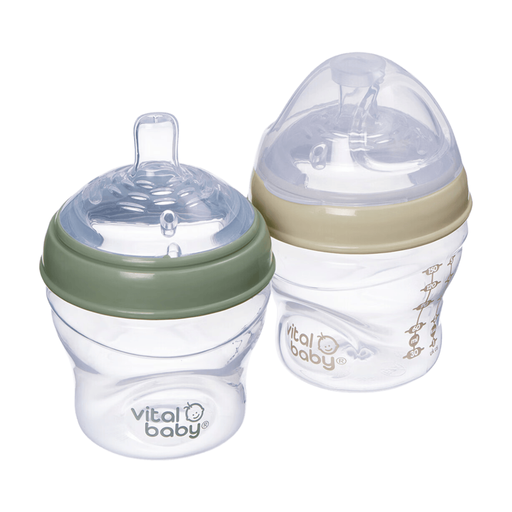
Why It Stands Out: This bottle is designed with both combination feeding and the environment in mind. It features a unique flattened teat to encourage a natural latch and an advanced anti-colic system, while the bottle itself is made from biodegradable plastic.
Pros:
Who is it for?: A great choice for parents who are combination feeding and are looking for a product with a reduced environmental impact.
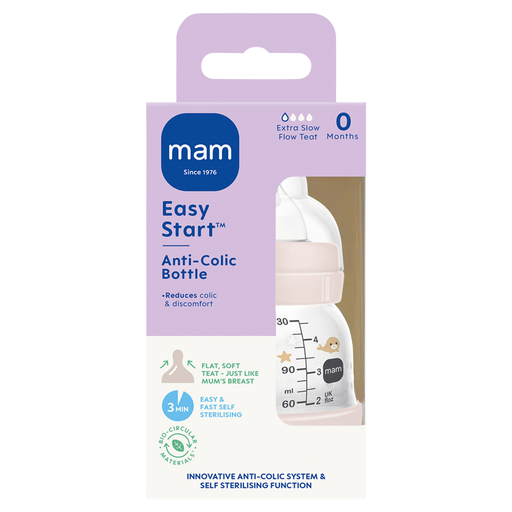
Why It Stands Out: The MAM Easy Start is well-regarded for its innovative vented base and high acceptance rate among babies. Its all-in-one self-sterilising function makes it exceptionally convenient for use at home or while travelling.
Pros:
Who is it for?: Ideal for parents of newborns looking for a bottle with a high acceptance rate and maximum convenience for sterilisation.

Why It Stands Out: This bottle is one of the most recognisable on the market, known for its teat which is designed to be their most breast-like. It aims to make switching between breast and bottle feel seamless for the baby.
Pros:
Who is it for?: A solid all-around option for parents who want a widely-used bottle that prioritises a natural latch, making it a good bottle for breastfed babies.
Every baby is unique, and what works for one may not work for another. If you're still exploring or want to compare a wider range of styles and sizes, our full collection has something for every family's needs.
Discover more choices in our Plastic Baby Bottle category.
Anti-colic bottles are designed with special vents, valves or internal systems that allow air to enter the bottle as your baby drinks. This prevents a vacuum from forming and, more importantly, reduces the amount of air that gets mixed with the milk. By swallowing less air, your baby is less likely to suffer from the painful gas and pressure that can cause colic-like symptoms.
Most manufacturers provide age guidelines for their teat flow rates (e.g., slow flow for 0+ months, medium flow for 3+ months). However, your baby is the best guide. It might be time to move up a size if you notice your baby is taking a very long time to finish a bottle, becoming frustrated or fussy during feeds or sucking so hard that the teat collapses.
Yes. The use of Bisphenol A (BPA) in the manufacturing of baby bottles has been banned across the UK and the EU since 2011. Any new BPA free baby bottle purchased from a reputable UK retailer will comply with these strict safety standards, giving you peace of mind.