
24/7 Customer Support

Free returns

Same-day & Next-day Delivery

Quality Guaranteed

Unlock Your Welcome Offers: FREE Delivery | Up to 80% OFF | Free 30-day JoyPlus trial
Download the APP
Watching your baby struggle with discomfort after a feed can be distressing for any parent. Symptoms like excessive crying, trapped wind and general fussiness are often linked to colic, a common issue for newborns. While the exact causes of colic are complex, swallowing too much air during feeding is a known contributor. This is where anti-colic baby bottles can make a significant difference.
Navigating the world of baby products can feel overwhelming. This guide is designed to cut through the clutter, explaining what to look for in an anti-colic bottle and providing a clear, objective look at some of the popular options available in the UK. Our goal is to help you find a feeding solution that brings more comfort to your baby and more peace of mind to you.
Before diving into specific products, it helps to understand the key features that make a bottle effective at reducing wind and discomfort.
The teat is your baby's first point of contact with the bottle, making its design crucial. Many parents find that breast-like bottles, which feature a wide, soft and flexible silicone teat, can help babies achieve a deeper, more natural latch. This is particularly important for combination feeding, as it can make switching between breast and bottle a smoother process.
Equally important is the flow rate. Slow flow bottles for newborns are essential, as they prevent your baby from gulping milk too quickly and swallowing excess air. Always start with the slowest flow and only move up when you notice your baby is becoming frustrated with the speed.
This is the core technology of an anti-colic bottle. Venting systems are designed to let air into the bottle as your baby drinks, which prevents a vacuum from forming. This allows the milk to flow steadily without the baby needing to break their latch, significantly reducing air ingestion. These systems can be integrated into the teat, a tube inside the bottle or a valve in the base. Choosing the right one often comes down to how many parts you are willing to clean.
Safety is non-negotiable. Always ensure you are choosing BPA-free baby bottles, which is the standard in the UK and EU. Beyond that, consider convenience. How many parts does the bottle have? Is it easy to assemble and clean? For busy parents, features like a wide neck for easy cleaning or even self-sterilising bottles that can be prepared in a microwave can be a huge time-saver.
Here are a few recommendations that stand out for their design, features and parent-approved functionality.
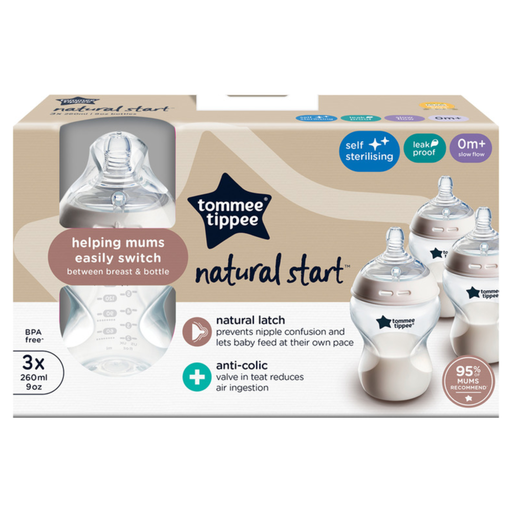
Why It Stands Out This bottle is a popular choice for its intuitive, breast-like design. The soft silicone teat flexes and stretches, mimicking natural feeding movements to encourage a good latch. The anti-colic system is straightforward: a simple valve in the teat vents air away from the milk. Its simple, three-part construction makes it one of the easiest anti-colic bottles to clean and reassemble.
Pros
Who is it for? Parents looking for a reliable and widely accepted bottle that supports combination feeding. Its no-fuss design is ideal for those who want effective anti-colic features without complex parts.
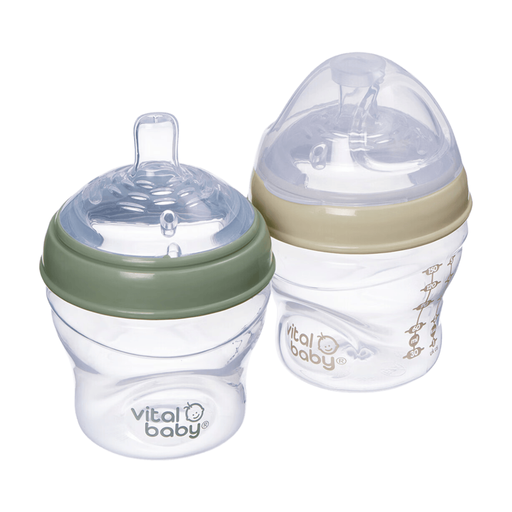
Why It Stands Out The Vital Baby bottle combines advanced anti-colic technology with an eco-conscious design. It features a triple anti-colic valve system for enhanced air reduction, making it a strong contender for bottles for windy babies. A unique point of difference is its EarthSmart material; the bottle body is designed to biodegrade in landfill. For convenience, the bottle body can also be sterilised in the microwave in just three minutes.
Pros
Who is it for? Environmentally-conscious parents who also want a bottle with a robust anti-colic system and the convenience of quick sterilisation.

Why It Stands Out The MAM Easy Start is a standout for its innovative convenience. Its key feature is the self-sterilising function: the entire bottle can be disassembled and sterilised in a microwave in just three minutes, without needing a separate steriliser. The anti-colic technology is built into the vented base, which ensures an even, bubble-free flow of milk. The bottle also features a unique flat, SkinSoft silicone teat, which the brand states has a 94% acceptance rate among babies.
Pros
Who is it for? Parents who prioritise convenience, especially for travel or late-night feeds. It's also an excellent choice for those struggling with bottle refusal, given the teat's high acceptance rate.
Every baby is different, and what works for one may not work for another. If these recommendations aren't quite what you're looking for, or if you'd like to see different sizes, materials or designs, you can browse a wider variety of feeding solutions.
Explore our full range of plastic bottle packaging to find the perfect fit for your family.
They work by preventing your baby from swallowing air during feeds. They feature special vents—in the teat, a tube or the base—that allow air to flow into the bottle as milk flows out. This stops a vacuum from forming and ensures a smooth, continuous flow of milk, so your baby doesn't have to gulp air to get their feed.
You can use newborn baby bottles with anti-colic features right from birth. It is often a good idea to start with them proactively, especially if you are bottle-feeding exclusively or combination feeding. If you notice your baby is particularly windy, fussy or uncomfortable after feeds, switching to an anti-colic bottle is a sensible first step.
For newborns, you should always start with a slow flow teat. This mimics the slower pace of breastfeeding and gives your baby full control, reducing the chance of them taking in too much milk and air. Watch your baby for cues. If they seem to be working very hard, getting frustrated or the teat collapses, it might be time to move to a medium flow. If they are spluttering, gagging or milk is dribbling from their mouth, the flow is too fast.