
24/7 Customer Support

Free returns

Same-day & Next-day Delivery

Quality Guaranteed

Unlock Your Welcome Offers: FREE Delivery | Up to 80% OFF | Free 30-day JoyPlus trial
Download the APP
Navigating the world of newborn essentials can feel overwhelming, especially when your little one is struggling with feeding discomfort. Colic, gas and general fussiness can turn what should be a peaceful bonding experience into a stressful one for both you and your baby. An anti-colic baby bottle is specifically designed to help alleviate these issues by minimising the amount of air your baby swallows during a feed.
As your Joybuy Product Recommendation Officer, my role is to help you understand the features that matter. This guide cuts through the clutter, offering practical advice and highlighting some standout options to help you find a bottle that brings more comfort and calm to feeding time.
Choosing the right newborn feeding bottle involves more than just picking a size. For babies prone to discomfort, the technology inside the bottle is what truly counts. Here are a few key features to consider.
The core of any anti-colic bottle is its venting system. These are clever mechanisms designed to prevent a vacuum from forming inside the bottle, allowing milk to flow steadily while channelling air away from the teat. Vents can be built into the teat itself, located in a ring at the base of the teat or integrated into the bottom of the bottle. The goal is always the same: to reduce air ingestion, which is a common cause of colic and gas.
For parents who are combination feeding, finding a breast-like bottle for newborns is crucial. Look for teats made from soft, flexible silicone that are shaped to mimic the breast, encouraging a deep and natural latch. This helps to reduce nipple confusion and makes switching between breast and bottle a smoother process. The flow rate of the teat is also important; newborns typically require a slow-flow teat to control the pace of feeding and prevent them from gulping too much milk (and air) at once.
Peace of mind is paramount. Always ensure any bottle you choose is a BPA-free baby bottle, as well as free from other potentially harmful chemicals like BPS and phthalates. Beyond safety, consider convenience. An easy to clean baby bottle with a wide neck and minimal parts can save you precious time. Even better, some modern designs now feature a self-sterilising baby bottle function, allowing you to sterilise them in the microwave in just a few minutes without needing a separate, bulky steriliser.
Based on features that address common parental concerns like colic, combination feeding and convenience, here are our recommendations.

Why It Stands Out: This bottle is renowned for its award-winning, breast-like teat. The soft silicone is designed to flex and stretch like a mother's breast, promoting a natural latch. This makes it a strong candidate for the best bottle for combination feeding. The integrated anti-colic valve in the teat vents air away from the milk to reduce symptoms of colic.
Pros:
Who is it for? Parents who are combination feeding and want a bottle that closely mimics the natural feel of breastfeeding. It's also a great choice for those seeking a convenient, all-in-one solution that doesn't require a separate steriliser.
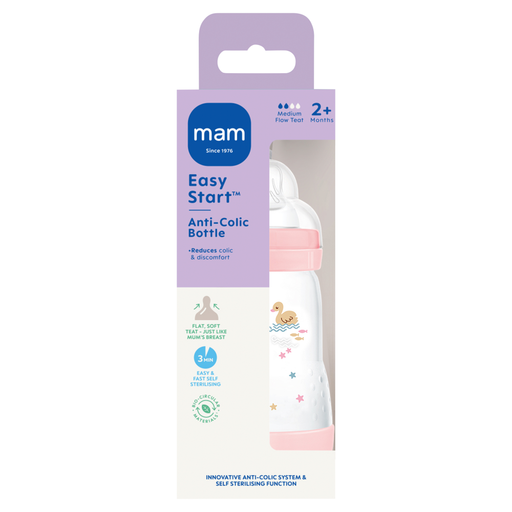
Why It Stands Out: The MAM bottle's key feature is its patented vented base. This technology ensures an even flow of milk by allowing air to enter from the bottom of the bottle, preventing air bubbles from mixing with the liquid. According to MAM’s own research, this design is shown to reduce colic symptoms. The bottle can also be fully disassembled, making it exceptionally easy to clean.
Pros:
Who is it for? Parents whose primary concern is managing significant colic and reflux. The vented base offers a distinct approach to air reduction, and the easy-to-disassemble design is perfect for those who prioritise hygiene and deep cleaning.
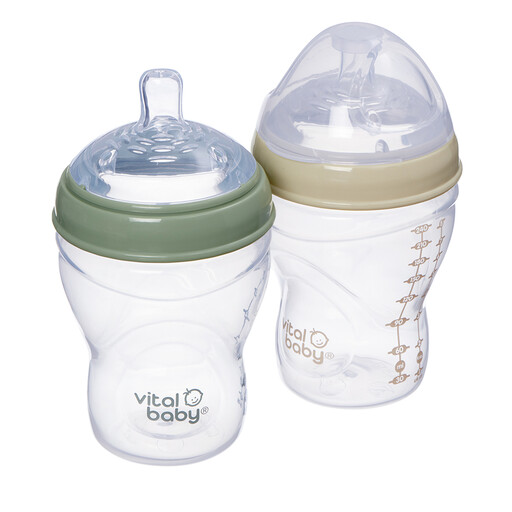
Why It Stands Out: This bottle combines a breast-like design with a powerful triple anti-colic valve system to minimise air intake. The teat features a unique FlexZone that mimics the natural flex of the breast. A standout feature is its eco-conscious design; the bottle base is made with EarthSmart technology, which is designed to biodegrade in landfill over time.
Pros:
Who is it for? Environmentally-conscious parents who do not want to compromise on performance. It provides a robust anti-colic system and a breast-like teat while offering a more sustainable product lifecycle.
Every baby is unique, and what works for one may not work for another. The bottles highlighted here are excellent starting points, but they represent just a fraction of the available options. If you'd like to explore different sizes, flow rates or designs, you can browse our full collection.
? Explore our complete range of baby feeding milk bottles here.
1. How do anti-colic bottles actually work? Anti-colic bottles work by using a venting system—either in the teat, a ring or the base of the bottle—to allow air to enter the bottle as your baby drinks. This prevents a vacuum from forming and stops air bubbles from mixing with the milk, which means your baby swallows less air and is less likely to suffer from gas, wind and discomfort.
2. When can I start using an anti-colic bottle? You can use an anti-colic bottle right from birth. Most brands offer slow-flow teats specifically designed for newborns (0+ months), making them a suitable newborn feeding bottle from day one.
3. Do I need a separate steriliser for these bottles? Not for the models recommended in this article. All three options feature a convenient self-sterilising function. You simply add a small amount of water, assemble the parts loosely, and microwave them for about three minutes. This makes them perfect for use at home or while travelling, saving you space and the cost of a separate sterilising unit.