
24/7 Customer Support

Free returns

Same-day & Next-day Delivery

Quality Guaranteed

Unlock Your Welcome Offers: FREE Delivery | Up to 80% OFF | Free 30-day JoyPlus trial
Download the APP
Navigating the world of art supplies can be a challenge. With so many types of markers available, each promising different results, it’s easy to feel overwhelmed. Whether you're a dedicated hobbyist looking for the right colouring pens for adults, a crafter embarking on a new project or a professional needing reliable permanent markers for plastic, choosing the correct tool is crucial.
This guide is designed to simplify your decision. We'll walk through the key features to consider when selecting an art marker set, helping you understand the differences between ink types and tip styles. Our goal is to provide clear, practical information so you can find the right markers for your specific creative or industrial needs.
Before you add a set to your basket, consider these three factors. They will help you match the product to your intended use, ensuring you get the results you're looking for.
The ink is the heart of the marker, and its composition determines how it behaves on different surfaces.
water-based markers is typically non-toxic and low-odour. On suitable heavyweight paper, you can blend colours with a little water to create subtle watercolour-like effects. They are generally easy to clean up if you have a spill.acrylic paint pens are an excellent option. Their pigment-based ink sits on top of the surface rather than soaking in, providing vibrant, solid colour even on dark backgrounds. This makes them ideal multi-surface markers for materials like wood, stone, metal and plastic. They are the go-to choice for many craft pens and industrial applications.The tip, or nib, dictates the kind of line you can create. Many modern sets offer more than one style to increase their versatility.
dual tip brush pens offers fantastic value and flexibility. Typically, you get a fine point on one end for outlining and detail work, and a flexible brush tip on the other for colouring, shading and expressive strokes. This combination is particularly useful for illustration and calligraphy pens.acrylic paint pens designed for detailed projects like pens for rock painting or customising objects.Not all markers work on all materials. To avoid disappointment, always check what surfaces a marker set is designed for. While most markers work on paper, specialised projects require specific formulations. If your work involves non-porous surfaces, look for products explicitly labelled as permanent markers for plastic, glass or markers for metal. These pens contain ink that adheres strongly to smooth surfaces, ensuring your design is durable and long-lasting.
Based on their features and suitability for common creative tasks, here are some standout options to consider.
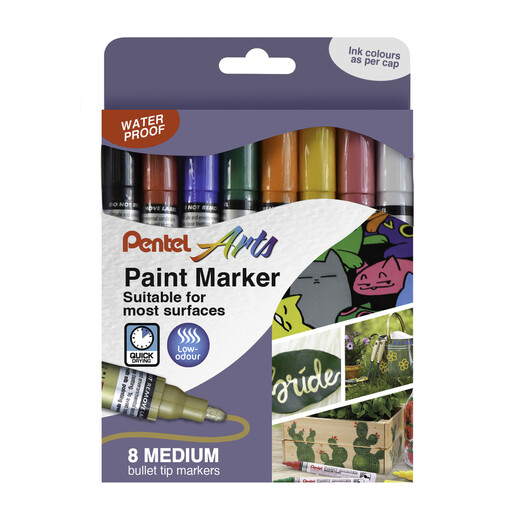
Why It Stands Out: This set is a workhorse for both craft and industrial use. The permanent, opaque pigment-based ink delivers excellent coverage on a huge range of materials, from thick card to metal, glass and rubber. The durable aluminium barrel and robust 4.5mm bullet tip are built for reliability and consistent performance on challenging surfaces.
Pros:
Who is it for? Crafters, DIY enthusiasts and trade professionals who need a reliable and permanent marking solution for varied materials, including metal, plastic and glass.
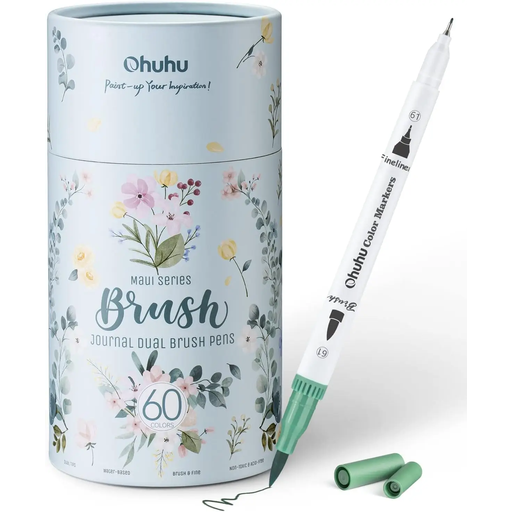
Why It Stands Out: This comprehensive set is perfect for illustrators and colouring enthusiasts. Each pen features a 0.4mm fineliner tip for precise details and a flexible 1-6mm brush tip for smooth colouring and calligraphic strokes. The 60 vibrant, water-based colours are numbered for easy organisation, and the set includes replacement tips to extend its lifespan.
Pros:
Who is it for? Adult and teen hobbyists, journal keepers, illustrators and anyone looking for a versatile set of colouring pens for adults for paper-based art projects.

Why It Stands Out: Offering the best of both worlds, this art marker set combines the control of a pen with the vibrant opacity of acrylic paint. The dual-tip design—a 0.7-2mm fine tip for details and a 1.7-3mm round tip for filling—makes them incredibly versatile. The high-opacity, water-based acrylic ink is waterproof and lightfast once dry, working beautifully on surfaces like rock, wood, fabric, ceramic and plastic.
Pros:
pens for rock painting.Who is it for? Artists and crafters who want to work on diverse surfaces beyond paper. Ideal for personalising objects, creating rock art, decorating ceramics and other mixed-media projects.
If you haven't found the perfect match here or want to explore even more specialised tools, there are many other options available. From different colour palettes to unique tip styles, you can find a wider selection to suit any project.
Discover our full range of creative tools in the Art paint pen category.
1. What is the main difference between alcohol-based and water-based markers? The primary difference is the solvent used for the ink. Water-based markers use water, are generally odourless and are great for blending on paper to create soft, watercolour-like effects. Alcohol-based markers use alcohol as a solvent, which evaporates quickly. This allows for smooth, streak-free colour application and layering without damaging the paper surface, but they often have a strong smell and can bleed through thinner paper.
2. How do I make acrylic paint pens permanent on non-porous surfaces like glass or ceramic? To ensure a permanent finish on non-porous surfaces, the item usually needs to be heat-set. After your design is completely dry (typically after 24 hours), place the item in a cold oven. Turn the oven on to a low temperature (around 180°C or 350°F), let it bake for about 30-60 minutes and then turn the oven off, allowing the item to cool down completely inside. Always check the marker manufacturer's specific instructions, as curing times and temperatures can vary.
3. Can I use colouring pens for adults on any type of paper? While you can use them on most paper, the results will vary significantly. For water-based markers and brush pens, using smooth, heavyweight paper (often called marker paper or Bristol board) will give you the best results. This type of paper prevents the ink from bleeding and allows for smoother blending. Standard printer paper is often too thin and absorbent, which can cause feathering and may damage the paper.