
24/7 Customer Support

Free returns

Same-day & Next-day Delivery

Quality Guaranteed

Unlock Your Welcome Offers: FREE Delivery | Up to 80% OFF | Free 30-day JoyPlus trial
Download the APP
Selecting the right art colouring pens can transform your creative routine, whether you are planning out an intricate bullet journal, adding vibrant artwork to outdoor pebbles, or setting up an afternoon craft session at the kitchen table. The modern craft market offers an extensive array of ink formulations and nib styles, which can quickly feel overwhelming. Choosing the incorrect pen often leads to frustrating bleed-through on porous paper, streaky fills on craft timber, or stubborn pigment marks left behind on clothes and furniture. Navigating these options becomes much simpler when you match ink chemistry and tip architecture to your primary creative surface.
A successful purchase balances line control, pigment opacity, and day-to-day usability. While some artists require delicate pastel washes that blend like traditional watercolours without tearing delicate fibres, others demand opaque acrylic mediums capable of adhering to dark wood, unglazed ceramics, or rough canvas. Everyday convenience matters just as much, encompassing practical details like click-action seals that eliminate missing lids, handled storage boxes that keep desk spaces orderly, and washable formulas that offer peace of mind during family crafting. This guide outlines essential buying factors and highlights three reliable options tailored to distinct creative habits.
A frequent misstep is purchasing standard water-based dye markers for decorating smooth pebbles, untreated wood, or primed canvas. Standard water-soluble inks require porous cellulose fibres to bind effectively; when applied to stone, glass, or varnished materials, they pool, smear, and flake off once dry. For hard or non-paper crafting substrates, always look for acrylic paint formulations that dry into resilient, opaque plastic films rather than transparent dye-based felt tips.
Relying on a single tip profile severely restricts your artistic range. Fine bullet tips produce immaculate outlines and crisp journal lettering, yet attempting to colour substantial background areas with them leads to noticeable streak marks, nib wear, and hand fatigue. Conversely, broad chisel or brush nibs struggle with precise margins and detailed cross-hatching. Dual-tip markers or carefully matched sets prevent the need to purchase separate marker packs for fine linework and expansive fills.
Art pens frequently dry out prematurely because of loose friction caps, cracked barrels, or misplaced lids left on crowded desks. When nibs encounter dry ambient air, solvent and water carriers evaporate, rendering the marker unusable long before the pigment reservoir is exhausted. Look for engineered sealing systems such as airtight click mechanisms or securely latching ventilated safety caps, alongside robust carry cases that ensure markers remain organised and properly shielded between creative sessions.
The carrier base determines where the pen can deposit colour, how rapidly it sets, and whether marks can be lifted, layered, or blended smoothly across creative surfaces.
Nib shapes dictate the breadth and texture of every stroke, directly influencing whether a tool suits miniature details, broad background washes, or dynamic calligraphy strokes.
The physical construction of the pen set dictates ease of storage in British homes, along with safety during shared household use.
These three selected sets offer proven performance across varied creative scenarios, from detailed personal journaling to multi-surface decorating and safe family crafting.
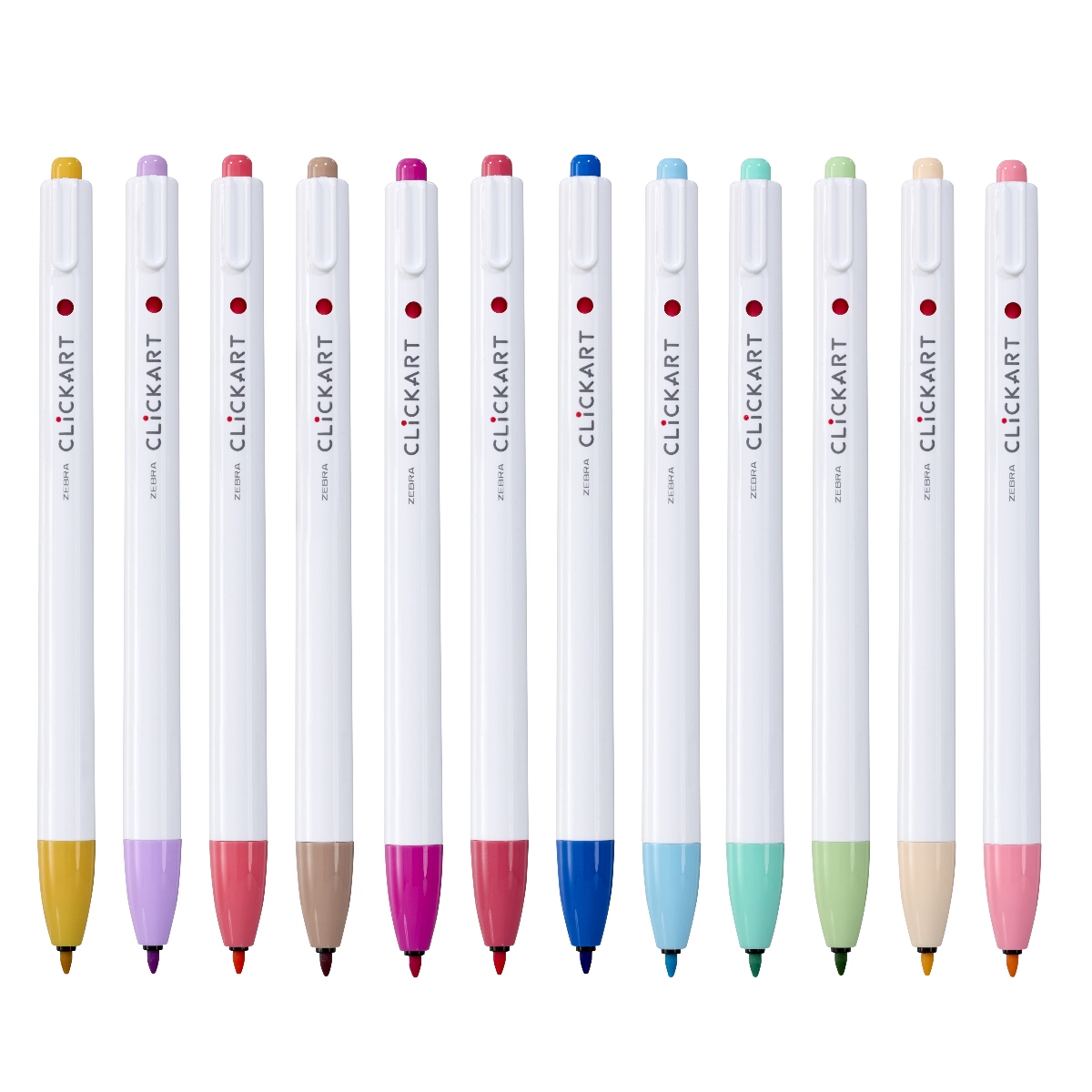
Why This Fits Their Persona: This pack of 12 assorted light colours features 2.0mm bullet tips engineered to produce crisp 0.6mm lines, making it well-suited for planner grids, soft pastel accents, and delicate sketches. The water-based ink blends easily to create subtle watercolour effects on card and sketch paper.
The retractable mechanism completely removes the risk of lost or dropped lids, ensuring nibs stay protected without wrestling with stiff plastic caps during quick note-taking sessions.
Model WYSS22-12C arrives in a compact carry case, pairing the convenience of click-action operation with blendable light shades that enhance notebook entries without heavy visual bleed.
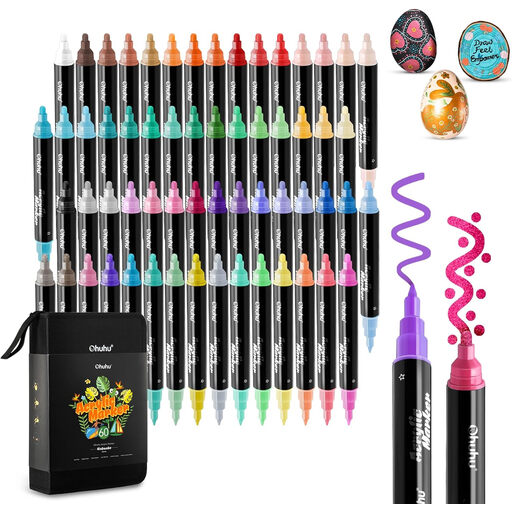
Why This Fits Their Persona: Equipped with dual tips featuring a 0.7–2mm fine nib on one end and a 1.7–3mm round nib on the other, this set handles both precise contouring and broader fill work. The generous selection of 60 colours incorporates 45 regular shades, 9 metallic options, and 6 neon tones designed to adhere cleanly to rocks, wood, and canvas.
Because these pens use an acrylic paint formula rather than ordinary dye ink, they provide true multi-surface coverage that stays vibrant on dark, coarse, or non-paper materials instead of soaking in or rubbing off.
Model 60 supplies an all-in-one palette of regular, metallic, and neon finishes alongside dual nibs, eliminating the need to purchase separate fine liners and broad paint markers for craft projects.
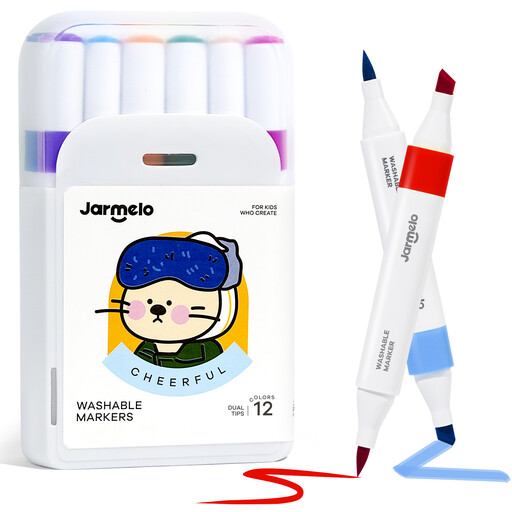
Why This Fits Their Persona: Providing 12 versatile shades, this set features dual chisel and brush tips that encourage expressive, sweeping lines as well as controlled edge work. The non-toxic, water-based ink is 90% washable from skin and most everyday fabrics, keeping creative sessions relaxed and tidy.
Fitted with ventilated caps, the design prioritises child safety while reducing the risk of permanent marker stains across household clothes and worktops.
Model jar melo includes a durable handled carry case that keeps the 12 markers neatly arranged, combining dual-nib artistic flexibility with effortless post-craft clean-up.
If your creative pursuits call for dedicated alcohol-based blending markers, ultra-fine graphic pens, or specialised watercolour cakes, our broader drawing collection offers a wealth of tailored alternatives.
Water-based art pens use transparent or semi-translucent dye solutions that absorb directly into paper fibres, making them ideal for soft layering, watercolour blending, and everyday sketchbooks. In contrast, acrylic paint markers lay down an opaque, polymer-based liquid that dries into a resilient surface film. This allows acrylic markers to coat dark backgrounds and bond securely with non-porous materials like stone, timber, metal, and canvas.
Dual-tip markers perform at their best when stored horizontally in their carry case or on a flat desk tray. Storing them horizontally ensures that the liquid ink reservoir remains evenly distributed between both nib ends, preventing one tip from drying out while the other becomes oversaturated. Always ensure caps are firmly clicked into place after use to stop ambient air from evaporating the ink carrier.
Yes, water-based markers blend effectively with wet brushes, but paper weight plays a crucial role. Applying water to standard thin printer paper or lightweight notebook sheets causes the cellulose fibres to buckle and pill. For smooth, seamless watercolour effects, use heavyweight cartridge paper or dedicated watercolour sheets rated at 200gsm or higher to withstand light water washes.