
24/7 全天候客户支持

免费退货

当日/次日达

品质保障

开启新人专享福利: 全场免邮 | 低至 2 折 | 免费试用 30 天 JoyPlus 会员
下载 Joybuy
Navigating the world of art pens and markers can feel overwhelming. Shelves are filled with endless options, each promising vibrant colours and flawless performance. Yet, many of us have faced the disappointment of a purchase that didn't live up to the hype. As a Joybuy Product Recommendation Officer, my role is to help you see past the marketing jargon and focus on what truly matters for your creative projects. Before you spend another pound, let's look at the common pitfalls to avoid.
To make a smart purchase, you need to understand the core features that determine a pen's performance. Focus on these three areas to find the right tool for your task.
The ink is the heart of any marker, and its base determines its behaviour.
The shape of the tip dictates the kind of lines you can create.
Beyond the number of colours, consider the ink's properties. Pastel pens and highlighters with milder, translucent inks are often marketed as no bleed highlighters because their lower saturation is less likely to show through the page. Vibrant, highly saturated inks offer bold impact but may require thicker paper.
Instead of a generic list, we've matched specific products to the people who will get the most from them.
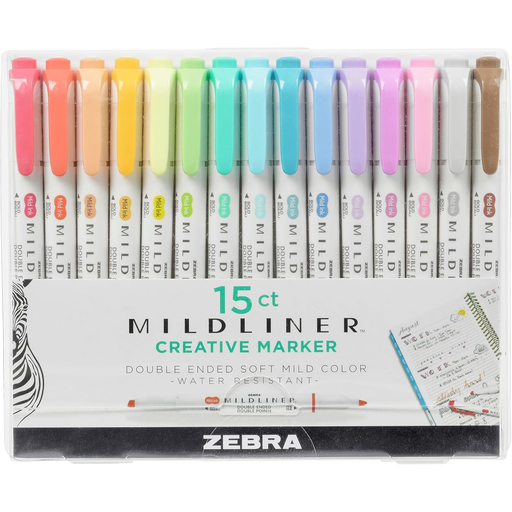
Why This Fits Their Persona: Perfect for organising planners and journals. The mild, translucent ink colours are easy on the eyes and provide subtle emphasis without overwhelming the page. The dual-tip design offers both broad highlighting and fine underlining in one pen, ideal for structured layouts.
The water-based pigment ink is specifically formulated to resist bleeding through most paper types, directly addressing the unreliable "no-bleed" claims of other markers.
Dual-Tip Functionality: Combines a 4.0 mm chisel tip and a 1.4 mm bullet tip. Archival Quality: Acid-free, water-resistant ink ensures notes last.
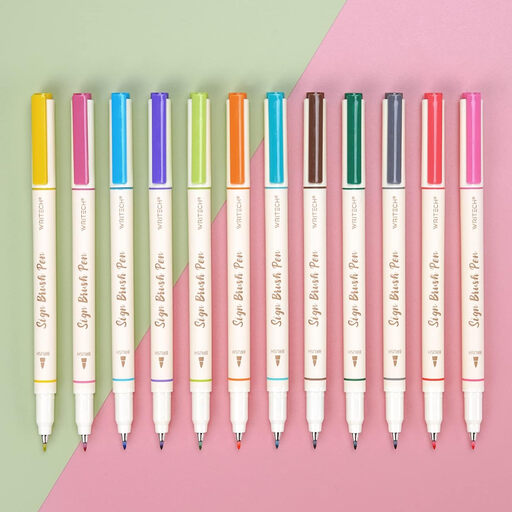
Why This Fits Their Persona: An excellent entry point for those learning hand lettering or calligraphy. The flexible brush tip is pressure-sensitive, allowing beginners to practise thick and thin strokes with ease. The water-based ink is blendable, encouraging creative experimentation.
The tip is described as "wear-resistant," designed to withstand the pressure variations of calligraphy without the quick fraying common in cheaper alternatives.
Flexible Brush Tip: Allows for variable line widths for expressive lettering and drawing. Blendable Ink: Water-based ink can be diluted for shading and watercolour effects.
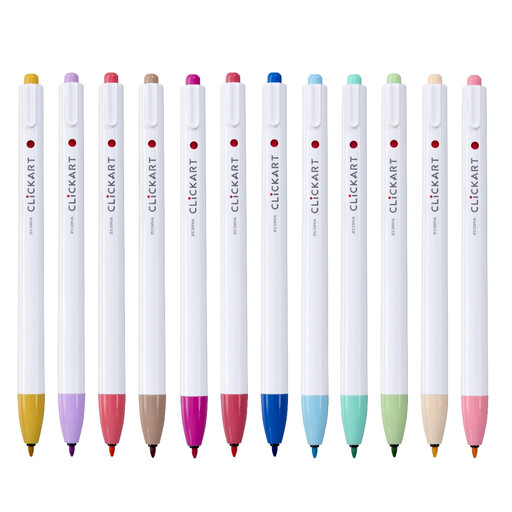
Why This Fits Their Persona: For those who need to switch between colours quickly for note-taking or annotating documents. The retractable, capless design eliminates the hassle of losing caps and allows for easy one-handed operation during lectures or meetings.
This pen directly solves the "rapid dry-out dilemma" with its "Moist Keep Ink" technology, which absorbs moisture from the air to keep the tip from drying out without a cap.
Capless Convenience: Retractable design means no lost caps and quick, one-handed use. Anti-Dry Technology: A practical solution that keeps the pen ready to use.
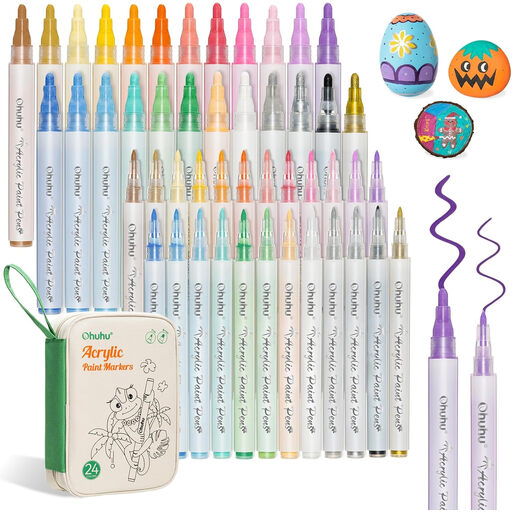
Why This Fits Their Persona: For the hobbyist who works on diverse projects. These acrylic paint markers are designed to work on multiple surfaces, including rock, wood, fabric and ceramic. The set includes both fine tips for detail and reversible chisel/round tips for broad coverage.
These are true multi-surface paint markers, not just paper markers. The reversible tips also offer a practical solution to fraying—simply pull the nib out and flip it over for a fresh tip.
Multi-Surface Application: Works on rock, wood, fabric, glass and more. Reversible Tips: Extends the life of the marker by providing a fresh chisel or round tip when one side wears down.
We have compiled a complete, real-time list of products that fully satisfy these strict selection criteria and UK safety regulations.
1. How can I stop my art pens from bleeding through paper? The simplest method is to use thicker paper, ideally over 120gsm (grams per square metre), especially for water or alcohol-based inks. Always perform a small spot test on an inconspicuous page of your notebook or journal first. For very thin paper, placing a sheet of blotter paper behind your working page can absorb excess ink.
2. What is the main difference between water-based and alcohol-based markers? Water-based markers use water as the solvent for their dye. They are low-odour and ideal for journaling and simple colouring, with some variants allowing for watercolour-like blending. Alcohol-based markers use alcohol as a solvent, which evaporates quickly. This allows for smooth, streak-free colour layering and blending but often requires specialised, coated paper to prevent significant bleeding.
3. How should I store my dual-tip markers to make them last longer? For any double-ended pen, including dual tip markers and highlighters, it is always recommended to store them horizontally. Storing them vertically can cause the ink to pool in the lower tip, potentially drying out the upper tip over time. Horizontal storage ensures an even ink flow to both ends.