
24/7 Customer Support

Free returns

Same-day & Next-day Delivery

Quality Guaranteed

Unlock Your Welcome Offers: FREE Delivery | Up to 80% OFF | Free 30-day JoyPlus trial
Download the APP
Watching your baby grow and discover the world is a remarkable journey. As they become more curious and mobile, you might find yourself wondering how to best support their development. With so many options available, from baby jumpers to sit-to-stand walkers, choosing the right equipment can feel overwhelming.
A well-chosen baby activity centre can provide a safe and stimulating environment for your little one to play, learn and practise new skills. This guide is designed to help you understand the different types of activity centres available and identify key features to look for, making it easier to find a suitable match for your child's age and developmental stage.
Before exploring specific products, it's helpful to consider a few key factors. Keeping these points in mind will help you narrow down your options and make a more informed choice.
When selecting any product for your child, safety comes first. Look for a baby activity centre with a wide, sturdy base to prevent tipping. Features like anti-slip pads or lockable wheels are important, especially for use on smooth flooring. In the UK, products should meet established safety standards, so check for materials like durable PP plastic and soft, non-toxic fabrics. Always ensure the product is assembled correctly according to the manufacturer's instructions and used under adult supervision.
Activity centres are not one-size-fits-all. The most suitable option depends on your baby's physical development:
Babies grow quickly, so consider products that can adapt. Models with adjustable height settings or multi-functional designs that convert from one mode to another offer better long-term value. Engaging features are also crucial. Look for a variety of textures, sounds and lights that encourage exploration. These baby learning toys help teach cause and effect, stimulate the senses and can introduce early concepts like colours, numbers and animals.
Based on features that support development, safety and versatility, here are some of our recommendations for parents and caregivers to consider.
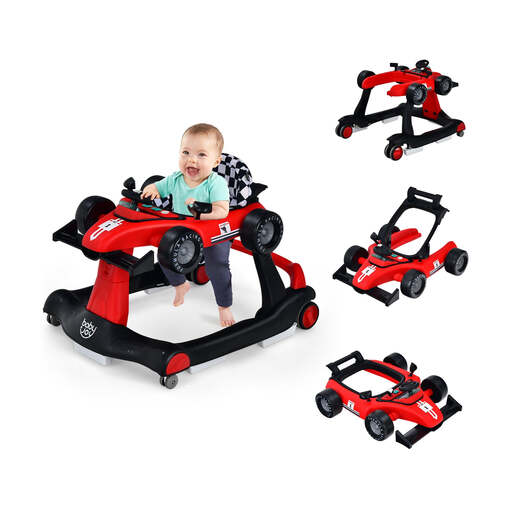
Why It Stands Out: This walker's main appeal is its versatility. It transforms through four different modes, adapting from a traditional baby walker to a push-behind toy, ensuring it remains useful as your child gains confidence and mobility.
Pros:
Who is it for? This is a practical option for families with babies aged 6 to 18 months who are looking for a single product that can support their child from early seated exploration through to confident walking.
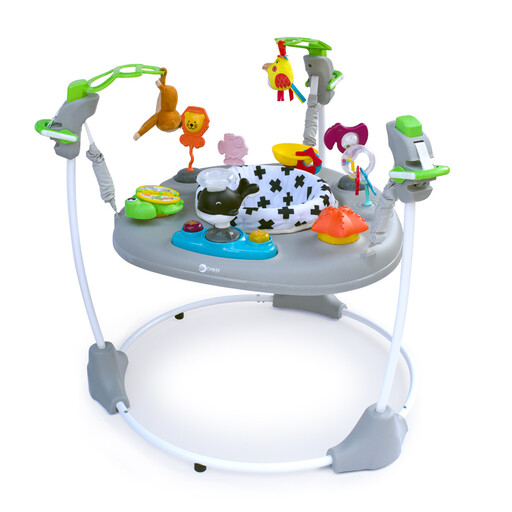
Why It Stands Out: This stationary baby jumper creates a world of 360-degree discovery. Its rotating seat allows babies to turn and interact with a full circle of toys, providing rich sensory stimulation while encouraging them to bounce and strengthen their legs.
Pros:
Who is it for? Ideal for babies from 4 to 12 months who can sit up unaided and are ready for active, bouncing play in a secure, stationary environment.
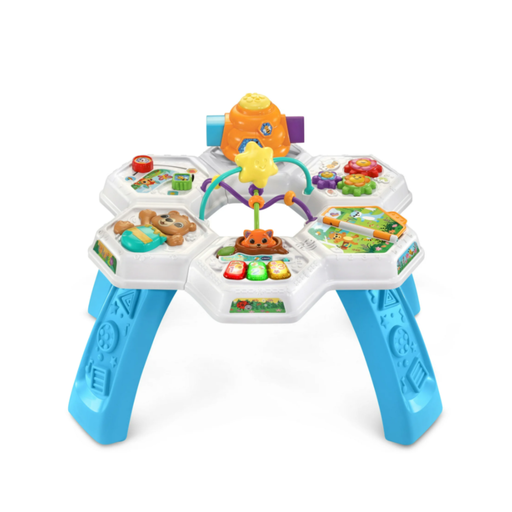
Why It Stands Out: This toddler activity table is designed for long-term play, starting as a floor toy for sitters and transitioning to a table for standers. Its six distinct play zones offer a wide range of baby learning toys that introduce fundamental concepts in a fun way.
Pros:
Who is it for? A great choice for children from 9 to 36 months, offering activities that are engaging for crawlers, new standers and confident toddlers alike.
While these recommendations cover a range of needs, every child is unique. If you're searching for different styles or more specialised developmental toys, there are many other choices available.
Explore our full collection of educational smart toys for toddlers to find the perfect match for your little one's learning journey.
1. What is the difference between a baby walker and a baby jumper? A baby walker is a mobile device with wheels that allows a seated baby to move across the floor by pushing with their feet. A baby jumper is stationary; it has a suspended seat that lets a baby bounce up and down in one spot. Jumpers often have a 360-degree rotating seat for access to attached toys.
2. At what age can a baby use an activity centre? This depends entirely on the type of activity centre and your baby's development. Stationary bouncers and jumpers are often suitable from around 4-6 months, once a baby has strong head and neck control. Seated walkers and activity tables are generally intended for babies from 6-9 months and older, who are either sitting confidently or beginning to pull themselves up to stand. Always refer to the manufacturer's recommended age and weight limits.
3. Are baby activity centres good for development? When used appropriately and under supervision, a baby activity centre can be a valuable tool. They provide sensory stimulation through lights, sounds and textures, which is crucial for brain development. They also encourage the development of gross motor skills (like bouncing and standing) and fine motor skills (like pressing buttons and grasping toys). It is important to balance time in an activity centre with plenty of free floor time to encourage natural crawling and movement.