
24/7 Customer Support

Free returns

Same-day & Next-day Delivery

Quality Guaranteed

Unlock Your Welcome Offers: FREE Delivery | Up to 80% OFF | Free 30-day JoyPlus trial
Download the APP
Navigating the world of baby products can feel overwhelming, and the market for baby carriers is no exception. With so many styles and features, it's easy to fall for marketing hype and end up with a carrier that’s uncomfortable for you and your little one. As a Joybuy Product Recommendation Officer, my role is to help you sidestep common purchasing mistakes and identify what truly matters for safety, comfort and practicality.
Before you make a decision, let's look at a few common pitfalls that can lead to buyer's remorse:
To make a confident choice, focus on these non-negotiable parameters. They are the foundation of a safe, comfortable and durable baby carrier.
The most critical feature of any carrier is how it supports your baby. A proper ergonomic baby carrier is designed to protect their developing hips and spine.
A carrier that isn't comfortable for you won't be used. Proper weight distribution is key to avoiding strain.
The fabric of a carrier impacts comfort, durability and ease of care.
Instead of a one-size-fits-all approach, we've matched a few carrier types to different parenting needs and lifestyles.
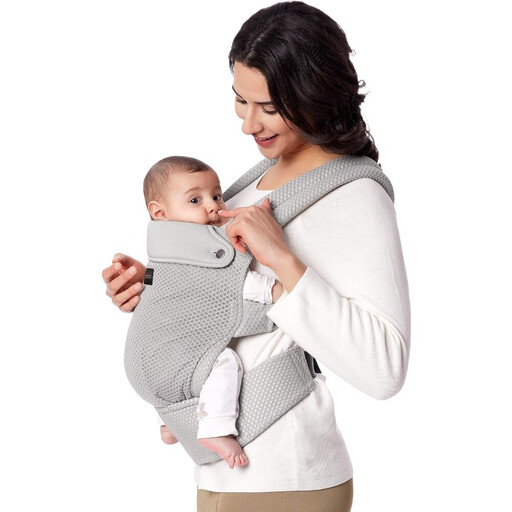
Why This Fits Their Persona: This carrier is well-suited for active UK parents who are out and about in all conditions. The mesh construction is ideal for managing temperature on warmer days or on stuffy public transport, while the robust support system is perfect for longer walks or day trips.
It directly counters the overheating pitfall with its Air Mesh panel and cooling fabric. The built-in EVA waist support and X-shaped back design address the lack of long-term comfort found in simpler models.
A great balance of breathability for temperature regulation and solid ergonomic support for both parent and baby. It's a versatile, all-season structured carrier.
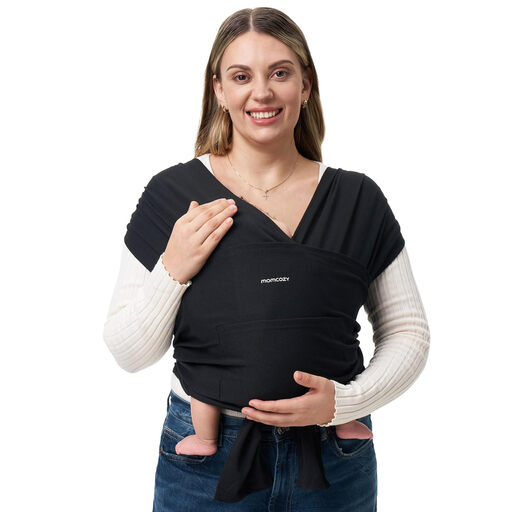
Why This Fits Their Persona: Perfect for parents in the "fourth trimester" who want to keep their newborn close and secure. The soft, stretchy fabric of this baby sling wrap provides a comforting, womb-like environment, and its less bulky design is ideal for wearing around the house.
This sling is specifically designed for the early months (from 3.6 kg), avoiding the "one-size-fits-all" trap where a large carrier is too big for a tiny newborn. The double-ring closure system is much simpler than traditional wrap tying.
Quick and easy to put on with no complicated wrapping. It offers an excellent ergonomic M-position fit for newborns and is made from soft, OEKO-TEX certified fabric.
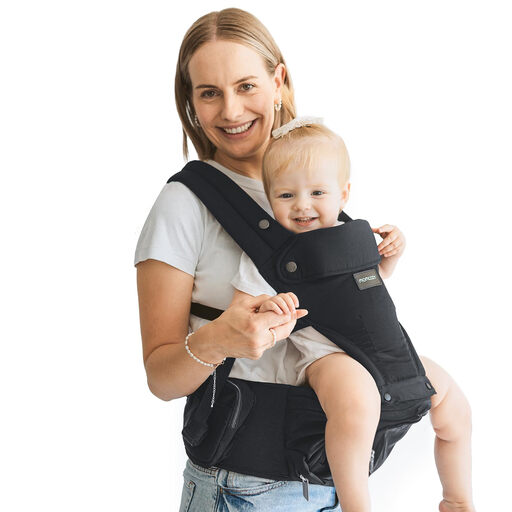
Why This Fits Their Persona: For the parent seeking maximum value and longevity from a single purchase. This hip seat baby carrier adapts from a standard carrier into a convenient hip seat for toddlers, covering multiple developmental stages and carrying needs.
It solves the "grows with your baby" problem by offering genuinely different modes. The detachable hip seat provides a stable, ergonomic perch for toddlers who want up-and-down contact, a function a standard carrier cannot replicate.
Exceptional versatility with six carrying positions and a high weight capacity (up to 20 kg). The detachable hip seat is a standout feature for supporting toddlers comfortably.
We have compiled a complete, real-time list of products that fully satisfy these strict selection criteria and UK safety regulations.
1. How do I know if my baby is positioned correctly in a carrier? The key is to ensure their airway is always clear and their face is visible. They should be positioned high on your chest, or "close enough to kiss" their head. For their lower body, check for the ergonomic "M-position", where their bottom is lower than their knees, creating an 'M' shape. Their back should have a gentle, natural curve like a 'C'.
2. Can I use a baby carrier from birth? Many carriers are designed for newborns, but you must always check the manufacturer's specified minimum weight and age. A good baby carrier for newborn use will offer excellent head and neck support and allow for a snug fit to prevent slumping. Some larger, structured carriers may require a separate infant insert to be used safely with a very small baby.
3. How long can I use a baby carrier for? This depends on two factors: the carrier's maximum weight limit and your own comfort. Most structured carriers are designed to support children up to 15-20 kg. However, a very lightweight baby carrier or sling may have a lower weight limit. Pay attention to your body; if you start to feel strain, it may be time to transition to a different carrying method or carrier type, like a hip seat baby carrier, which is often more comfortable for heavier toddlers.