
24/7 Customer Support

Free returns

Same-day & Next-day Delivery

Quality Guaranteed

Unlock Your Welcome Offers: FREE Delivery | Up to 80% OFF | Free 30-day JoyPlus trial
Download the APP
Navigating the world of baby cups can feel like a minefield. Shelves are packed with promises of mess-free hydration and seamless transitions, yet many parents find themselves with a cupboard full of cups their child refuses to use, or worse, ones that leak all over the nappy bag. As a Joybuy Product Recommendation Officer, my role is to help you sidestep the common purchasing traps and find a practical solution for your family.
Before you add another cup to your collection, let's look at the three most common pitfalls that lead to wasted money and frustration:
To make an informed choice, it helps to understand the core features that truly matter. Focusing on these three parameters will ensure you select a cup that is safe, practical and developmentally appropriate.
This is perhaps the most critical decision. A free flow beaker allows liquid to pour out when the cup is tipped, much like a regular open cup. Health professionals often recommend these for early weaning as they teach a child to sip, not just suck, which is an important skill for oral development.
In contrast, a non-spill toddler cup uses a valve (often made of silicone) that only opens when the child applies suction. This is incredibly practical for preventing messes, especially when out and about. However, the sucking action is different from sipping. Many parents find it useful to have both: a free-flow cup for mealtimes at home and a valved cup for travel.
In the UK, any product intended for babies must meet strict safety standards. You will see BPA-free on almost all packaging, which means the plastic does not contain Bisphenol-A. Look for cups made from durable materials like Polypropylene (PP) and food-grade Silicone. These materials are not only safe but are also robust enough to withstand being dropped from a highchair, which is an inevitable part of toddler life.
Before you buy, mentally disassemble the cup. How many parts are there? Are there narrow tubes or complex valve systems? A simple design with two or three parts is always easier to manage. Check if the cup is top-rack dishwasher safe, as this can be a huge time-saver. A baby training cup that is easy to clean is one you will be happy to use every day.
Instead of a generic list, we have matched some practical options to the parents who will appreciate them most.
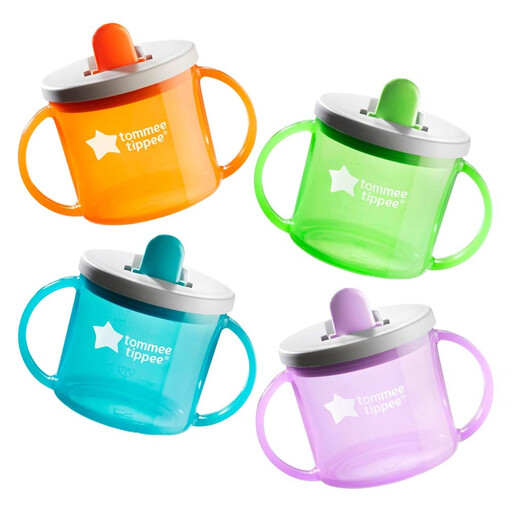
Why This Fits Their Persona: Ideal for parents starting the weaning journey. This cup is designed to introduce the concept of sipping from something other than a bottle or breast. The small size and simple handles are perfect for tiny hands just learning coordination.
It's a free-flow cup, avoiding the developmental issues of valved cups at this early stage. With only two parts, it sidesteps the cleaning nightmare entirely.
The free-flow spout helps babies learn to sip, and the spout flips down for spill-proof travel. It's simple, affordable and easy to clean.
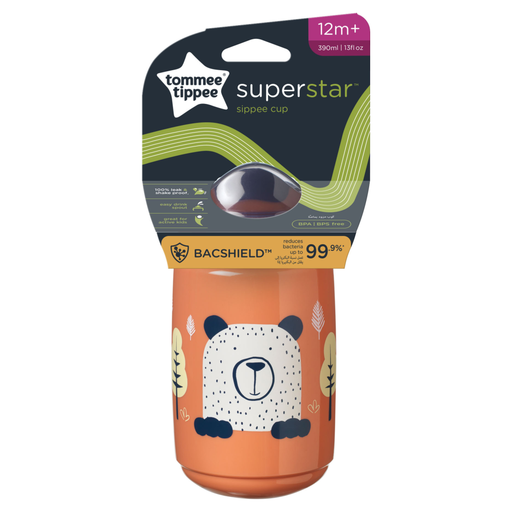
Why This Fits Their Persona: For parents of toddlers who are always on the move. This cup is built for durability and preventing major spills during trips to the park, car journeys or just chaotic playtime at home.
It tackles the "leak-proof" promise with specific INTELLIVALVE technology designed to be robust. The bite-resistant spout also addresses a common failure point for cups used by teething toddlers.
The combination of a leak-proof valve and a durable, bite-resistant spout provides peace of mind. It's also ergonomically designed for small hands to hold securely.
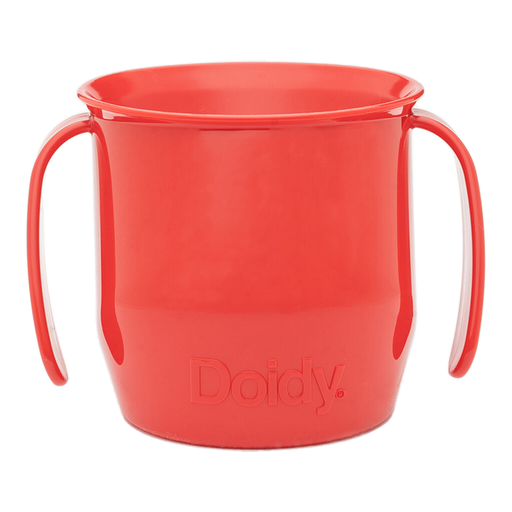
Why This Fits Their Persona: For parents who want to encourage natural oral development and transition to an open cup as early as possible. This cup is consistently recommended by health professionals for its unique design.
It completely bypasses the spout vs. straw debate by being an open cup. Its simplicity means there are no complex parts to clean, avoiding the hygiene trap entirely.
The unique slanted design allows the baby to see the liquid and learn to sip without tilting their head back, promoting good posture and hand-eye coordination.

Why This Fits Their Persona: This is for any parent who has ever spent too long trying to clean a straw with a tiny, fiddly brush. It's a practical solution for those who prioritise hygiene and convenience above all else.
It directly solves the "cleaning nightmare" pitfall. The straw zips open, allowing for a thorough clean without any special tools, ensuring no hidden mould can grow.
The innovative zip-open straw is exceptionally easy to clean. It also features a reliable spill-proof valve, making it a great all-rounder for toddlers.
We have compiled a complete, real-time list of products that fully satisfy these strict selection criteria and UK safety regulations.
A free-flow cup allows liquid to flow freely when tipped, which helps your child learn to sip and control the flow, similar to an open cup. A non-spill cup contains a valve that only releases liquid when your child sucks on the spout or straw. This prevents messes but uses a different mouth action.
A 360 cup is a spoutless trainer cup with a valve that allows a child to drink from anywhere on the rim. They can be an excellent transitional tool between a sippy cup and a fully open cup, as they mimic the motion of open-cup drinking while still providing a high degree of spill resistance.
You should inspect the cup, especially the spout or straw, before each use. Look for any signs of wear, such as cracks, tears or bite marks. It is good practice to replace soft spouts or silicone valves every 2-3 months or immediately if you see any damage. The entire cup should be replaced if the main body is cracked or heavily scratched, as these areas can harbour bacteria.