
24/7 Customer Support

Free returns

Same-day & Next-day Delivery

Quality Guaranteed

Unlock Your Welcome Offers: FREE Delivery | Up to 80% OFF | Free 30-day JoyPlus trial
Download the APP
Navigating the world of baby products can feel overwhelming, and choosing the right baby feeding set is no exception. The market is filled with items that promise mess-free mealtimes and happy eaters, but the reality can often be a bowl that won't stick, a spoon that's too big and a cupboard full of mismatched plastic. As a Joybuy Product Recommendation Officer, my role is to help you sidestep the common purchasing traps and find functional, safe and durable items for your little one.
Before you add anything to your basket, let's look at a few common pitfalls that can lead to wasted money and frustration:
To ensure you're getting a safe and practical baby weaning set, focus on these core parameters. They are the non-negotiable details that separate a useful tool from a kitchen gadget that gathers dust.
Your child's safety is paramount. Always look for products explicitly labelled as BPA-free. Bisphenol-A (BPA) is a chemical that has been widely removed from baby products due to health concerns. Beyond this, consider the material itself:
The design of a feeding set can either help or hinder your child's journey to independent eating.
Instead of a generic list, we've matched our recommendations to specific parenting needs. This helps you find a product that truly fits your situation.
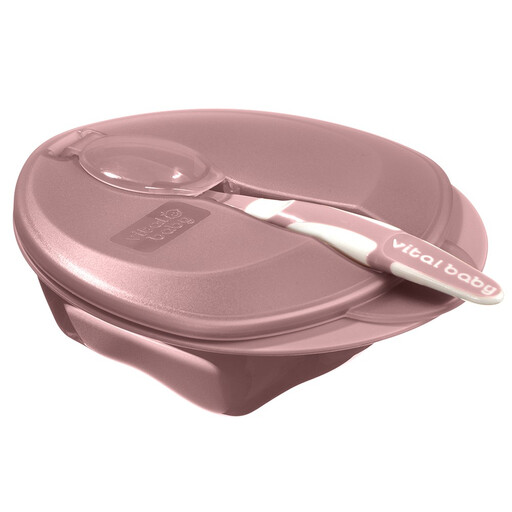
Why This Fits Their Persona: Ideal for parents just starting the weaning journey. This all-in-one set simplifies the process of preparing and serving first foods, whether at home or on the go, thanks to its clever design.
It directly solves the "one-size-fits-all" utensil problem with a shallow, soft-tipped spoon designed for a baby's first tastes. The integrated mashing zone also means you can easily control food texture without needing extra equipment.
Features a built-in food mashing zone and a leakproof lid with a spoon cover for hygienic travel. It is also made with EarthSmart biodegradable technology.
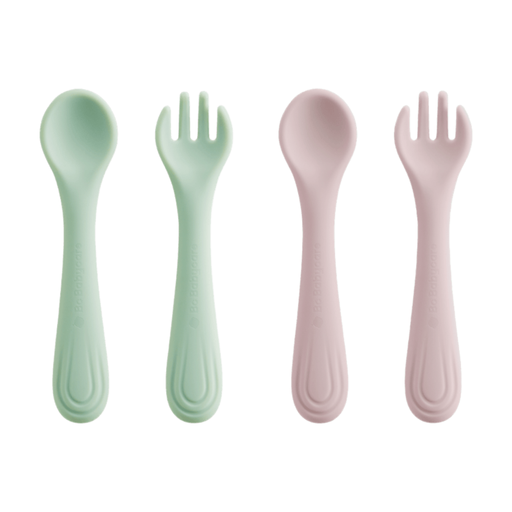
Why This Fits Their Persona: Perfect for parents encouraging their toddler's independence. The ergonomic, non-slip handles are easy for small hands to grip, and the included travel case makes it simple to bring familiar utensils on outings.
This set is the antidote to poorly designed utensils. The fork tines are rounded for safety but flexible enough to spear food, and the handles are specifically shaped for a toddler's grasp, reducing frustration during mealtimes.
Ergonomic, non-slip silicone handles and rounded fork tips promote safe self-feeding. Includes a portable storage case for hygiene on the go.

Why This Fits Their Persona: For the parent who wants a complete, coordinated and highly functional solution. This comprehensive **pink baby feeding set** covers every mealtime need, from the bowl and plate to the bib and cup.
This set tackles the "non-sticking suction bowl" issue head-on with a strong suction base on both the bowl and plate. The entire set is made from food-grade, BPA-free silicone, ensuring consistent safety and quality across all items.
A complete 6-piece set including a bib and cup. The bowl and plate feature a strong suction base to minimise spills, and all components are dishwasher-safe for easy cleaning.
We have compiled a complete, real-time list of products that fully satisfy these strict selection criteria and UK safety regulations. Many of our recommended sets come in a variety of colours, including pink.
1. How do I properly clean a silicone baby feeding set? Most food-grade silicone sets are dishwasher-safe (top rack recommended). For manual washing, use warm, soapy water and a soft sponge. Avoid abrasive scourers which can damage the surface. To remove stubborn food odours or stains, you can try soaking the items in a solution of water and white vinegar or boiling them for a few minutes, if the manufacturer's instructions permit.
2. At what age should a baby start using self-feeding utensils? Babies can start exploring utensils around 6 to 8 months, though they will mostly play at first. By 10 to 12 months, many babies develop the pincer grasp and coordination to begin using a spoon more effectively. Toddler-specific forks are usually introduced after 12 months, once they have better motor control. Always supervise your child during mealtimes.
3. Are suction bowls worth it, and how do I make them stick? A good suction bowl can be a mealtime-saver. To make them work, ensure the suction base and the surface are both perfectly clean and dry. Press the bowl down firmly in the centre to push out any air. They stick best to smooth, non-porous surfaces like plastic highchair trays, glass or polished stone. They will not stick well to textured or porous wood grain surfaces.