
24/7 Customer Support

Free returns

Same-day & Next-day Delivery

Quality Guaranteed

Unlock Your Welcome Offers: FREE Delivery | Up to 80% OFF | Free 30-day JoyPlus trial
Download the APP
Navigating the world of baby nappies can feel overwhelming. With shelves lined with countless options, it’s easy to fall for marketing promises that don’t quite hold up in reality. As a Product Recommendation Officer at Joybuy, my role is to help you see past the hype and focus on what truly matters for your baby’s comfort and your budget. Let's look at the common pitfalls and how to choose wisely.
Before you add another pack of disposable nappies to your basket, be aware of these common traps that can lead to disappointment and wasted money:
To find the right nappy, focus on these core parameters rather than just the marketing slogans.
A good nappy's primary job is to keep wetness away from your baby's skin and prevent leaks. The key is not just total capacity, but how quickly and effectively it absorbs liquid.
overnight nappies.disposable nappies, flexible tapes that can be re-fastened are useful. For older, more active babies, nappy pants (or pull up pants) with a 360-degree stretchy waistband often provide a more secure fit.The right size and material are fundamental to both comfort and performance. An ill-fitting nappy is the number one cause of leaks.
size 1 nappies for newborns, size 4 nappies for active crawlers). If your baby is near the top of a weight range or you're experiencing frequent leaks, it's usually time to move up a size.newborn nappies and babies with delicate skin, prioritise soft, breathable materials. A "dermatologically tested" statement provides assurance that the product has been reviewed for its potential to cause skin irritation. Many own-brand options, like Nutmeg nappies, and premium brands like Pampers nappies, offer this as standard.Instead of a one-size-fits-all approach, we've matched different types of nappies to the parents and babies they suit most.

Why This Fits Their Persona: Ideal for new parents who prioritise gentle care for their newborn's delicate skin. The features are designed to offer peace of mind during those early weeks.
It goes beyond vague "sensitive" claims by being dermatologically tested and free from the 26 EU perfume allergens, providing tangible assurance for delicate newborn skin.
Features a DermaComfort layer to pull wetness away from the skin and a handy wetness indicator that turns blue, helping new parents know when a change might be needed.
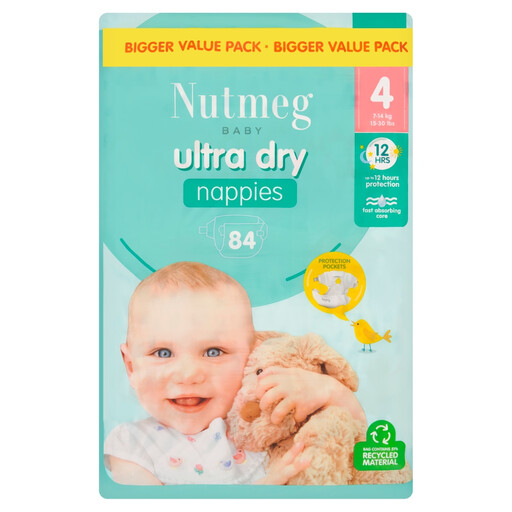
Why This Fits Their Persona: An excellent choice for families looking for reliable performance without the premium price tag. The large pack size offers great value for daily use with an active baby.
This nappy focuses on core performance features like DoubleDry technology and a fast-absorbing core, delivering dependable dryness and avoiding the cost of big-brand marketing.
Offers a low cost-per-nappy in a jumbo pack. It is also dermatologically tested and uses pulp from PEFC certified sustainable forests, providing both quality and ethical assurance.
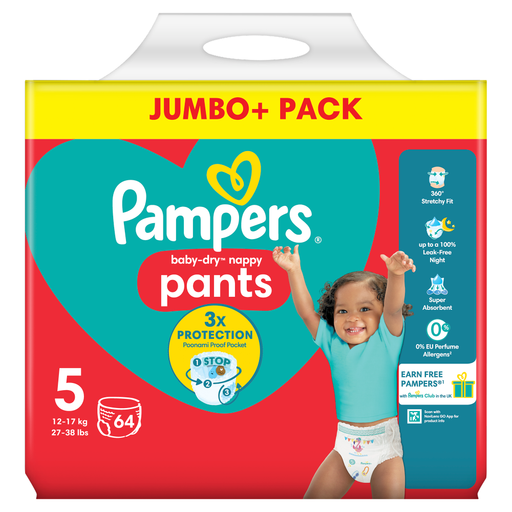
Why This Fits Their Persona: Perfect for toddlers who are always on the move. The pull-on design makes changes quicker and easier, while the secure fit is designed to prevent leaks during crawling, climbing and play.
It tackles the "12-hour dryness" issue for active toddlers by focusing on a secure, gap-free fit. The 360° Comfort Fit and Stop & Protect pocket are practical features designed to prevent leaks caused by movement.
The pull-on design with easy-tear sides simplifies changing a wriggly toddler. The Stop & Protect pocket at the back is specifically designed to catch messes before they escape.
We have compiled a complete, real-time list of products that fully satisfy these strict selection criteria and UK safety regulations.
The most common signs that it's time for a bigger size are frequent leaks, red marks on your baby's tummy or thighs from the nappy being too tight or the nappy not fully covering your baby's bottom. If your baby is approaching the upper end of the weight guide for their current size, it's a good time to buy a small pack of the next size up to try.
Standard nappies (like size 1, size 2 and size 3 nappies) use adhesive tapes on the side for fastening. They are ideal for newborns and less mobile babies as they can be changed while the baby is lying down. Nappy pants, or pull up pants, are pulled on like underwear and are better suited for active toddlers who stand during changes. They have tearable sides for easy removal.
Not necessarily. While premium brands often pioneer new features, many supermarket own-brands provide excellent, reliable performance at a lower cost. They often use similar core technologies, are dermatologically tested and meet the same UK safety standards. The right choice depends on finding the features that work for your baby and fit your budget.