
24/7 Customer Support

Free returns

Same-day & Next-day Delivery

Quality Guaranteed

Unlock Your Welcome Offers: FREE Delivery | Up to 80% OFF | Free 30-day JoyPlus trial
Download the APP
Navigating the world of baby soothers can feel overwhelming. With countless shapes, materials and features on the market, it is easy to fall into common purchasing traps. As a Product Recommendation Officer at Joybuy, my role is to help you sidestep the marketing clutter and focus on what truly matters for your child's comfort and safety. This guide will break down the essential factors to consider, helping you choose with confidence.
Before you add a soother to your basket, be aware of these frequent missteps that many parents make:
To make an informed choice, focus on these three non-negotiable parameters. They are the foundation of a safe, comfortable and practical soother.
A soother's primary job is to comfort, but it should also support healthy development. Always choose a soother that is explicitly labelled for your child's age group, such as 0-6 month soothers, 6-18 month dummies or soothers for toddlers (18-36 months).
Additionally, look for orthodontic soothers. These feature a symmetrical, often flattened teat that is designed to place less pressure on the developing palate and jaw. This shape helps support the natural development of your baby's teeth and gums. In the UK, all soothers must comply with the safety standard EN 1400, so always check for this on the packaging.
The two most common materials for soother teats are silicone and natural rubber latex.
Regardless of the material, ensure the soother is certified BPA-free. For the shield, look for designs with large air holes that allow your baby's skin to breathe, reducing the chance of irritation.
Certain features can make a real difference to your daily routine. Glow in the dark dummies are a perfect example; they make it easy to find a lost soother in the middle of the night without having to turn on a bright light.
Another highly practical feature is a reusable dummy with a steriliser case. Brands like MAM soothers and Tommee Tippee dummies often include a small pod that allows you to sterilise the soothers quickly and hygienically in a microwave with just a splash of water, which is ideal for use at home or while travelling.
Based on these practical criteria, here are a few soothers that align with specific needs of UK parents.
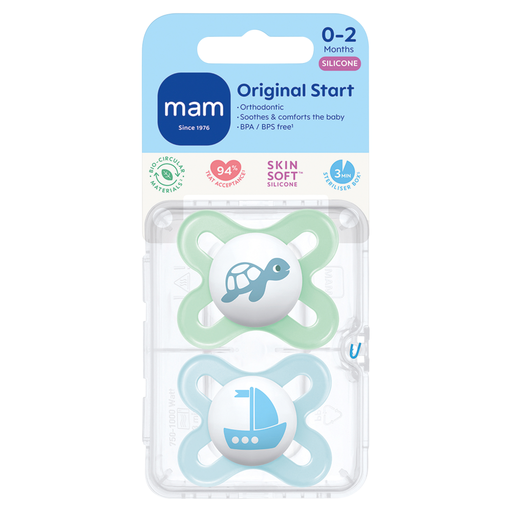
Why This Fits Their Persona: This soother is specifically engineered for newborns. Its extra-small and lightweight shield is easy for a tiny baby to hold in their mouth without it falling out, providing comfort from day one.
It directly counters the "one-size-fits-all" trap by being purpose-built for the 0-2 month stage. The shield also has large air holes, addressing the pitfall of poor ventilation for delicate newborn skin.
Made with 94% bio-circular materials for a reduced carbon footprint. Includes a self-sterilising travel box for quick, easy hygiene.
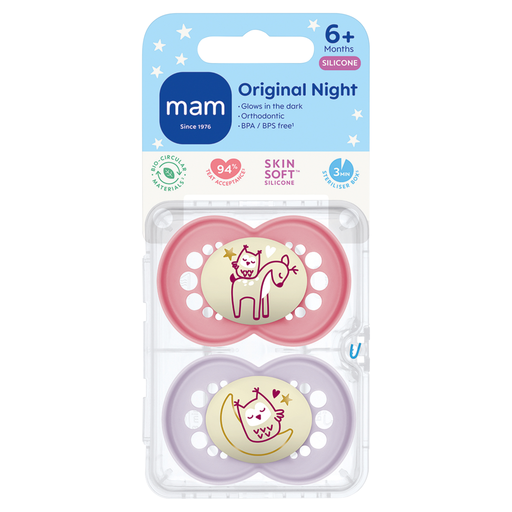
Why This Fits Their Persona: For parents tired of fumbling around a dark cot at 3 a.m., the glow-in-the-dark button on this soother is a genuinely practical solution that helps everyone get back to sleep faster.
This is a convenience feature that works. It is not a gimmick, but a simple, effective solution to a common problem, combined with a well-regarded orthodontic teat and skin-friendly shield.
The button gently glows for easy finding at night. It also includes the brand's signature self-sterilising travel case for hygiene on the go.
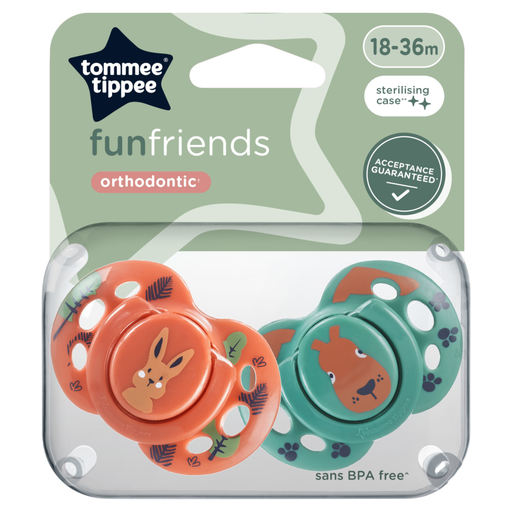
Why This Fits Their Persona: This soother is built for the demands of a toddler. Its robust, symmetrical design is suitable for a more developed jaw and can withstand the extra wear and tear from a child with teeth.
By being clearly marked for the 18-36 month stage, it ensures a safe and appropriate fit. The symmetrical teat also means it is always the right way up, a practical design for a toddler who may insert it themselves.
The symmetrical orthodontic design supports oral development in older toddlers. It also includes a reusable steriliser pod for quick microwave cleaning.
We have compiled a complete, real-time list of products that fully satisfy these strict selection criteria and UK safety regulations.
For both safety and hygiene, it is recommended to replace a soother every 1-2 months. You should also inspect it before each use by pulling the teat in all directions. Discard it immediately at the first sign of damage, weakness or stickiness.
Silicone soothers are made from a medical-grade synthetic material. They are very durable, hold their shape, are easy to clean and are hypoallergenic. Latex soothers are made from natural rubber, which is softer and more flexible. Some babies prefer the texture, but latex can degrade faster and carries a small risk of causing an allergic reaction.