
24/7 Customer Support

Free returns

Same-day & Next-day Delivery

Quality Guaranteed

Unlock Your Welcome Offers: FREE Delivery | Up to 80% OFF | Free 30-day JoyPlus trial
Download the APP
Watching your little one go through the teething phase can be tough. The fussiness, drooling and discomfort are clear signs they need relief, but navigating the world of teething toys can feel overwhelming. With so many shapes, materials and features, how do you choose a baby teether that is both safe and effective?
As the Joybuy Product Recommendation Officer, my role is to help you find practical solutions. This guide cuts through the clutter, offering clear advice on what to look for in a teether and highlighting a few standout options to help soothe your baby’s sore gums.
Before looking at specific products, it’s helpful to understand the key features that make a good teether. Here are a few points to consider during your search.
A baby teether will spend a lot of time in your child's mouth, so material safety is paramount. Always look for products that are explicitly labelled as BPA-free. In the UK, reputable teethers should also carry a UKCA or CE mark, indicating they meet stringent safety standards. Common materials include:
Not all teething discomfort is the same. The right teether often depends on your baby's age and the intensity of their symptoms.
Hygiene is crucial. Look for teethers that are easy to wash with soap and water. Some are dishwasher-safe, but always check the manufacturer's instructions, as certain materials or designs (like those with squeakers or electronic parts) may require wipe-cleaning only. Regularly inspect any teething toys for signs of wear and tear, and discard them if they become damaged to prevent any choking hazards.
Based on their features, materials and user feedback, here are a few options that address different teething needs.
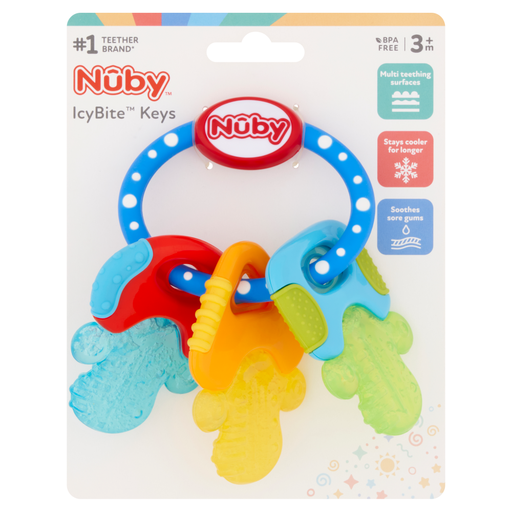
Why It Stands Out: The Nuby IcyBite Keys are a classic cooling teether designed for targeted relief. They contain a non-toxic PurIce gel that stays cool longer than water-filled teethers. The multi-surface design features a combination of soft and firm textures, helping to massage gums as front, middle and back teeth emerge.
Pros:
Who is it for? Parents looking for an effective teether for sore gums, particularly for babies aged 3 months and older who would benefit from the added comfort of a chilled surface.
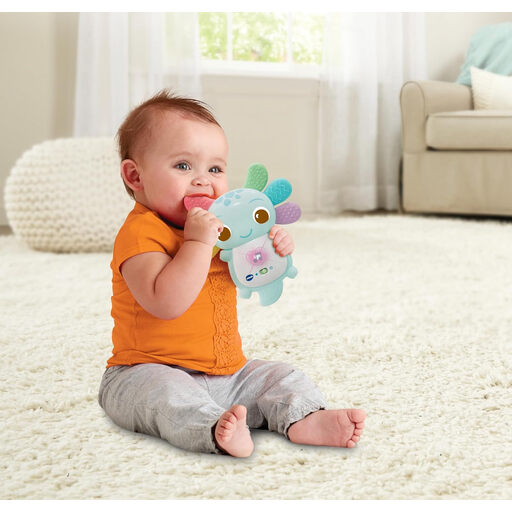
Why It Stands Out: This sensory teether toy does more than just soothe gums. The Vtech Axolotl combines a soft, textured silicone teether with interactive elements. A light-up heart button activates songs, melodies and fun sounds, providing a welcome distraction for an irritable baby while encouraging sensory exploration.
Pros:
Who is it for? Families who want a multi-functional toy that aids teething discomfort while also supporting their baby's sensory and cognitive development from 3 months onwards.
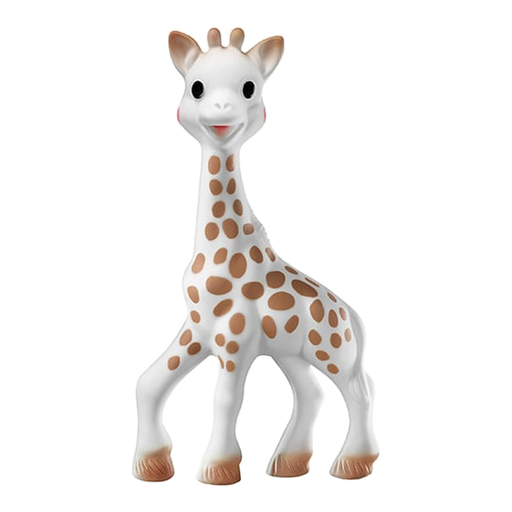
Why It Stands Out:Sophie la Girafe is an iconic teether, handcrafted in France for over 60 years. Made from 100% natural rubber and painted with food-grade paint, it’s designed to stimulate all five of a baby's senses. Its soft texture, numerous chewable parts (ears, horns, legs) and gentle squeak have made it a globally recognised companion for teething infants.
Pros:
Who is it for? Parents seeking a classic, time-tested natural rubber teether or anyone looking for a cherished newborn teether gift. It is suitable from birth.
While these recommendations cover a range of needs, every baby is different. If you’re still searching for the perfect fit, or simply want to see more styles and materials, you can browse our complete collection.
? Explore our full range of teething toys to find more choices.
1. What is the safest material for a baby teether? The safest materials are those that are non-toxic, durable and appropriate for chewing. Look for teethers made from 100% food-grade silicone or 100% natural rubber. Most importantly, always ensure the product is certified BPA-free and meets UK safety standards (indicated by a UKCA or CE mark).
2. When should I give my baby a teether? You can introduce a teether as soon as you notice the first signs of teething, which typically occurs between 3 and 6 months of age. These signs include excessive drooling, irritability, swollen gums and a constant desire to chew on things. A lightweight newborn teether is suitable for this early stage.
3. Can I put any teether in the freezer? No, it is generally not recommended to put a teether in the freezer. Freezing can make the teether too hard, which could bruise your baby's delicate gums. For a cooling teether, always follow the manufacturer's instructions, which usually advise placing it in the refrigerator for a short period.