
24/7 Customer Support

Free returns

Same-day & Next-day Delivery

Quality Guaranteed

Unlock Your Welcome Offers: FREE Delivery | Up to 80% OFF | Free 30-day JoyPlus trial
Download the APP
Moving from a bottle or breast to a cup is a significant milestone in your little one's development. But with so many options on the market, finding the right baby training cup can feel overwhelming. You want something that minimises mess, is safe for your child and supports healthy oral development. As the Joybuy Product Recommendation Officer, my role is to help you navigate these choices with clear, practical advice. This guide will break down what to look for and highlight a few standout options to make your decision easier.
Before diving into specific products, let's look at the key features that matter most. Keeping these points in mind will help you select the first cup for baby that best suits their age and developmental stage.
The type of cup you choose can influence how your child learns to drink. Health professionals often suggest that moving to an open cup or a cup that mimics open-cup drinking is beneficial for developing the muscles in the mouth.
For many parents, a non-spill baby cup is a non-negotiable feature, especially for use outside the home. Look for cups with well-designed valves that prevent leaks when tipped over or dropped. However, remember that some free-flow cups, which do not have valves, can be helpful for teaching your child about cause and effect (tipping the cup means the drink comes out). It's often practical to have both types for different situations.
Safety and hygiene are paramount. Always opt for a BPA free toddler beaker to ensure no harmful chemicals are in contact with your child's drink. Additionally, consider how easy the cup is to clean. Cups with fewer, easy-to-disassemble parts are less likely to harbour mould or bacteria. Dishwasher-safe components are a significant time-saver for busy parents.
Here are a few baby training cups that offer practical features for different stages of the weaning journey.
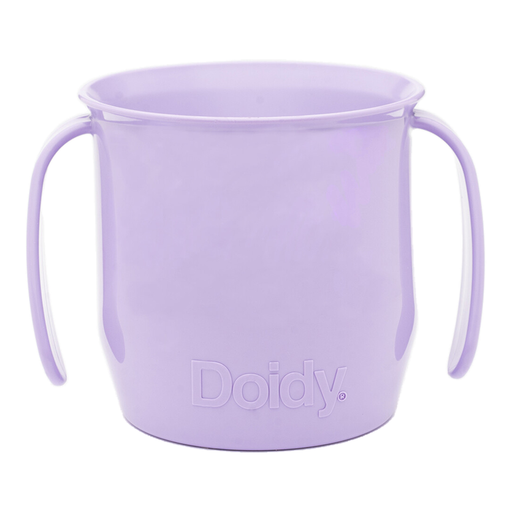
Why It Stands Out: The Doidy Cup is a classic open trainer cup recommended by many health professionals for its focus on oral development. Its unique slanted design is its defining feature, allowing a baby to see the liquid without tilting their head excessively. This encourages a natural sipping action and helps develop hand-eye coordination from a very early age.
Pros:
Who is it for? This cup is an excellent choice for parents who want to introduce an open cup from the very beginning of the weaning process. It's ideal for supervised use at mealtimes to teach fundamental drinking skills.
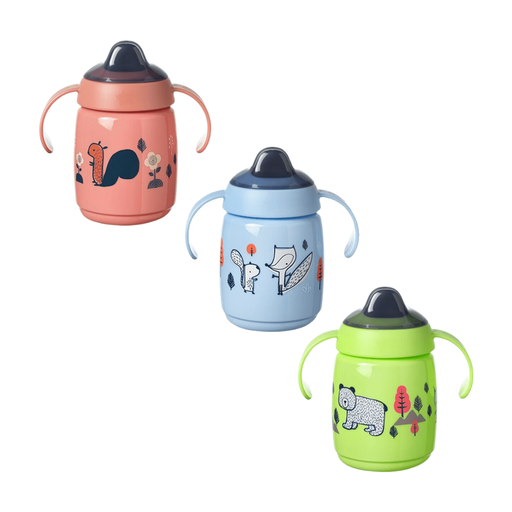
Why It Stands Out: For parents prioritising a mess-free experience, this toddler sippy cup delivers robust performance. According to the brand, its INTELLIVALVE technology provides a 100% leak- and shake-proof guarantee. The spout also features BACSHIELD antibacterial technology, which the brand states reduces bacteria by up to 99.9%.
Pros:
Who is it for? This is a great option for parents of active babies and toddlers from 6 months old. Its durability and reliable spill-proof design make it a practical choice for travel, nursery and everyday adventures where spills are not an option.
View Tommee Tippee Superstar Cup Details

Why It Stands Out: The Munchkin Miracle 360° cup offers a clever compromise between a spouted cup and an open cup. Its signature feature is the 360° valve rim, which allows a child to drink from any side. The valve seals automatically when the child stops drinking, effectively preventing spills while encouraging a more natural sipping motion.
Pros:
Who is it for? This cup is perfect for toddlers aged 6 months and up who are ready to move on from bottles but still need a spill-resistant option. It’s a fantastic transitional tool that builds confidence for eventually using an open cup.
View Munchkin Miracle 360° Cup Details
The journey to independent drinking is unique for every child. If the recommendations above aren't quite what you're looking for, or if you'd like to see a wider variety of styles, including straw cups and different sizes, we have a broader selection available.
Explore Our Full Range of Trainer Cups
Most health guidelines in the UK suggest introducing a cup around 6 months of age, which often coincides with the start of weaning onto solid foods. Starting early helps your baby become familiar with something other than the breast or bottle.
Prolonged and frequent use of any drinking vessel other than an open cup, especially with sugary drinks, can increase the risk of tooth decay. Many dental professionals advise transitioning to an open cup or a free-flowing cup as soon as your child is able. Cups like the 360° design are often seen as a positive step away from traditional spouts that require a sucking motion. The key is to use them for water between meals and to avoid letting a child carry one around to sip from constantly.
To ensure your child's cup stays hygienic, it's important to disassemble it completely after each use. This includes removing any valves, seals and lids. Wash all parts in warm, soapy water or place them on the top rack of the dishwasher if the manufacturer's instructions permit. Allow all components to dry completely before reassembling to prevent mould growth in hidden crevices.