
24/7 Customer Support

Free returns

Same-day & Next-day Delivery

Quality Guaranteed

Unlock Your Welcome Offers: FREE Delivery | Up to 80% OFF | Free 30-day JoyPlus trial
Download the APP
Watching your baby become more mobile is a thrilling milestone. As they start to show an interest in getting on their feet, many parents and caregivers in the UK begin looking for tools to support this new stage of development. A baby walker can seem like an ideal solution, offering a mix of freedom, entertainment and support.
However, the market is filled with options, and choosing the right one can feel overwhelming. This guide is designed to provide clear, practical advice to help you select a baby walker that is safe, engaging and a good fit for your family's needs. We will look at key features to consider and highlight a few models that stand out for their design and functionality.
Before diving into specific products, it’s helpful to understand what features make a baby walker a practical choice. Focusing on safety, adaptability and engagement will help you make a confident decision.
When it comes to baby equipment, safety is non-negotiable. In the UK, baby walkers should comply with the safety standard BS EN 1273:2020. This standard ensures the product has key safety mechanisms. Look for a wide, stable base that prevents tipping as your child moves around. Many modern walkers also include friction strips or anti-tip pads underneath the frame, which are designed to stop the walker at the edge of a step or an uneven surface. Always check that these features are present and clean them regularly to ensure they function correctly.
Babies grow quickly, so a product that adapts with them offers better long-term value. An adjustable baby walker with multiple height settings allows you to position your baby correctly, ensuring their feet can touch the floor comfortably as they grow. This is crucial for proper posture and movement. For many UK households where space is at a premium, a foldable baby walker is a significant advantage. Models that collapse into a flat, compact shape are much easier to store away or take with you when visiting family.
Beyond mobility, many walkers double as entertainment centres. A baby activity walker with built-in toys, lights and sounds can provide valuable sensory stimulation. A musical baby walker, for instance, can help develop auditory senses and keep your little one happily occupied. Look for models with a variety of textures, colours and interactive elements like steering wheels or buttons to press. Some even feature removable toy trays, which adds another layer of versatility for floor play or snack time.
Based on features that prioritise versatility, engagement and practicality, here are our recommendations for your consideration.
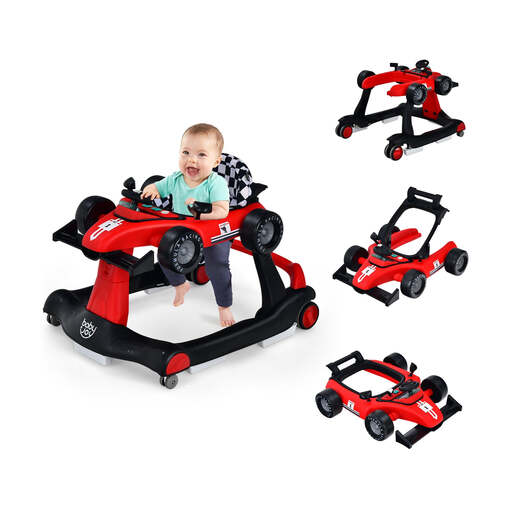
Why It Stands Out: This model is the definition of a multi-stage product. Its clever design allows it to transform from a traditional sit-in walker to a baby push walker, a push car and a rolling toy car. This adaptability means it can serve your child well beyond their first steps, offering excellent long-term value.
Pros:
Who is it for? This is an excellent choice for parents seeking a single product that will adapt to their child's developmental journey from 6 to 18 months. Its transition to a push walker makes it particularly useful for toddlers gaining confidence in walking independently.
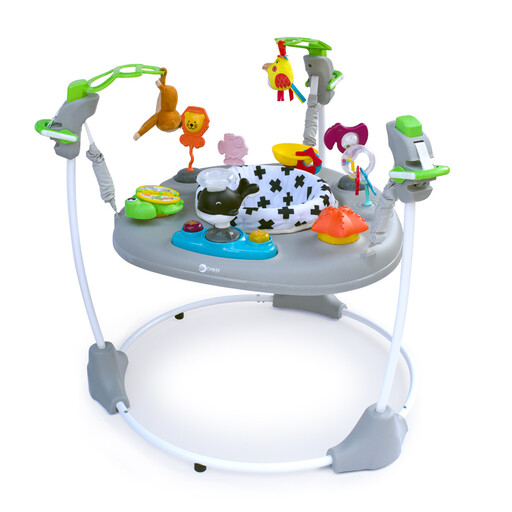
Why It Stands Out: While not a traditional walker for moving around a room, this stationary activity centre is designed for safe, contained play. The 360-degree rotating seat gives your baby full access to a world of entertainment, with 10 different activities designed to stimulate their senses and develop fine motor skills.
Pros:
Who is it for? This is ideal for parents of babies who can sit up unaided (from around 4 months) and want to provide a stimulating and secure play environment. It’s a great option for keeping your baby entertained in one place while you attend to other tasks nearby.
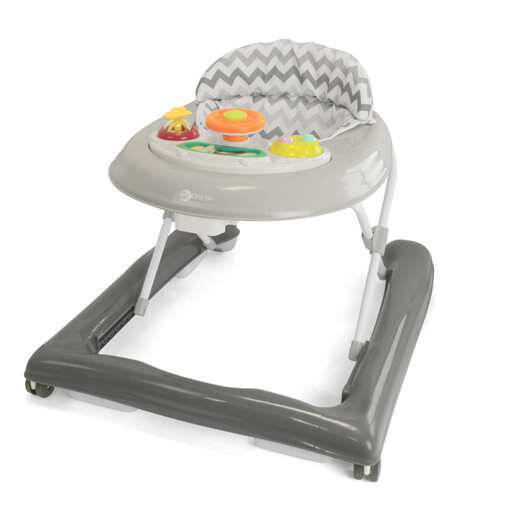
Why It Stands Out: The Wizzy Walker excels in practicality and convenience. Its standout feature is its ability to fold completely flat, making it one of the most storage-friendly options available. The detachable musical baby walker play tray adds another layer of function, easily converting the walker for snack time or floor play.
Pros:
Who is it for? This is a top contender for families living in flats or homes with limited storage. It’s a practical, no-fuss baby walker for 6 months plus who are ready to explore on their feet.
While these three models offer a great balance of features, every family's needs are unique. If you're looking for different styles, from simple wooden push-along toys to other feature-rich activity centres, there are many more choices available.
Explore our complete range of first baby toys to find the perfect match for your little one.
Most sit-in baby walkers are intended for babies who can sit up confidently on their own, which is typically around 6 months of age. Stationary activity centres can sometimes be used slightly earlier, from around 4 months, provided the baby has good head and neck control. Always check the manufacturer's recommended age and weight limits and ensure your child meets the developmental milestones required.
When used correctly and under constant adult supervision, modern baby walkers sold in the UK are designed with safety in mind. To ensure safety, look for products that comply with the BS EN 1273:2020 standard. Key features to look for include a broad, stable base and anti-stair fall devices like friction pads. It is critical to never leave a child unattended in a walker and to ensure the environment is free from hazards like stairs, loose rugs and dangling cords.
The choice depends on your child's developmental stage. A sit-in baby activity walker provides full support and is designed for infants who are not yet able to pull themselves up or stand. It allows them to sit comfortably while using their feet to move. A baby push walker (or push-behind toy) is for toddlers who are already pulling up to a stand and are beginning to cruise. It offers stability in front of them as they practise the motion of walking forward. Some models, like the 4-in-1 walker, offer both functions.