
24/7 Customer Support

Free returns

Same-day & Next-day Delivery

Quality Guaranteed

Unlock Your Welcome Offers: FREE Delivery | Up to 80% OFF | Free 30-day JoyPlus trial
Download the APP
Watching your child take their first wobbly steps is a milestone every parent cherishes. But the journey to independent walking is filled with choices, and the sheer variety of mobility aids can be overwhelming. From traditional sit-in walkers to push-along toys and versatile trikes, how do you know which is right for your child's developmental stage and your family's needs?
This guide is designed to cut through the clutter. As the Joybuy Product Recommendation Officer, my role is to provide clear, practical advice to help you select a product that is safe, suitable and offers genuine value. We will explore the key features to consider and highlight a few standout options that support your child's move towards mobility.
Before you decide, it’s helpful to understand the different types of walkers and the safety features that matter most.
When it comes to any product for your child, safety is the top priority. For traditional sit in baby walker models, look for compliance with UK safety standards, such as EN 1273:2020. Key features to check for include:
Always ensure the product is used on a flat surface, away from stairs, and that your child is supervised at all times.
Not all walkers are created equal, and they serve different purposes at different stages of development.
Many modern walkers are more than just mobility aids; they are also learning to walk toys. An integrated activity panel with lights, sounds and textures can help stimulate your baby’s senses and develop fine motor skills. A baby activity walker can keep your child entertained while encouraging them to move, combining physical development with cognitive play.
Based on functionality, safety features and user feedback, here are our recommendations for different needs and developmental stages.
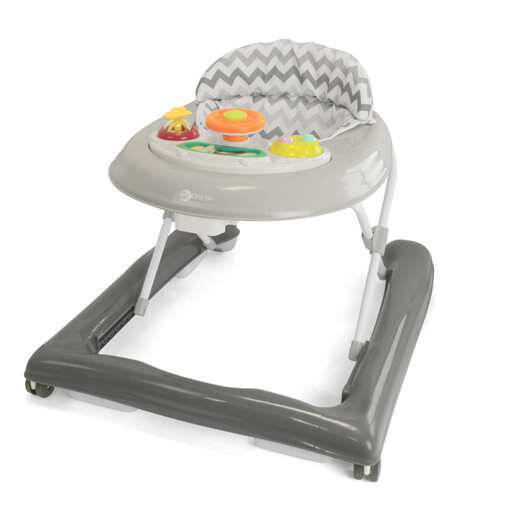
Why It Stands Out: This is a classic sit in baby walker designed with both safety and entertainment in mind. It provides a secure and comfortable environment for babies who are ready to explore their surroundings on their feet, supported by a sturdy frame and engaging play features.
Pros:
Who is it for? This walker is intended for babies from approximately 6 months of age who can sit up unaided and weigh up to 12kg. It’s an excellent choice for parents seeking a secure first walker that also doubles as an entertainment station.
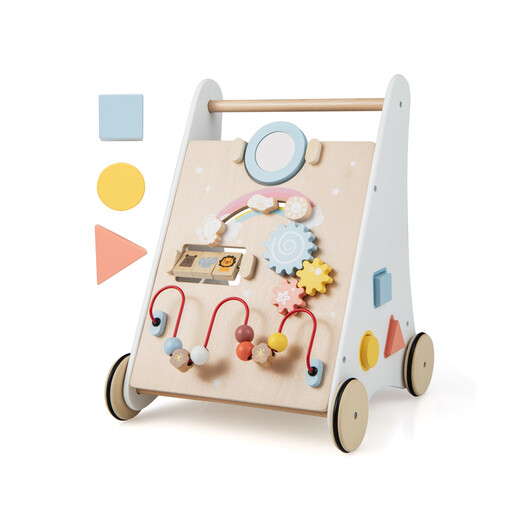
Why It Stands Out: This wooden baby walker combines the function of a push along walker with a comprehensive activity centre. Its sturdy wooden construction and multitude of built-in games make it a durable and highly engaging toy that supports the transition to independent walking.
Pros:
Who is it for? Ideal for toddlers aged 12 months and over who are pulling themselves up to stand and are ready to take their first supported steps. It’s a great option for families who appreciate wooden toys and want a product that aids both walking and learning.
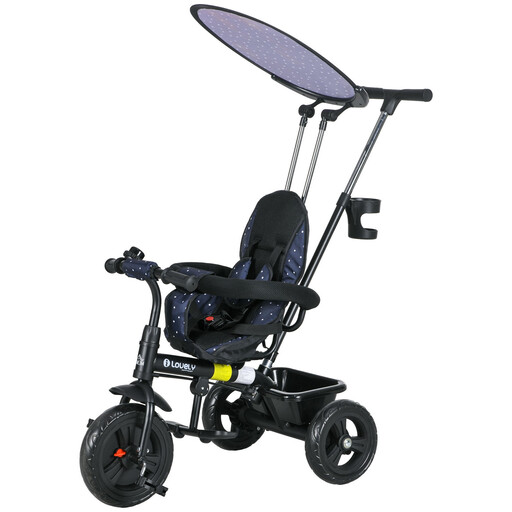
Why It Stands Out: This is the ultimate multi-stage mobility product, designed to grow with your child from 12 months to 5 years. It starts as a secure, parent-steered baby trike with push handle and gradually transforms into an independent toddler tricycle, offering exceptional long-term value.
Pros:
Who is it for? This is for families seeking a long-lasting outdoor mobility solution. It’s perfect for children from 12 months old, providing a safe way to enjoy the outdoors before they are ready to pedal and steer on their own.
While these selections cover key developmental stages, every child's journey is unique. If you are exploring more ways to encourage development through play, our curated collection of educational toys for 3 year olds might have just what you need to inspire your little one's curiosity.
1. At what age can a baby use a walker? This depends on the type of walker. A sit in baby walker is generally suitable from around 6 months, but only once a baby can sit up firmly without assistance. A push along walker is for the next stage, typically from 9-12 months, when a toddler can pull themselves to a standing position and is ready to practise stepping forward. Always check the manufacturer's specific age and weight guidelines.
2. Are push along walkers good for babies? Push along walkers are a popular choice for toddlers who are on the verge of walking. They can help build confidence, improve balance and strengthen leg muscles. Unlike sit-in models, they allow the child to control their movements more freely and practise the natural mechanics of walking while having a stable object for support.
3. What is the difference between a baby walker and an activity centre? A traditional baby walker is primarily a mobility device. A stationary activity centre is a stand-alone play station designed to keep a baby entertained in one place. However, many modern products merge these concepts. A baby activity walker, for example, is a walker that includes a built-in panel of toys, offering the benefits of both movement and developmental play.