
24/7 Customer Support

Free returns

Same-day & Next-day Delivery

Quality Guaranteed

Unlock Your Welcome Offers: FREE Delivery | Up to 80% OFF | Free 30-day JoyPlus trial
Download the APP
Watching your baby become more mobile is a thrilling milestone. As they start to show an interest in moving around independently, many parents consider a baby walker to support their journey. With so many options available, from sit-in models to push-along toys, choosing the right one can feel overwhelming.
This guide is designed to help you understand the key features to look for in a baby walker. We will explore different types, highlight important safety considerations and provide some practical advice to help you find a suitable option for your little one's developmental stage.
Making an informed choice involves looking beyond the bright colours and fun toys. Here are a few key points to keep in mind during your search.
A safe baby walker is the number one priority. In the UK, look for products that comply with the latest safety standards, such as EN 1273:2020. Key features to check for include:
Babies grow quickly, so an adjustable baby walker offers better long-term value. Height adjustment is crucial for ensuring your baby can use the walker correctly and comfortably. Their feet should be able to rest flat on the floor, which supports proper posture and leg muscle development. Some models also offer adjustable speed settings on the wheels, allowing you to control the pace as your child builds confidence.
Modern walkers are more than just mobility aids; they are often a baby activity walker packed with features. Interactive play trays with lights, sounds and textures can help stimulate your baby's senses and develop fine motor skills. Look for walkers with a variety of activities, such as spinning gears, shape sorters or musical buttons, to keep your little one entertained while they explore.
As a Joybuy Product Recommendation Officer, I've filtered through various options to highlight a few walkers that stand out for their design, features and practicality.
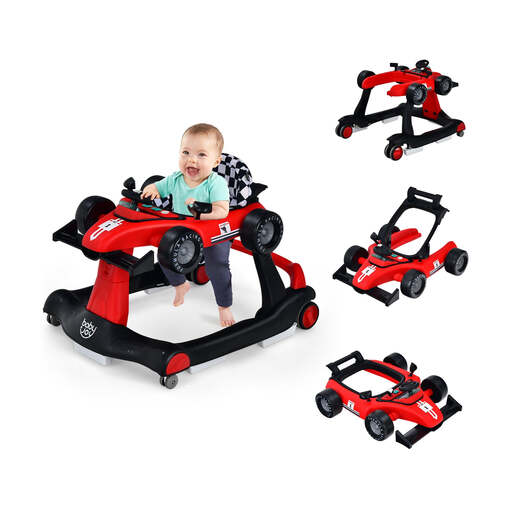
Why It Stands Out This model is a standout for its sheer versatility. It transforms through four different modes—a traditional sit in baby walker, a push along walker, a push car and a rolling toy car. This adaptability means it can support your child through multiple developmental stages, from their first supported steps to confident toddler play.
Pros
Who is it for? This is an excellent choice for parents seeking a multi-functional product that offers great value and will last well beyond the initial walking phase. It's particularly suitable for a baby walker for 6 months and up.
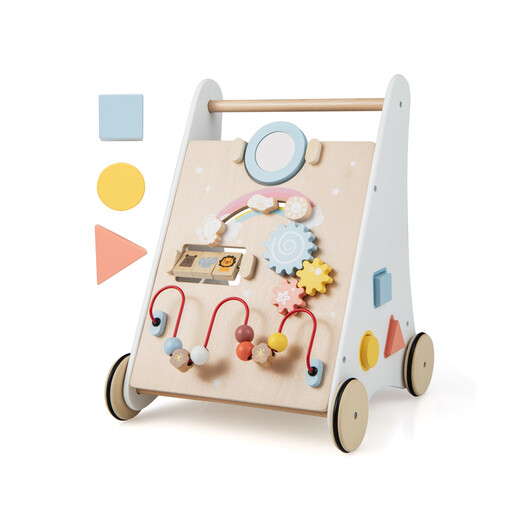
Why It Stands Out For those who prefer classic, durable materials, this wooden push along walker is a fantastic option. It doubles as a 7-in-1 activity centre, with features like a shape sorter, bead maze and flipping blocks designed to enhance cognitive and hands-on skills. Its sturdy wooden construction and thoughtful design make it both a toy and a developmental tool.
Pros
Who is it for? This walker is ideal for families who appreciate traditional wooden toys and are looking for a product that focuses heavily on learning and motor skill development for toddlers aged 12 months and older.
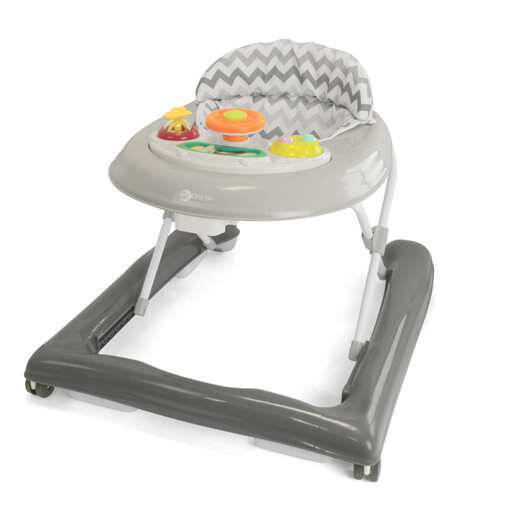
Why It Stands Out The MyChild Wizzy Walker excels in practicality and convenience. It is a classic sit in baby walker designed with modern family life in mind. Its key feature is the ability to fold completely flat in seconds, making it incredibly easy to store or transport. The high-back padded seat provides excellent comfort and support for younger babies.
Pros
Who is it for? This is a great option for parents who prioritise comfort, safety and space-saving design in a straightforward and effective sit in baby walker.
These recommendations offer a glimpse into what's available, but every child's needs are unique. If you're looking for different styles or other ways to encourage movement, there is a wide world of developmental toys to discover.
From ride-on cars to indoor slides, you can explore our full collection of active toys to find the perfect fit for your little one's next adventure.
1. When can a baby start using a walker? Most manufacturers recommend that a baby can start using a sit-in walker once they can sit up confidently on their own, which is typically around 6 months of age. Always check the specific age and weight guidelines provided by the manufacturer for the product you choose.
2. What is the difference between a sit-in and a push-along walker? A sit in baby walker provides full support, allowing a younger baby who isn't yet standing to move around using their feet. A push along walker (or push toy) is designed for toddlers who can already pull themselves up and stand. It offers them something stable to hold onto for balance as they practise taking steps.
3. How can I ensure my baby uses a walker safely? Constant supervision is essential. Only use the walker on flat, clear surfaces and block access to all stairs, steps and uneven ground. Adjust the height so your baby's feet are flat on the floor to promote good posture. Finally, never leave your child unattended in a baby walker, even for a moment.