
24/7 Customer Support

Free returns

Same-day & Next-day Delivery

Quality Guaranteed

Unlock Your Welcome Offers: FREE Delivery | Up to 80% OFF | Free 30-day JoyPlus trial
Download the APP
Starting your baby on solid foods is a milestone filled with excitement, discovery and, let's be honest, a fair amount of mess. As a parent or caregiver, you want to make this transition as smooth and positive as possible. A well-chosen baby weaning set can make all the difference, helping to contain spills, encourage self-feeding and ensure mealtimes are safe and enjoyable.
This guide is designed to help you navigate the options. We'll walk through the key features to look for and share some of our top recommendations to support your little one's journey into the world of food.
Choosing the right first feeding set for baby involves more than just picking a nice colour. Practicality, safety and design all play a crucial role in making mealtimes easier for both you and your child.
When it comes to items your baby will eat from, safety is paramount. Look for sets made from food-grade silicone. This material is a popular choice because it is durable, flexible and free from harmful chemicals. Always ensure any product you choose is explicitly labelled as BPA-free, PVC-free and phthalate-free, which are standard requirements for baby products in the UK. Silicone is also gentle on developing teeth and gums.
A key goal of weaning is to help your baby develop independence. A good baby led weaning (BLW) set is designed to support this. Features to look for include:
Parenthood is busy enough without adding complicated washing-up routines. A practical silicone baby feeding set should be easy to clean. Many sets are dishwasher-safe, and their non-porous surface resists staining and odours. Components that are fully detachable also allow for more thorough cleaning to prevent any build-up in small crevices.
Here are a few recommendations that incorporate the practical and safety-conscious features that many UK parents look for.

Why It Stands Out: This is a comprehensive, all-in-one kit that provides everything you need to get started. It removes the guesswork by bundling all the essential items together in a coordinated set.
Pros:
Who is it for? Parents and caregivers who want a complete and convenient starter kit that covers all feeding needs from the very beginning of the weaning process.
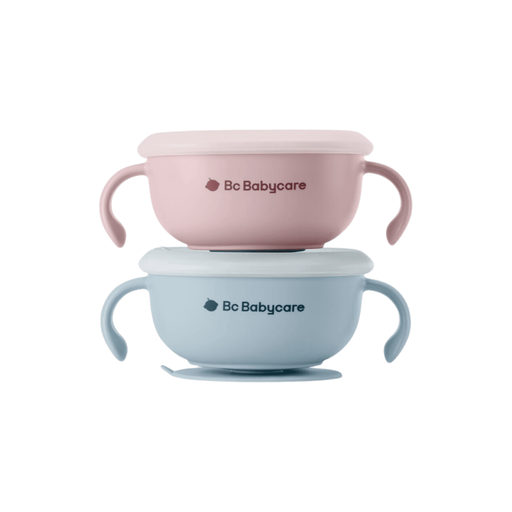
Why It Stands Out: This product’s versatility is its main strength. It functions as a snack pot, a meal bowl and a straw cup, adapting to different feeding situations and stages.
Pros:
Who is it for? Families who appreciate multi-functional products that grow with their child, offering a solution for meals, snacks and drinks all in one clever design.
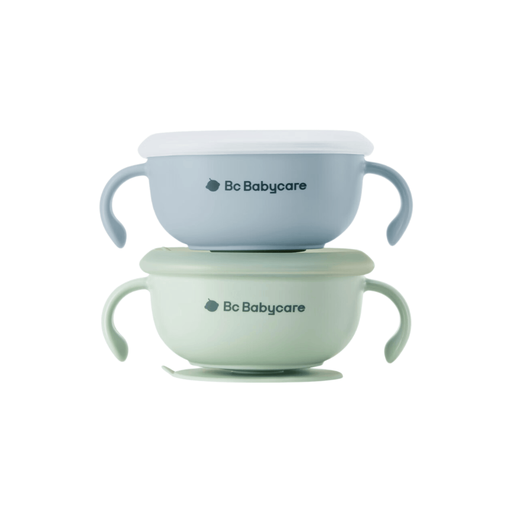
Why It Stands Out: Similar to the model above, this bowl offers excellent 3-in-1 versatility. Its design focuses on encouraging independent sipping and eating with features tailored for toddlers.
Pros:
Who is it for? Parents looking for a durable, multi-use bowl that helps toddlers transition from purées to more solid foods and learn to sip from a straw.
While a dedicated silicone baby feeding set is ideal for the messy early stages of weaning, your tableware needs will evolve as your child grows. You might soon be thinking about more traditional plates and bowls for family mealtimes.
If you are planning ahead or looking for durable, classic designs for older children, you might be interested in exploring different materials and styles. For a look at some timeless options, why not browse our collection of blue china plates?
1. When should I introduce a weaning set? Most parents start to use a weaning set when their baby begins eating solid foods, which is typically around 6 months of age. A baby suction bowl and plate can be particularly useful from the moment your baby starts trying to feed themselves.
2. Is a silicone baby feeding set safe? Yes, provided it is made from high-quality, 100% food-grade silicone and is certified as BPA-free, PVC-free and phthalate-free. Silicone is a stable, inert material that does not leach harmful chemicals, making it a safe choice for baby dishes.
3. How do I get a non-slip baby bowl to stick properly? For the best results, ensure both the suction base of the bowl and the surface (e.g., highchair tray) are clean and dry. Place the bowl on a smooth, flat, non-porous surface and press down firmly in the centre to push the air out and create a strong seal. Textured or uneven surfaces will prevent it from sticking effectively.