
24/7 Customer Support

Free returns

Same-day & Next-day Delivery

Quality Guaranteed

Unlock Your Welcome Offers: FREE Delivery | Up to 80% OFF | Free 30-day JoyPlus trial
Download the APP
The daily ritual of a perfectly brewed coffee is one of life's simple pleasures. Yet, replicating the rich aroma and complex flavour of a café-quality drink at home can feel like a challenge. If you're ready to move beyond instant granules or single-use pods, a bean to cup coffee machine is a significant step up, grinding fresh beans for every single cup.
The market is filled with options, from fully automatic models to those that offer a more hands-on, home barista experience. This guide is designed to cut through the clutter, offering clear, practical advice to help you find a machine that fits your lifestyle and your kitchen counter.
As the Joybuy Product Recommendation Officer, my role is to help you understand the key features to look for, so you can make an informed choice.
Choosing the right machine comes down to a few key considerations. Focusing on these will help you narrow down the options to find a model that suits your daily routine.
The first question to ask yourself is how involved you want to be in the coffee-making process.
If you enjoy lattes, cappuccinos or flat whites, the type of coffee machine with milk frother is a crucial feature.
The integrated grinder is the heart of any bean to cup machine. Look for models with hardened steel or ceramic burrs, which provide a consistent grind without generating excess heat that can damage the flavour of the beans. Multiple grind settings are also important, as they allow you to dial in the perfect extraction for different types of coffee beans, from a fine grind for espresso to a coarser one for a long coffee.
Here are a few standout models that cater to different preferences and priorities, from guided automation to hands-on barista control.
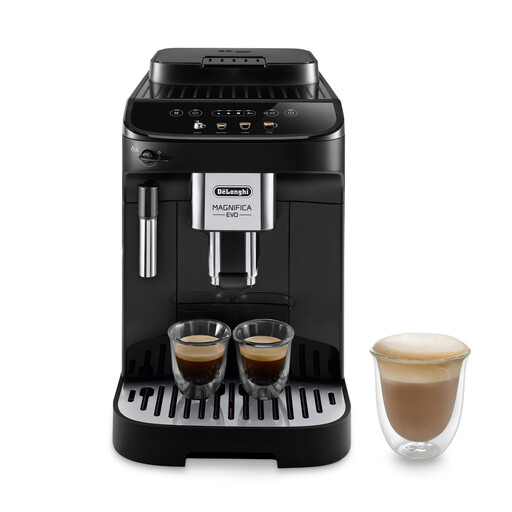
Why It Stands Out: The De'Longhi coffee machine Magnifica Evo is a popular choice for those seeking simplicity and reliability. It focuses on delivering core coffee drinks with minimal fuss. The intuitive control panel with one-touch icons makes it incredibly easy to brew an espresso or a long coffee first thing in the morning.
Pros:
Who is it for? This is an excellent entry-point into the world of bean to cup coffee. It's ideal for individuals or families who want fresh, flavourful coffee without a steep learning curve or complex settings.
View Details for the De’Longhi Magnifica Evo

Why It Stands Out: The Sage coffee machine Barista Pro strikes a balance between automation and manual control. Its standout feature is the ThermoJet heating system, which reaches the optimum extraction temperature in just 3 seconds. The intuitive LCD screen provides all the feedback you need to pull a great shot, while the powerful manual steam wand gives you the tool to create café-style milk foam.
Pros:
Who is it for? The aspiring home barista who wants to learn the craft of espresso making. It offers the control and feedback needed to experiment and improve, without the full automation that can feel restrictive to enthusiasts.
View Details for the Sage the Barista Pro

Why It Stands Out: This machine brings smart technology to the forefront of home coffee making. The Barista Touch Impress offers step-by-step guidance via its colour touchscreen. The Impress Puck System assists with dosing and tamping to create a perfect coffee puck every time. It also features Auto MilQ, an automatic steam wand with settings for dairy, oat, soy and almond milk, making it exceptionally versatile. The new cold extraction feature for making cold brew and cold espresso is a notable addition for warmer months.
Pros:
Who is it for? The tech-savvy coffee lover who wants consistent, high-quality results with the help of smart guidance. It’s perfect for those who appreciate both the art and science of coffee but want a system that removes the guesswork.
View Details for the Sage the Barista Touch Impress
If you haven't found the perfect fit here or want to compare a wider variety of models, there are many other machines to consider. Each offers a different combination of features, sizes and price points.
Explore our full collection to find the ideal coffee bean machine for your home.
Browse All Coffee Bean Machines on Joybuy
1. What is the difference between a bean to cup and an espresso machine? A bean to cup coffee machine is a type of espresso machine that has an integrated grinder. A traditional espresso machine requires a separate grinder. The "bean to cup" name highlights the convenience of having the entire process, from whole bean to finished drink, handled by a single appliance.
2. Are bean to cup coffee machines worth the investment? For those who drink coffee regularly and buy from coffee shops, a bean to cup machine can be a worthwhile investment over time. The cost per cup is significantly lower, and the quality, freshness and flavour are far superior to instant or pod coffee. It also reduces waste from disposable pods and packaging.
3. How often do you need to clean an automatic coffee machine? Regular maintenance is key to performance and longevity. Daily tasks include rinsing the milk frother (if used) and emptying the drip tray and grounds container. A more thorough weekly clean of the brew group is recommended. Most machines also have automated descaling cycles that will prompt you when it's time to run them, typically every 1-3 months depending on your water hardness and usage.