
24/7 Customer Support

Free returns

Same-day & Next-day Delivery

Quality Guaranteed

Unlock Your Welcome Offers: FREE Delivery | Up to 80% OFF | Free 30-day JoyPlus trial
Download the APP
As a Joybuy Product Recommendation Officer, I often see cyclists invest heavily in their bikes but overlook one of the most critical tools for maintenance: a reliable bicycle torque wrench set. Modern bikes, especially those with carbon fibre components, rely on precise bolt tension. Too loose, and parts can slip or creak; too tight, and you risk a catastrophic failure that could cost hundreds of pounds to fix.
Navigating the market for a cycle torque wrench set can be tricky. Many fall into common purchasing traps that lead to wasted money and, worse, damaged equipment. Before you buy, be aware of these pitfalls:
To ensure you get a tool that protects your investment, focus on these non-negotiable parameters. This is the foundation of any good precision bicycle repair kit.
Unlike cars, bicycles operate on much lower torque values. Most key components like stems, seatposts and brake levers require settings between 2 and 15 Newton-metres (N.m). A dedicated carbon bike torque wrench should comfortably operate in this lower range. When shopping, look for a small torque wrench N.m range, typically starting from around 2 N.m and going up to about 25 N.m. This ensures you have the precision needed for delicate adjustments without the risk of damage.
The drive size refers to the square peg that connects the wrench to the socket. For the vast majority of mountain bike maintenance tools and road bike applications, the 1/4 inch torque wrench is the standard. It is perfectly suited for the smaller bolts and lower torque values found on bicycles.
Accuracy is just as important. Look for a stated accuracy of ±4% or better. A tool with a certified accuracy of ±3% or ±2% provides a higher degree of confidence that you are tightening fasteners to the manufacturer's exact specification, which is crucial for both performance and safety.
Instead of a one-size-fits-all approach, the right tool depends on your specific needs. Here are our recommendations based on common user profiles.
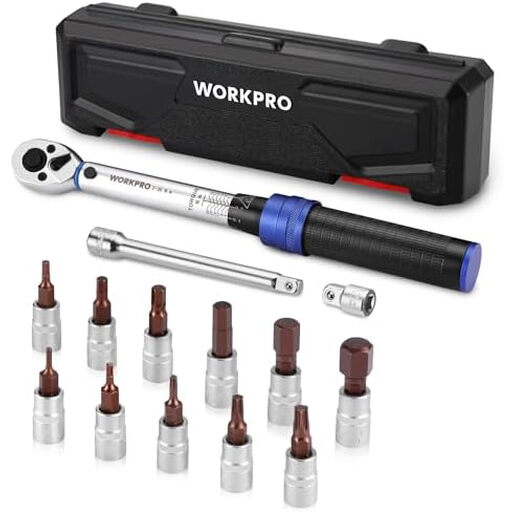
Why This Fits Their Persona: This is an ideal starting point for the home mechanic who performs routine maintenance and component swaps. It offers a practical, no-fuss solution without a hefty price tag, covering all the basics for road and mountain bike care.
It avoids the mismatched range pitfall with a bike-specific 2-26 N.m range and includes the most common Hex and Torx bits, so you are not left searching for accessories.
A complete mechanical kit with a stated ±3% accuracy and a clear 'click' mechanism. The dual-direction 72-tooth ratchet is useful for a variety of tasks.
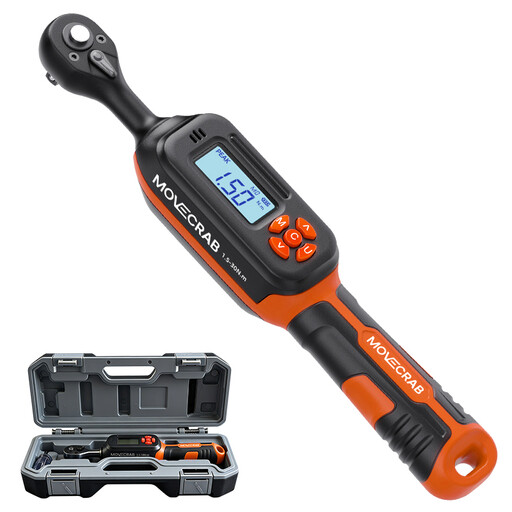
Why This Fits Their Persona: For the owner of a high-end carbon bike, precision is not a luxury—it is a necessity. This digital wrench provides the accuracy and feedback needed to confidently tighten delicate components without fear of costly damage.
It directly counters the calibration trap by offering a high ±2% accuracy and a clear digital readout, removing the guesswork associated with ambiguous 'clicks' from cheaper mechanical wrenches.
The triple-alert system (vibration, sound and light) ensures you never miss the target torque, even in a noisy workshop. The 1-20 N.m range is perfectly tailored for a carbon bike.
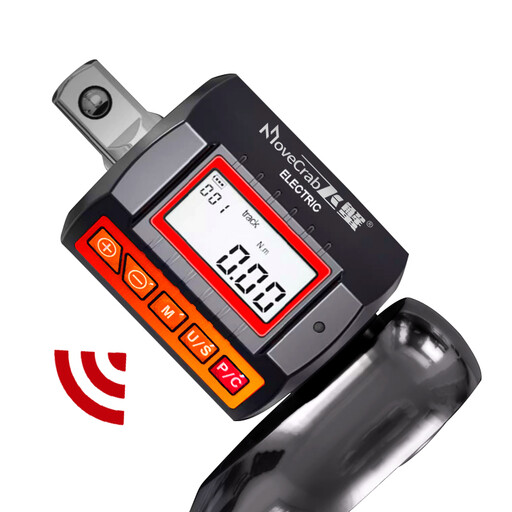
Why This Fits Their Persona: This is for the enthusiast who works on everything from their bicycle to their motorcycle and car. It provides a cost-effective way to get digital precision across a huge range of applications by upgrading existing tools.
This adapter prevents you from buying multiple, limited-range wrenches. It turns any standard 1/2" ratchet into a digital torque tool and includes adapters for 3/8" and 1/4" drives.
Unmatched versatility. The extremely wide 6-200 N.m range covers delicate bike parts and heavy-duty automotive bolts. It also features data storage for up to 1,000 readings.
We have compiled a complete, real-time list of products that fully satisfy these strict selection criteria and UK safety regulations.
Both can be effective if they are high quality and properly calibrated. A digital wrench offers higher precision, a clear visual display and helpful alerts, which is particularly useful for low torque settings on carbon components. A mechanical 'click' wrench is simpler, more robust and requires no batteries, making it a reliable choice for general maintenance. The choice often comes down to personal preference and budget.
It is highly inadvisable. Most torque wrenches designed for automotive use have a high torque range (e.g., 40-250 N.m) and are not accurate at the low values (2-15 N.m) required for bicycles. Using a car wrench on a bike will almost certainly lead to over-tightening and damaging your components. Always use a tool with a range appropriate for the job.
For a home mechanic, formal recalibration is not always necessary if the tool is handled with care. Always store a mechanical 'click' wrench at its lowest torque setting to relieve tension on the internal spring. Avoid dropping any torque wrench, as impacts can knock it out of calibration. If you are a professional or use the tool daily for critical tasks, consider having it professionally checked and recalibrated every 12-18 months.