Joybuy Insights

Finding the Right Blender for Smoothies: Our Top Recommendations for 2026

Choosing the right blender for smoothies can feel overwhelming with the sheer number of models available. Are you looking for a compact personal blender for quick protein shakes after the gym, or a versatile countertop blender that can serve the whole family? The features, power and price points vary widely, making it difficult to know where to start.

As a Joybuy Product Recommendation Officer, my role is to help you navigate these options with clear, practical advice. This guide is designed to cut through the marketing jargon, breaking down the key features to consider. We will explore some standout models to help you find a smoothie maker that fits your lifestyle, budget and daily routine.

How to Choose a Blender for Smoothies: A Quick Guide

Before diving into specific products, let’s look at a few key factors. Thinking about these points will help you identify which type of blender is the right fit for your kitchen.

1. Power and Performance: What Wattage Do You Need?

A blender's power, measured in watts (W), is a crucial indicator of its performance. For soft fruits and protein powders, a motor around 300-500W is often sufficient. However, if you plan on making smoothies with tougher ingredients, you will need more power. A blender for frozen fruit, ice, nuts or fibrous greens like kale performs best with a motor of 600W or higher. A powerful motor ensures a smooth, grit-free consistency without straining the appliance.

2. Capacity and Type: Personal vs. Countertop

Your choice here depends on your lifestyle and how many people you are blending for.

  • Personal Blender: These are compact, single-serving blenders where the blending cup often doubles as a travel cup. They are ideal for individuals, busy professionals or fitness enthusiasts who need a quick blender for protein shakes. A portable blender or cordless blender offers the ultimate convenience, allowing you to blend anywhere, making it an excellent travel blender.
  • Countertop Blender: A traditional kitchen blender offers a larger capacity, typically 1.5 litres or more. These are better suited for families, batch-prepping or for those who want a multi-purpose appliance for making soups, sauces and dips in addition to smoothies.

3. Ease of Cleaning and Use

Convenience is key for a device you plan to use daily. Look for models with dishwasher-safe cups, lids and blade assemblies. Simple, one-touch controls or intuitive dials can also make the blending process much quicker. Some models feature detachable blades, which makes rinsing them under the tap safer and more effective.


Our Top Recommendations for 2026

Here are a few recommendations that cater to different needs, from on-the-go convenience to all-in-one kitchen versatility.
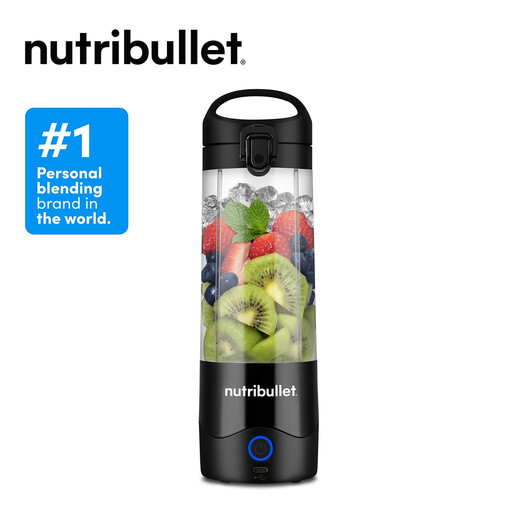
1. Nutribullet Portable Blender

Nutribullet Portable Blender

  • Why It Stands Out: This model redefines convenience by offering true cordless blending. Its rechargeable battery, powered by a modern USB-C cable, delivers over 15 blending cycles on a single charge. You can blend directly in the 475ml travel cup, seal it with the to-go lid and head out the door.
  • Pros:
    • Truly portable for use at the office, gym or while travelling.
    • Powerful enough to handle frozen fruit and powders for smooth results.
    • Long-lasting battery with convenient USB-C charging.
    • Simple one-touch operation and dishwasher-safe components.
  • Who is it for? This portable blender is perfect for fitness enthusiasts, commuters, students or anyone with an active lifestyle who wants fresh smoothies or protein shakes without being tied to a power socket.

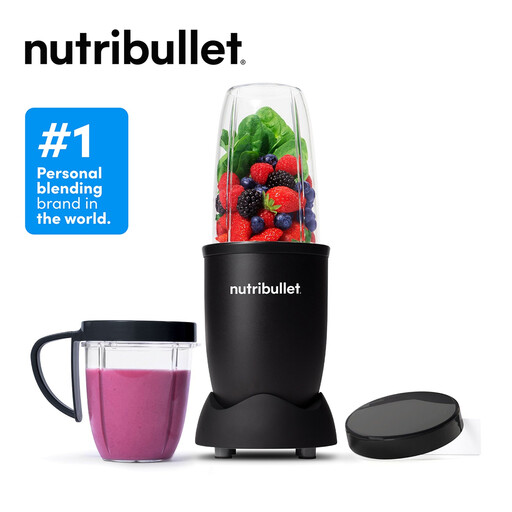
2. Nutribullet 600 Series

Nutribullet 600 Series

  • Why It Stands Out: The Nutribullet 600 Series is a classic for a reason. It packs a punch with its 600W high-torque power base and cyclonic action, designed to extract nutrients from whole foods. It hits an impressive 20,000 RPM, making short work of seeds, stems and tough skins to create exceptionally smooth drinks.
  • Pros:
    • Powerful motor effectively pulverises tough ingredients, including nuts and ice.
    • Simple and intuitive push, twist and blend operation.
    • Compact countertop footprint that doesn't take up much space.
    • Comes with multiple cups and lids for added convenience.
  • Who is it for? This is an excellent personal blender for individuals or small households seeking a reliable and powerful daily smoothie maker. It is a significant step up from basic models and is a great blender for ice and frozen fruit.

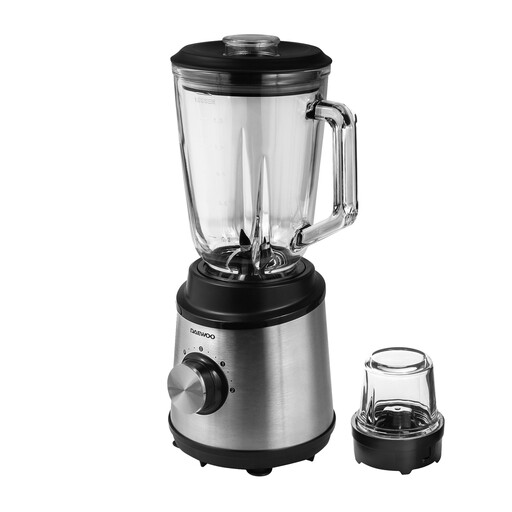
3. DAEWOO Glass Jug Blender & Grinder

DAEWOO Glass Jug Blender & Grinder

  • Why It Stands Out: This appliance offers fantastic versatility beyond just smoothies. With a powerful 800W motor, a large 1.5-litre glass jug and a separate 100g grinder attachment, it functions as a true multi-purpose kitchen blender. You can make large batches of smoothies, blend hot soups, create sauces and grind fresh coffee or spices.
  • Pros:
    • High-capacity jug is ideal for families or batch cooking.
    • Included grinder attachment adds significant value and versatility.
    • Two speed settings plus a pulse function provide complete control over texture.
    • Durable glass jug and detachable blades for easy cleaning.
  • Who is it for? This countertop blender is best for home cooks and families who need a robust, all-in-one machine for a wide range of kitchen tasks, from morning smoothies to evening meal preparation.

Looking for More Options?

If you haven't found the perfect match yet, your ideal appliance might be a more specialised model. For a wider selection of blending solutions, including different types of food processors and mixers, feel free to browse our complete collection.

Explore our full range in the puree mixer category.


Frequently Asked Questions

1. Can you put frozen fruit in any blender? Not all blenders are equipped to handle hard, frozen ingredients. Doing so in an underpowered model can strain or damage the motor. For the best results and to protect your appliance, choose a blender for frozen fruit with a motor of at least 600W and robust blades.

2. What is the difference between a smoothie maker and a blender? The terms are often used interchangeably, but there can be a subtle distinction. A smoothie maker typically refers to a personal blender designed for single-serving drinks. A general blender can refer to anything from a personal model to a large-capacity countertop blender designed for a wider variety of food preparation tasks.

3. How important is wattage in a blender for smoothies? Wattage is a direct measure of the motor's power. For smoothies containing ice, nuts or fibrous vegetables, a higher wattage is essential for achieving a smooth, non-gritty texture. While a lower-wattage portable blender is fine for soft fruits and powders, a model with 600W or more will provide more consistent and versatile performance.