Family dip makers
If you want to blend a shared serving without repeatedly emptying a small cup, compare full-size vessel capacities with the volume of your complete recipe. The usable capacity and maximum fill are worth checking separately.


For a family meal, start with a full-size jug blender if you mainly want to purée prepared peppers, or a food processor–blender if you will also chop or slice ingredients for the meal. A hand blender may suit a smaller batch or limited cupboard space, but check the included vessel against your recipe volume. For any route, follow the exact appliance’s instructions before blending warm or hot ingredients.
If you want to blend a shared serving without repeatedly emptying a small cup, compare full-size vessel capacities with the volume of your complete recipe. The usable capacity and maximum fill are worth checking separately.
If the dip is one part of a larger meal, a processor–blender can also handle preparation tasks such as chopping or slicing, provided the attachments you need are included with the exact model.
If you make dip occasionally and cupboard space matters, a hand blender and suitable deep container may be more practical than a countertop system. Check whether its included beaker will hold the amount you plan to make.
Choose the format around the whole meal, not just the peppers: a jug handles straightforward puréeing, a processor–blender adds preparation functions, and a hand blender offers another way to work with smaller quantities.
Choose it when: The ingredients are prepared and your main task is puréeing a family serving; Bosch lists a 1.5L usable jug for its MMB6174SG.
Trade-off: A jug blender does not inherently provide separate slicing or grating functions.
Choose it when: You regularly prepare other ingredients alongside the dip and would use the processor tools as well as the blender.
Trade-off: Additional bowls and attachments need storage and washing; check which supplied vessel is intended for puréeing.
Choose it when: Storage space is limited or you want to blend a modest amount in a suitable deep container.
Trade-off: Bosch’s ErgoMaster example has a 600ml beaker, which may mean dividing a family recipe into batches.
| Concern | What to check | Who this matters to |
|---|---|---|
| Family-batch capacity | Compare the complete recipe volume with the vessel’s usable capacity and maximum-fill instructions. | If I am serving the whole family, I would rather blend the dip together than manage several small batches. Around 42% of consumers put family-batch capacity first. |
| Preparation beyond blending | Check which processor bowl, blades or discs come with the exact package and which tasks they perform. | When the dip is only one part of dinner, I also want to prepare ingredients for the rest of the meal. For around 33% of consumers, those additional preparation tasks are the main concern. |
| Storage and handling | Consider where the appliance and attachments will go, and compare the included beaker with your usual batch size. | With little cupboard space and only occasional dips to make, I may accept a smaller vessel to avoid storing a countertop system. Compact storage is the priority for around 25% of consumers. |
A cup that holds the peppers alone may not hold the other ingredients, leaving you to blend in batches.
Estimate the volume of the complete dip, then compare it with the exact vessel’s usable capacity and maximum-fill guidance.
Hot-ingredient suitability depends on the particular vessel and appliance instructions, not simply on whether a jug is glass or plastic.
If you plan to blend the peppers while hot, choose a model whose instructions expressly allow that use. Otherwise, let the ingredients cool as its manual directs.
A processor–blender offers additional preparation functions, but its extra parts also take space and need cleaning.
Choose one if chopping, slicing or grating will be a regular part of your meals; if you only purée prepared ingredients, compare a jug or hand blender instead.
Storage matters if you make more dip than the family will eat at the meal.
GOV.UK advises cooling cooked food at room temperature and placing it in the fridge within one to two hours. Follow any ingredient-specific storage instructions as well.
Bosch offers examples of both a full-size jug blender and a hand-blender range relevant to dip making.
The BN800UK is a processor-and-blender example for consumers preparing dip alongside other meal components.
Kenwood’s processor range includes models aimed at preparing larger meals as well as blending.
These models cover jug blending, combined food preparation and blending, and hand blending. Match the vessel and supplied tools to your recipe and meal-preparation routine; the listed vessel capacity alone does not establish a safe fill level.
 No image available
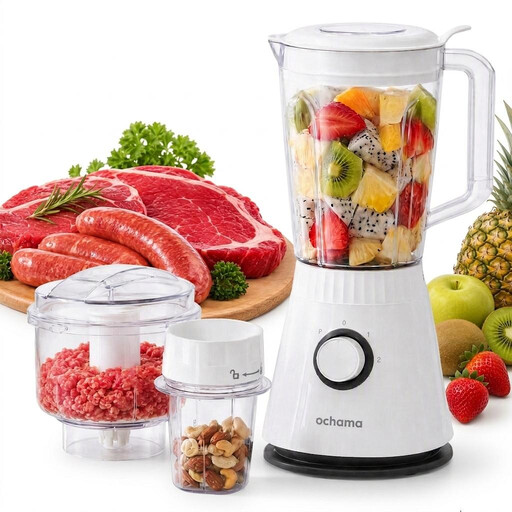
Consider this jug blender if you mainly want to blend a dip that fits its fill guidance.
The product name lists a 1.5L pitcher and three speed settings. Check the instructions before using warm ingredients.
 No image available
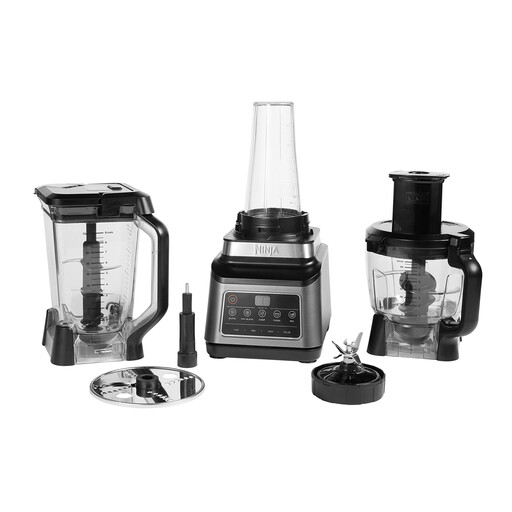
Consider it if you want to blend dip and prepare other ingredients with the same appliance.
The listed set has a 1.8L processor bowl, 2.1L jug and 700ml cup. The product description says not to process hot liquids; allow roasted ingredients to cool and follow the appliance instructions.
 No image available
This combined format is worth considering when dip making is part of wider meal preparation.
The product name lists a 2L bowl and a separate 1.8L capacity. Check the instructions for the blending vessel’s fill level and suitability for warm ingredients.
 No image available
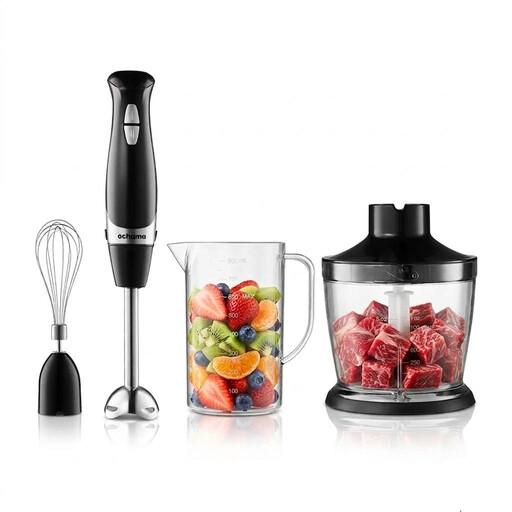
Consider this hand-held option for smaller batches or blending in a suitable container.
The named set includes an 800ml beaker, 500ml chopper cup, whisk and two speed settings. A family recipe may need more than one batch in the included beaker; check the instructions before blending warm peppers.
 No image available
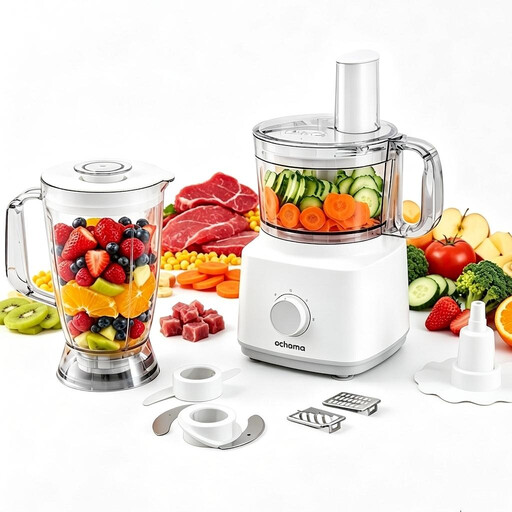
Consider it if chopping or grating ingredients alongside the dip matters to you.
The product name lists slicing and grating discs and a 1.8L capacity. Before choosing it for the dip, confirm which vessel is intended for puréeing, its fill guidance and its instructions for warm ingredients.
It can make dip, but a small cup may require several batches for a family meal. Compare your complete recipe volume with the exact cup’s capacity and maximum-fill instructions before choosing it over a full-size vessel.
Only use hot ingredients if the exact appliance and vessel instructions permit them. Kenwood describes its KAH359GL ThermoResist attachment as suitable for hot ingredients, but that does not establish suitability for other models. Bosch advises allowing hot liquid to cool slightly before using its hand blenders.
If the dip contains cooked ingredients, cool it and refrigerate it promptly. GOV.UK advises placing cooked food in the fridge within one to two hours of cooling it at room temperature; also follow any storage instructions for the other ingredients you used.