
24/7 Customer Support

Free returns

Same-day & Next-day Delivery

Quality Guaranteed

Unlock Your Welcome Offers: FREE Delivery | Up to 80% OFF | Free 30-day JoyPlus trial
Download the APP
Managing blood sugar levels is a daily reality for many people across the UK. Whether you are navigating a new diabetes diagnosis, managing a long-term condition or simply keeping an eye on your health, having a reliable blood sugar test kit at home is essential. The challenge often lies in choosing the right one. With so many options available, it can be difficult to know which features matter most.
This guide is designed to help you understand what to look for in a home blood sugar monitor. We will walk you through key considerations and present some of our top recommendations to help you find a device that fits your needs and budget.
Before looking at specific models, it helps to understand the core features that differentiate one diabetes testing kit from another. Here are a few practical points to consider.
A meter's primary job is to be accurate. In the UK and Europe, blood glucose meters for self-testing should meet the ISO 15197:2013 standard for accuracy. This ensures the readings are reliable enough for you to make informed decisions alongside your healthcare professional. Many modern devices use an FAD-GDH enzyme system, which is known for its stability and resistance to interference from other sugars, contributing to more consistent results.
Your daily testing routine should be as straightforward as possible. Look for features that simplify the process:
The initial price of a glucometer kit is only part of the picture. The ongoing cost of blood glucose test strips and lancets is a significant factor. Before committing to a meter, check the price and availability of its compatible test strips. All the kits we recommend come with a starting supply of both strips and lancets, giving you everything you need to get started.
Based on features that prioritise accuracy, ease of use and value, here are our recommendations. All these devices are mmol/l blood sugar monitor models, which is the standard unit of measurement used in the UK.
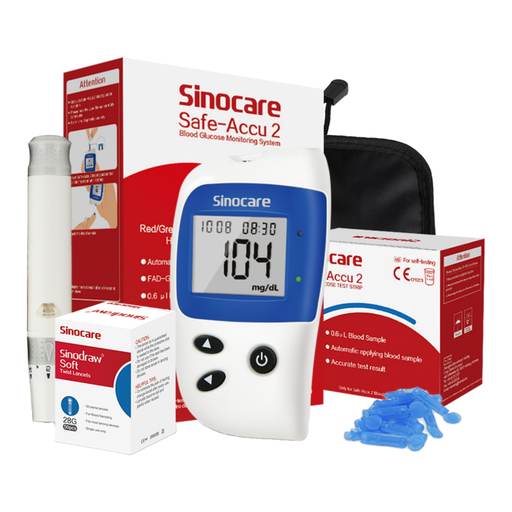
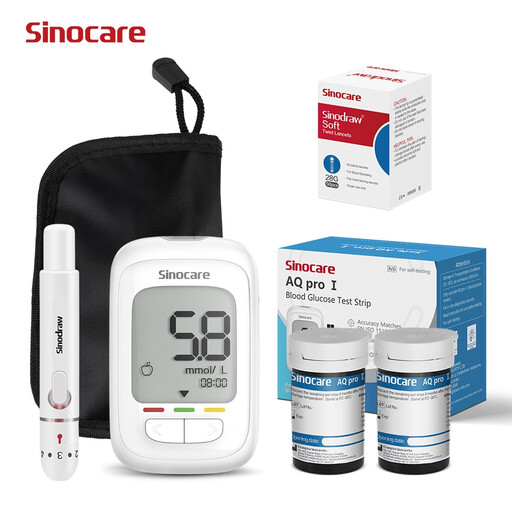
Sinocare glucose meter is ideal for users who need rapid results and value the additional awareness provided by a ketone warning. Its enhanced accuracy across a wide haematocrit range also makes it suitable for a diverse group of individuals.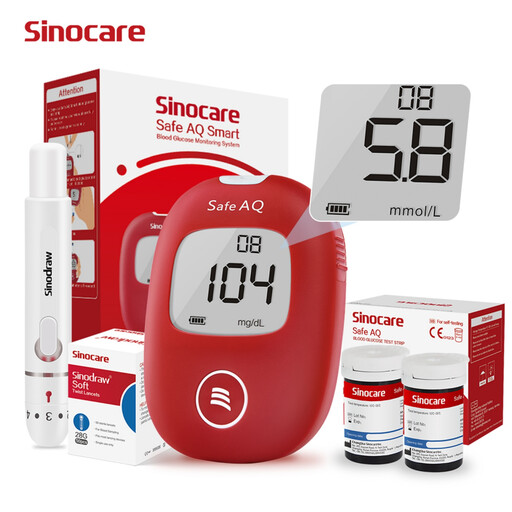
home blood sugar monitor.Our recommendations cover some excellent all-around choices, but everyone's needs are different. If you are looking for specific features or want to compare more models, you can explore our full range of devices.
? Explore our complete collection of glucose meters here
Mmol/L stands for millimoles per litre. It is the standard unit of measurement for blood glucose concentration used by healthcare professionals and on all certified devices in the United Kingdom. Meters sold in other countries, such as the United States, may use milligrams per decilitre (mg/dL). It is important to use a device that displays results in the unit you and your healthcare team are familiar with.
The frequency of testing depends entirely on your individual health circumstances, the type of diabetes you have, your treatment plan and other lifestyle factors. It is crucial to follow the specific guidance provided by your GP, diabetes nurse or endocrinologist. They will give you a personalised testing schedule that is right for you.
No. Both blood glucose test strips and lancets are designed for single use only. Lancets become dull after one use, and reusing them can be more painful and increases the risk of infection. Test strips contain chemicals that create a reaction to measure glucose; this reaction is irreversible, and the strip cannot be used again. For safety and accuracy, always use a new lancet and a new test strip for every test.