
24/7 Customer Support

Free returns

Same-day & Next-day Delivery

Quality Guaranteed

Unlock Your Welcome Offers: FREE Delivery | Up to 80% OFF | Free 30-day JoyPlus trial
Download the APP
Investing in a quality pair of bookshelf speakers is only half the battle. To truly unlock their audio potential, proper placement is essential. Yet, many find themselves disappointed after purchasing stands that fail to deliver. The market is filled with options that look the part but fall short in practice, leading to wasted money and compromised sound.
As the Joybuy Product Recommendation Officer, my role is to help you navigate these choices. We will look at the common pitfalls to avoid and the key features that genuinely matter, ensuring your next purchase enhances your listening experience rather than hindering it.
Before choosing, be aware of these frequent issues that can turn a promising purchase into a frustrating one:
To make an informed decision, focus on these non-negotiable specifications. They are the difference between a stand that simply holds a speaker and one that optimises its performance.
The golden rule of speaker placement is to position the tweeter at the same height as your ears when you are in your primary listening position. This ensures you receive the most direct and detailed sound. Look for height adjustable speaker stands that offer a range covering your seated ear level, typically between 85cm and 110cm for a standard sofa. For desktop or studio monitor stands, the goal is the same: raising the speaker off the desk to aim directly at your ears.
A stand's primary job is to provide a stable, inert platform. Check the maximum weight capacity and ensure it is comfortably above the weight of your speakers. Heavier stands, often made from steel, are generally better at dampening vibrations. The design of the base is also important; a wide, solid base provides more stability than a narrow one, reducing the risk of being knocked over.
The top plate is where your speaker sits. Its dimensions should be a close match to the base of your speaker for maximum stability. Some universal speaker stands feature adjustable top plates, offering greater flexibility. Furthermore, look for models with speaker stands with cable management. This is usually a hollow channel within the main pillar that allows you to conceal speaker wire, resulting in a much cleaner and safer installation.
Instead of a generic list, we have matched specific products to different user needs and living situations.
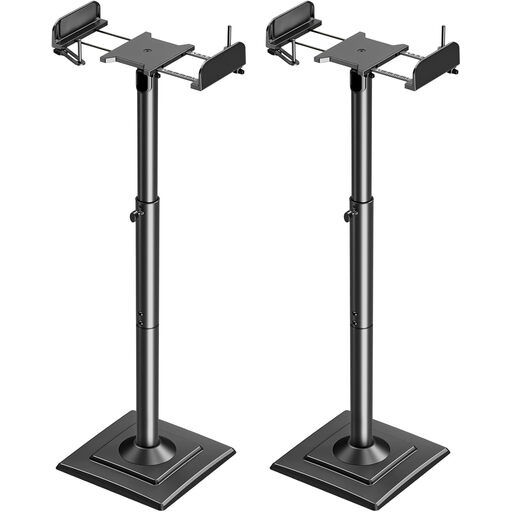
Why This Fits Their Persona: This user is building a proper home cinema or hi-fi system and needs a purpose-built solution. This speaker stands pair is designed specifically for optimising bookshelf speakers in a living room environment.
It directly addresses all three pitfalls. The durable construction minimises vibration, the height is adjustable (86.5-110cm), the top plate extends (12.7-25.4cm) for a secure fit and it features an internal duct for cable management.
The combination of an adjustable top plate and adjustable height provides exceptional flexibility, ensuring a secure and acoustically correct setup for a wide range of bookshelf speakers up to 5kg.
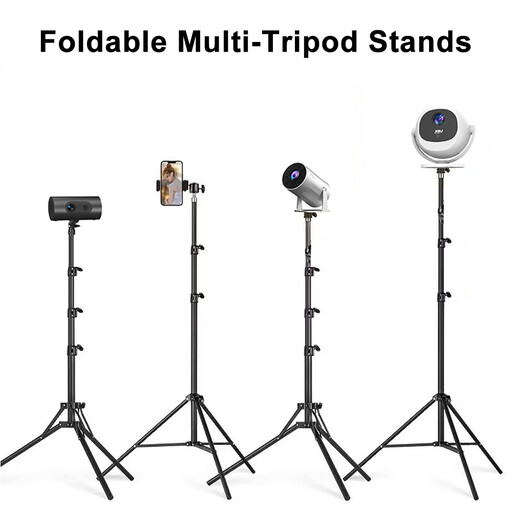
Why This Fits Their Persona: Ideal for someone in a smaller flat or a multi-purpose room who values versatility. This stand can hold a projector for movie nights, a ring light for streaming or a pair of very small, lightweight satellite speakers for a surround setup.
Its aluminium alloy tripod design offers good stability for its intended lightweight loads. The huge height adjustment range (60-160cm) avoids the fixed-height trap, offering immense flexibility for different uses, though it lacks dedicated cable management.
Extreme versatility. One stand can serve multiple functions in a home, from entertainment to photography. It is also lightweight and foldable for easy storage, a significant benefit in smaller living spaces.
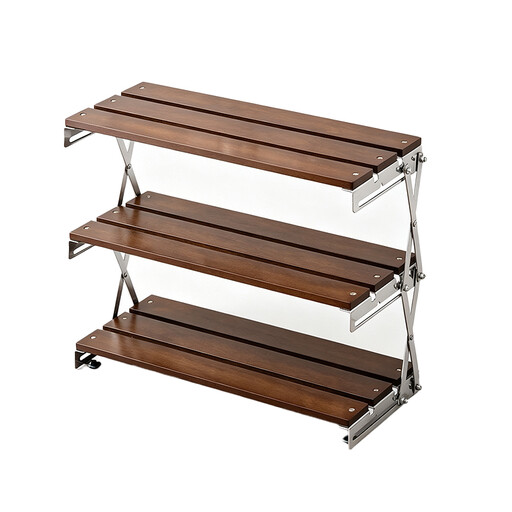
Why This Fits Their Persona: This is for the user with a desk-based setup, such as a home office or a small music production station. They need to raise their studio monitor stands or small speakers off the desk to reduce surface reflections and improve the listening angle.
As a solid storage rack, it provides a stable, non-resonant platform for small speakers, avoiding the wobble of cheap stands. While not adjustable, its fixed height is often perfect for elevating speakers above other desk clutter to ear level.
It's a dual-purpose solution. It acts as a functional stand to improve audio while also creating valuable multi-level storage on a crowded desk, helping to keep the workspace organised.
We have compiled a complete, real-time list of products that fully satisfy these strict selection criteria and UK safety regulations.
For living room setups, the stand should place the speaker's tweeter at your seated ear level. Measure this height from the floor while sitting on your sofa. For desktop use, the stand or riser should elevate the speaker so the tweeter is pointing directly at your ears, clearing any obstructions like your monitor screen. Height adjustable speaker stands offer the most flexibility to achieve this.
Yes, significantly. A good stand does two things. First, it positions the speaker correctly for optimal sound dispersion and imaging. Second, it provides a stable, isolated platform that prevents vibrations from transferring to the floor (or from the floor to the speaker), which tightens up the bass and improves overall clarity.
Many hollow metal speaker stands are designed to be filled with sand or another inert material. This adds mass to the stand, making it far more stable and effective at dampening vibrations. It is a common and highly recommended practice for audiophiles looking to extract the maximum performance from their setup. Always check the manufacturer's instructions to see if your chosen model supports this.