
24/7 Customer Support

Free returns

Same-day & Next-day Delivery

Quality Guaranteed

Unlock Your Welcome Offers: FREE Delivery | Up to 80% OFF | Free 30-day JoyPlus trial
Download the APP
Navigating the breakfast cereal aisle can feel like a chore. Shelves are packed with boxes making bold claims, from "high in fibre" to "packed with vitamins." But how do you separate genuine nutritional value from clever marketing? As a Joybuy Product Recommendation Officer, my role is to help you see past the hype and make choices that are right for your household's needs and budget.
Many of us have been caught out by a few common purchasing traps. Understanding them is the first step to becoming a more discerning shopper when you next decide to buy cereal online or in-store.
To avoid these pitfalls, focus on a few core parameters. This simple checklist will empower you to compare products accurately and find a breakfast cereal that genuinely meets your requirements.
The single most effective way to compare different cereals is to ignore the 'per serving' column and look directly at the 'per 100g' figures in the nutritional table. This gives you a like-for-like comparison, regardless of the manufacturer's suggested portion size. When analysing the table, pay attention to these key values:
The term wholegrain cereal means the product contains all three parts of the grain: the bran (the fibre-rich outer layer), the germ (the nutrient-packed core) and the endosperm (the starchy part). This is important because wholegrains provide more fibre, vitamins and minerals than refined grains. To verify this, check the ingredients list. If a wholegrain like wholegrain wheat or whole oats is listed as the first ingredient, it means it's the main component of the cereal.
There is no single "perfect" cereal for everyone. A sweet chocolate cereal might be an occasional treat, while a simple, low-sugar option is better for daily consumption. For families, finding a kids cereal that children will eat but isn't overloaded with sugar is a common challenge. Consider options from brands like Weetabix, Kellogg's or Nestle cereal that offer a range, from indulgent choices to more nutritionally balanced staples.
Based on these practical criteria, here are a few recommendations from our catalogue, matched to different household needs.

Why This Fits Their Persona: This is ideal for anyone focused on fitness or seeking a more substantial breakfast. The added protein helps with satiety, keeping you feeling full until lunchtime, which is perfect for busy professionals or those with active lifestyles.
It sidesteps the "healthy halo" trap by delivering on its claims. The nutritional panel confirms its credentials: 19g of protein and just 4.7g of sugar per 100g, making it a genuinely low-sugar, high-protein choice.
High in protein and fibre (9.9g per 100g) from wholegrain wheat. Fortified with vitamins and iron to support energy levels.
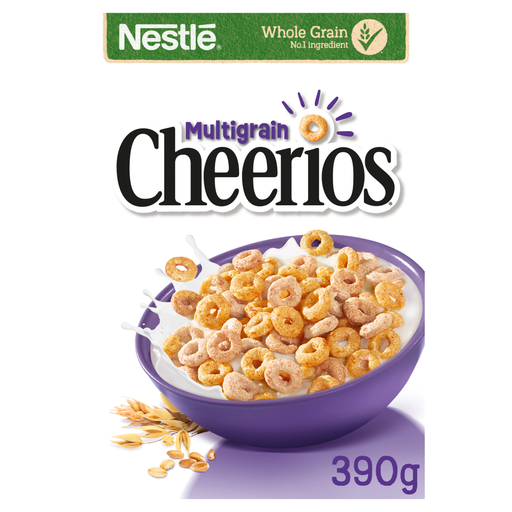
Why This Fits Their Persona: Cheerios are a familiar favourite that strikes a balance. They are appealing to children without being one of the highest-sugar options, making them a practical choice for daily family breakfasts during the busy school week.
This cereal avoids the vitamin diversion trap. While it is fortified, its primary strength is its base of three whole grains (oats, wheat and barley), making it a source of fibre that provides more than just empty calories.
A good source of fibre (9.6g per 100g) and fortified with 7 essential vitamins and 2 minerals, including iron. Free from artificial colours and flavours.

Why This Fits Their Persona: For large households or savvy shoppers, this cereal multipack offers excellent value. It's a timeless, versatile breakfast staple that can be customised with fruit, yoghurt or honey to suit different tastes.
This product is the antithesis of a marketing-hyped cereal. It has an incredibly simple ingredient list and avoids the portion size illusion because the serving (2 biscuits) is clear. The nutrition is transparent: 95% wholegrain wheat, low sugar and low salt.
Excellent cost-per-serving in a large 72-biscuit pack. Naturally high in fibre (10g per 100g) and very low in sugar (4.2g per 100g).
We have compiled a complete, real-time list of products that fully satisfy these strict selection criteria and UK safety regulations.
According to NHS guidelines, a product is generally considered high in fibre if it contains at least 6g of fibre per 100g. A product is a "source of fibre" if it has at least 3g of fibre per 100g. Always check the 'per 100g' column on the nutritional information panel for the most accurate comparison.
When choosing a cereal for children, a good starting point is to look for options where wholegrain is the first ingredient. Next, check the sugar content per 100g and try to choose one on the lower end of the scale. If your children prefer a sweeter cereal, you could try mixing it half-and-half with a low-sugar option like plain cornflakes or puffed wheat to reduce the overall sugar per serving.
In many cases, yes. When you buy cereal online, you often have access to larger pack sizes or a cereal multipack that isn't always available in smaller local shops. These bulk options typically offer a lower cost per serving, which can lead to significant savings for a family over time, not to mention the convenience of having it delivered to your door.