
24/7 Customer Support

Free returns

Same-day & Next-day Delivery

Quality Guaranteed

Unlock Your Welcome Offers: FREE Delivery | Up to 80% OFF | Free 30-day JoyPlus trial
Download the APP
Expressing and storing breast milk is a practical way to provide for your baby, whether you're returning to work, sharing feeding duties or building a 'milk bank' for peace of mind. With so many options available, finding the right storage solution can feel overwhelming. You need something safe, reliable and convenient that protects every precious drop.
This guide is designed to help you navigate the key features of breast milk storage bags. We'll outline what to look for and share some of our top recommendations to help you make a confident choice for you and your baby.
When selecting disposable milk pouches for breastfeeding, a few key factors can make a significant difference in safety and convenience.
The safety of the material that comes into contact with your breast milk is paramount. Always opt for bags that are explicitly labelled as BPA-free and BPS-free. These are industrial chemicals that you want to avoid. Additionally, look for bags that are pre-sterilised. This ensures they are hygienic and ready to use straight out of the box, saving you a crucial step and preventing contamination.
There is nothing more disheartening than discovering a leak in your carefully stored milk. To prevent this, look for leak proof milk storage bags that feature robust sealing mechanisms. A double zipper provides an extra layer of security against spills, especially during freezing and thawing. Reinforced side seams also add to the bag's durability, ensuring it can withstand being stored flat in the freezer.
Small details can greatly improve the user experience. Self-standing bags are easier to fill, reducing the risk of spills. Clear, accurate volume markings help you track how much you're storing. Some modern bags also include innovative features like temperature sensing milk bags, which use a colour-changing indicator to show when the milk is at a suitable temperature for feeding. A dedicated write-on tab is also essential for labelling bags with the date and time of expression.
Based on features that prioritise safety, reliability and ease of use, here are our recommendations for breastmilk freezer bags.
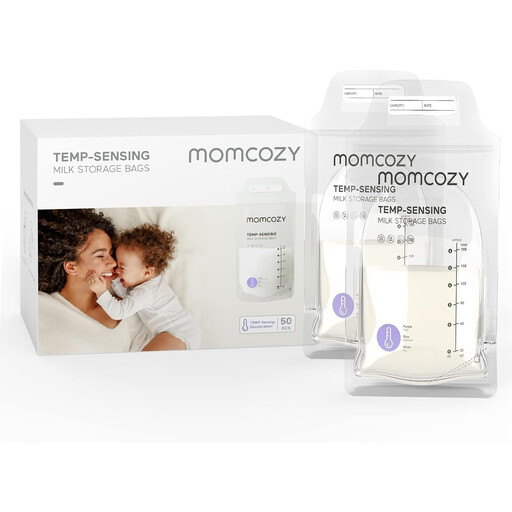
Why It Stands Out: These Momcozy milk bags feature a clever Temp-Sensing Discolouration panel. It appears purple when cold, blue when at an optimal feeding temperature (36-40°C) and white when too hot. This provides a simple, visual cue for busy parents. The design also includes a separate pour spout, which you tear open only when ready to feed, helping to maintain hygiene.
Pros:
Who is it for? The 120-pack is an excellent choice for mothers who express milk regularly and are looking to build a consistent supply in their freezer. It offers a good balance of quantity and value for daily use.
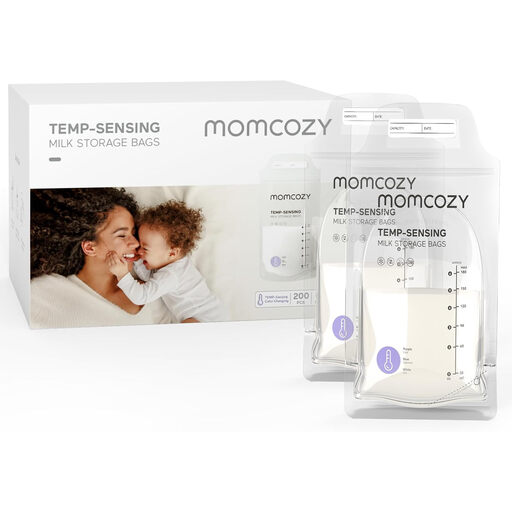
Why It Stands Out: This larger pack offers all the same key features as the other Momcozy options, including the visual temperature guide and hygienic separate spout. The thickened, food-safe plastic provides extra durability, while the large write-on label makes it easy to keep your milk bank organised by date and volume.
Pros:
Who is it for? This 200-pack is perfectly suited for mothers who are exclusively expressing or are committed to building a large, long-term 'milk bank'. It provides excellent value and ensures you won't run out of bags at a critical moment.

Why It Stands Out: This pack delivers the same high-quality features—Temp-Sensing Discolouration, a double zipper seal and a self-standing design—in a smaller quantity. It’s an accessible way to try these innovative bags without committing to a large volume.
Pros:
Who is it for? The 50-pack is ideal for new mothers who are just beginning their expressing journey, those who only need to store milk occasionally or anyone wanting to trial the temperature-sensing feature before buying in bulk.
If these recommendations aren't quite what you're looking for or if you'd like to see different pack sizes and features, you can browse our complete collection.
Explore our full range of disposable bags to find the perfect fit for your needs.
According to NHS guidelines, breast milk can be stored for up to 2 weeks in the ice compartment of a fridge or for up to 6 months in a home freezer at -18°C or lower. Always label your bags with the date so you can use the oldest milk first.
Most disposable milk pouches for breastfeeding are designed for single use only. Reusing them can introduce bacteria and compromise the sterility of the bag, which could be harmful to your baby. For hygiene and safety, it is recommended to use a new bag for each expression session.
The safest way to thaw frozen breast milk is to place the bag in the refrigerator overnight or hold it under cool, then gradually warmer, running water. You can also place it in a bowl of warm water. Never use a microwave to thaw or heat breast milk, as it can create dangerous hot spots and destroy important nutrients.