
24/7 Customer Support

Free returns

Same-day & Next-day Delivery

Quality Guaranteed

Unlock Your Welcome Offers: FREE Delivery | Up to 80% OFF | Free 30-day JoyPlus trial
Download the APP
The art of hand lettering transforms simple words into captivating designs. Whether you are creating elegant calligraphy, decorating a journal or sketching your next masterpiece, the right tool can make all the difference. However, navigating the vast selection of brush pens for lettering can feel overwhelming. With varying nibs, inks and colour palettes, it is easy to feel lost.
This guide is designed to simplify your search. As a Joybuy Product Recommendation Officer, my role is to help you understand the key features to look for, so you can choose a set that aligns with your creative goals. We will explore some popular options and what makes them suitable for different projects.
Before diving into specific products, let's outline a few key factors to keep in mind. Understanding these will help you select the right hand lettering pen set for your needs.
The "brush" in a brush pen refers to its flexible tip, which allows you to create lines of varying thickness by adjusting your pressure.
The ink is just as important as the nib. The two main types are water-based and pigment-based.
Here are a few noteworthy options that cater to different artistic styles and skill levels.
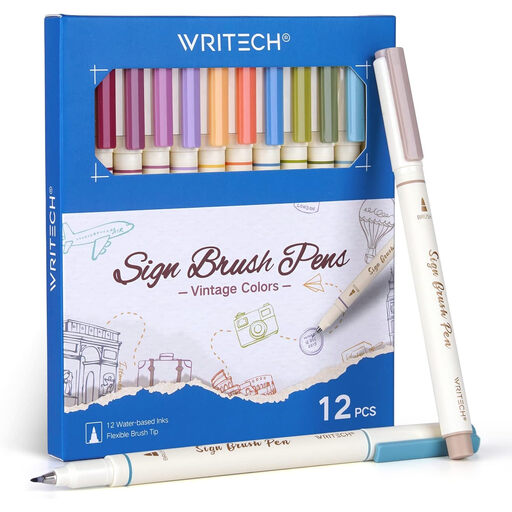
Why It Stands Out: This set distinguishes itself with a unique palette of 12 muted, vintage-inspired colours. The water-based ink is highly blendable, allowing you to create subtle gradients and watercolour effects simply by adding a little water.
The pens feature a flexible and wear-resistant soft brush tip made of felt, which responds well to changes in pressure. This makes it straightforward to transition between fine lines for detail and broad strokes for filling in areas. The design is approachable, making it a great starting point for those new to the craft.
View the WRITECH 12-Colour Set on Joybuy
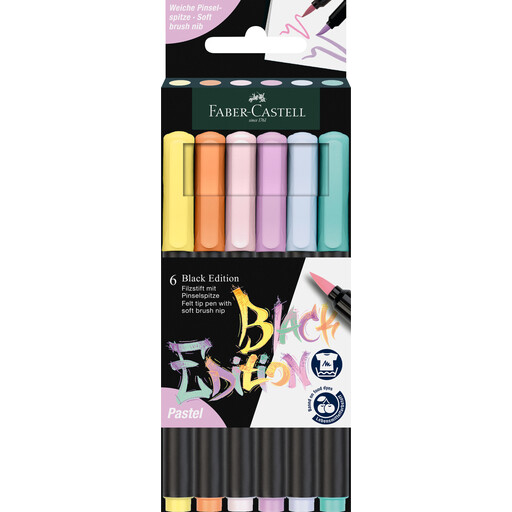
Why It Stands Out: This set from Faber-Castell offers a curated selection of six soft pastel colours. The soft brush nib is designed for versatility, enabling users to produce both fine and broad strokes depending on the angle and pressure applied.
These felt tip pens for drawing and lettering are well-suited for creative projects that call for a gentler, more delicate aesthetic. The compact cardboard wallet makes the set easy to store and transport, perfect for students or artists on the go.
View the Faber-Castell Black Edition Set on Joybuy
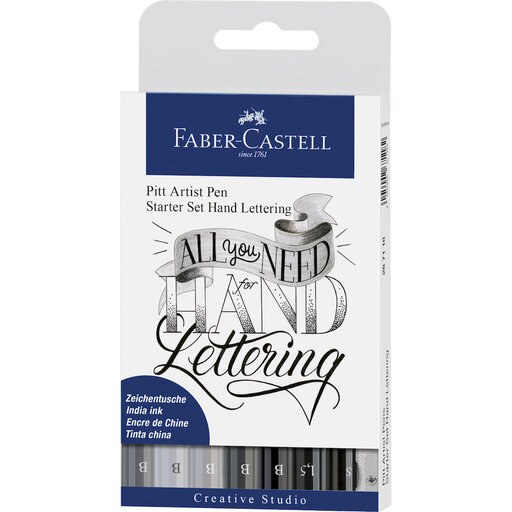
Why It Stands Out: The Faber-Castell Pitt Artist Pens are known for their high-quality, pigmented India ink. This ink is odourless, permanent when dry and does not bleed through most paper, making these pens a reliable choice for finished artwork.
This hand lettering pen set includes a variety of nibs, including a brush nib, allowing for a wide range of applications from writing and sketching to detailed embellishments. The pens are ready to use straight from the pack, with no shaking or pumping required. Their versatility extends to multiple surfaces, including paper, card and canvas.
View the Faber-Castell Pitt Artist Pen Set on Joybuy
If these selections are not quite what you had in mind, or if you are searching for a thoughtful present for a creative friend, there are many other tools to discover.
Explore our wider collection of stylish pen gifts to find even more pens and art supplies.
1. What is the difference between a brush pen and a calligraphy pen? A "brush pen" is a modern tool with a flexible fibre tip that mimics a paintbrush. A traditional "calligraphy pen" often refers to a dip pen with a metal nib that is dipped into an inkwell. Brush pens offer more convenience and are a popular modern alternative for achieving calligraphic styles.
2. Can you use brush pens for drawing? Absolutely. The flexible nib of a brush pen is excellent for expressive drawing and sketching. It allows artists to vary line weight dynamically, adding depth and character to illustrations, comics and doodles. Many artists use them as their primary felt tip pens for drawing.
3. How do I stop my brush pens from fraying? To maintain the sharp point of your brush pen, use smooth paper, as rough textures can damage the felt tip. Also, try to use a light touch and let the pen do the work. Applying excessive pressure, especially at an awkward angle, can cause the fibres to fray over time. Always replace the cap securely to prevent the tip from drying out.