Choose the camera setup around the details you need to frame and the way you work, rather than the body alone: close views depend on the lens’s focusing range, while layered arrangements may benefit from focus bracketing and stable support. If you also film your making process, screen movement and video features matter, but they do not replace a suitable close-focusing lens.
Who needs which setup?
Close-detail craft portfolio makers
If fruit texture, cut surfaces or small decorative elements need to fill the frame, start with the lens’s close-focus specifications. Canon UK’s macro guidance explains why minimum focus distance and magnification matter for this kind of framing.
Repeatable still-life photographers
If you build stationary, layered arrangements, a fixed camera position and a workable focus-bracketing process can help you cover more of the scene’s depth. Canon UK documents this workflow for the EOS R10.
Photo-and-process content creators
If you need finished portfolio photographs as well as making-of or presentation clips, consider how you will position the screen and film items near the camera. Nikon UK documents an item-focused Product Review Mode on the Z50II; Sony UK documents a tilting screen on the Alpha 6400.
What matters when choosing?
For a fruit-arrangement portfolio, decide whether close detail, consistent sharpness through the arrangement or a combined photo-and-video workflow is your primary need. Then check the lens and camera features that serve it.
| Concern |
What to check |
Who this matters to |
| Close-up detail |
Check the exact lens’s minimum focus distance and maximum magnification against the detail you want to frame. |
If fruit skin or a small garnish needs to feature prominently, I need to know the lens can frame it at a usable distance. Around 42% of consumers put close detail first. |
| Depth and repeatability |
Check the camera’s still-image focus-bracketing workflow and plan for a tripod or other fixed support if you intend to stack images. |
When fruit sits at several distances, I want a repeatable setup that can keep the intended parts sharp. For around 33% of consumers, depth and repeatability are the primary concern. |
| Stills and process video |
Check whether the screen moves to suit your shooting angle and whether the exact camera-and-lens setup meets both your stills and recording needs. |
If I film how an arrangement is made as well as photographing the result, I need a camera I can compose and operate in both situations. That combined workflow comes first for around 25% of consumers. |
Mistakes to avoid
-
Choosing the body before checking the lens
The attached lens determines its minimum focus distance and magnification. Moving closer than it can focus will not capture a sharper view of the fruit.
Identify the smallest detail you want in your portfolio, then compare those specifications for the exact lens supplied or planned.
A separate closer-focusing lens may be needed if the kit lens cannot frame that detail.
-
Expecting one close-up frame to keep every layer sharp
Close framing can leave little depth in focus. Focus stacking instead combines images focused at different distances, which is more practical with a stationary arrangement and fixed camera position.
Check whether the camera offers the bracketing and stacking process you want, and use stable support when taking the sequence.
A workflow that combines the images outside the camera also adds an editing step.
-
Treating video focus features as close-up stills features
A mode that shifts focus to an item during a video does not establish how closely the supplied lens can frame a still photograph or whether the camera stacks still images.
Check lens close-focus capability and the still-image workflow separately; give video features more weight if process clips are part of your portfolio.
Relevant camera brands
Canon
The EOS R10 is a route to consider for stationary close-up and layered still-life photographs.
- Canon UK documents built-in focus bracketing and stacking on the EOS R10, alongside a 24.2MP APS-C sensor and vari-angle touchscreen.
- Canon UK lists no sensor-shift image stabilisation for the EOS R10. Plan stable support for a controlled still-life setup, and check the close-focus capability of the lens you choose.
Nikon
The Z50II is relevant if portfolio stills will be accompanied by process or item-presentation video.
- Nikon UK documents a vari-angle touchscreen and says Product Review Mode shifts focus towards items brought close to the camera during presentation.
- Product Review Mode is not a substitute for checking the chosen lens’s close-focus ability or the still-image bracketing process you need.
Sony
The Alpha 6400 is an interchangeable-lens option for composing portfolio images from varied camera angles.
- Sony UK documents a 24.2-megapixel APS-C sensor and a 180-degree tiltable touchscreen on the Alpha 6400.
- Check the exact body-and-lens variant and its close-focus specifications. If you need stacked stills, confirm that workflow separately.
Joybuy cameras for portfolio work
These Sony interchangeable-lens camera kits are options to consider if you want portfolio stills alongside process content. Before choosing either kit for close fruit details or layered arrangements, check the supplied lens’s focusing specifications and your intended still-image workflow.
 No image available
Sony Alpha ZV-E10 II K with 16-50 mm f/3.5-5.6 Power Zoom kit lens
Consider this kit if you photograph finished arrangements and also record process clips. Its listed specifications include an APS-C interchangeable-lens body, 26-megapixel stills and 4K60p video.
Check whether the supplied lens’s minimum focus distance and maximum magnification suit your smallest fruit details. If you plan to stack still images of layered arrangements, confirm the camera and editing workflow you will use.
View on Joybuy
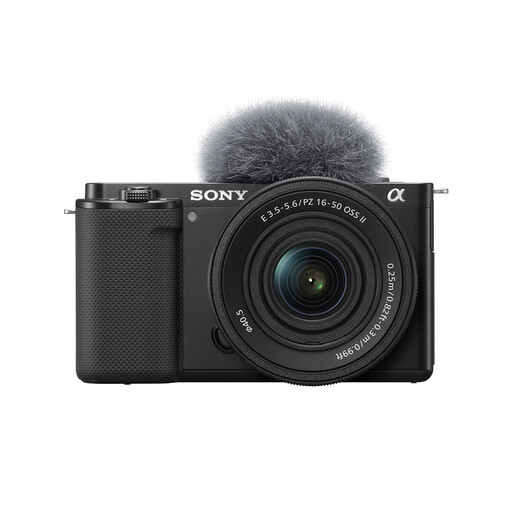 No image available
Sony ZV-E10K with 16–50mm Power Zoom lens
Consider this interchangeable-lens kit if your craft portfolio includes photographs and making-of content. It comes with a 16–50mm Power Zoom lens.
For close fruit details, check that lens’s minimum focus distance and maximum magnification. Confirm the still-image resolution for your intended output and the bracketing or editing workflow if you need sharpness through a layered arrangement.
View on Joybuy
Common questions
Do I need a macro lens for fruit-arrangement photographs?
Not for every photograph of the whole arrangement, but a lens’s close-focus capability becomes important when small textures or cut surfaces need to fill the frame. Check its minimum focus distance and maximum magnification; Canon UK says macro lenses typically provide 0.5x to 1.0x magnification at their minimum focus distance.
How can I keep a layered fruit arrangement sharp?
Keep the camera fixed, then consider images focused at different distances if one close-up frame cannot cover the depth you want. Those images can be combined through focus stacking; Canon UK documents built-in focus bracketing and stacking on the EOS R10.
Will a movable screen help with tabletop photographs?
It can make the composition easier to see when the camera is positioned above or low beside the arrangement. Canon UK and Nikon UK document vari-angle touchscreens for the EOS R10 and Z50II respectively, while Sony UK documents a 180-degree tiltable touchscreen for the Alpha 6400; check which movement suits your camera position.
Who usually owns photographs I make for a UK craft portfolio?
The person who creates an image will generally be its first copyright owner, according to the UK Intellectual Property Office. If a photograph was made by someone else, check who owns its rights and obtain any permission needed before copying or sharing it in your portfolio.


