Choose the lens before settling on a camera body: a compatible close-focusing lens matters when stitches and embroidery need to fill the frame, while a kit zoom may be sufficient for photographs of a whole toy. For repeatable yarn colour, plan for consistent lighting and white-balance settings; close-up work also benefits from stable support because the area in focus becomes shallow.
Who is this for?
Knit-toy sellers making regular listings
If you photograph finished toys across several sessions, a repeatable background, lighting and white-balance routine helps you present yarn colours consistently. Adobe and Nikon both describe how backgrounds and white balance affect colour in product photographs.
Makers showing small construction details
Close views of embroidery, seams and stitch texture make lens magnification and working distance important. Sony and Nikon publish these specifications for their cited macro lenses.
Makers taking photos and short videos
If you also film a toy or part of the making process, consider how you will frame tabletop shots and whether the camera system accepts a lens suited to your close-up needs.
What matters when choosing?
Decide how close your photographs need to get, then check the lens and your lighting routine before comparing camera-body features.
| Concern |
What to check when buying |
Who this matters to |
| Consistent yarn colour |
White-balance controls and a lighting setup you can repeat when photographing another batch of toys. |
I need listing photographs taken on different days to represent the same yarn shade consistently. Around 40% of consumers put colour consistency first. |
| Stitch-level detail |
The exact lens’s maximum magnification and working distance, as well as its compatibility with the camera body. |
Small seams and embroidery need to be visible in close crops, even if close focusing takes more care. Detail is the primary concern for around 40% of consumers. |
| Photos and short videos |
Screen positioning and the camera’s video workflow; assess close-up ability through the lens separately. |
I want to photograph finished toys and make short clips without changing my basic setup. Around 20% of consumers prioritise this combined workflow. |
Buying pitfalls
-
Choosing the body without checking the lens
A camera body alone does not establish how large a stitch can appear in the frame. Canon specifies up to 1:2 magnification for its RF 35mm F1.8 Macro, while Sony and Nikon specify 1:1 for the cited E 30mm F3.5 Macro and NIKKOR Z MC 50mm f/2.8.
Compare the exact body-and-lens combination, including mount compatibility, magnification and minimum focus distance.
A suitable close-up or macro lens may be a separate purchase.
-
Expecting a new camera to correct changing light
Light changes can alter how yarn colours look. Nikon explains that white balance adjusts for a scene’s colour temperature, while Adobe notes that a neutral matte background can reduce reflections and colour casts.
Keep the lighting and background consistent for a batch of toys, and recheck white balance when the light changes.
-
Planning close-ups without stable support
At macro distances, the area that appears sharp can be very shallow. Canon advises using a tripod or other stable support for still-life macro photographs.
Take test frames at different apertures and inspect the eyes, embroidery and nearest stitches before photographing a full batch.
Brands to consider for camera-and-lens setups
Canon
The EOS R50 is an APS-C interchangeable-lens option for full-toy photographs and occasional close detail, depending on the lens chosen.
- Canon specifies a 24.2 MP APS-C sensor and vari-angle touchscreen for the EOS R50.
- Canon’s compatible RF 35mm F1.8 Macro reaches up to 1:2 magnification, not 1:1; check whether that is close enough for your smallest details. The lens is a separate choice.
Sony
The ZV-E10 II offers an APS-C interchangeable-lens route for makers who also want to shoot video.
- Sony specifies a 26.0 MP APS-C sensor for the ZV-E10 II and 1:1 magnification for its E 30mm F3.5 Macro lens.
- Sony states a 2.4 cm minimum working distance for that macro lens. Consider whether you can position light around a small toy when the lens is that close.
Nikon
The Z50II and a compatible Z-mount macro lens offer another route for close-up photographs and product-showcase video.
- Nikon specifies a vari-angle touchscreen and Product Review Mode for the Z50II; its NIKKOR Z MC 50mm f/2.8 offers 1:1 magnification.
- The cited macro lens is a separate purchase. Nikon specifies a 0.16 m minimum focus distance, so check that the complete setup suits your framing and available space.
Joybuy camera choices
These cameras are options for photographing finished toys and making short videos. If stitch-level crops are essential, check the exact lens’s close-focusing specifications before choosing a kit or fixed-lens camera.
 No image available
Sony Alpha ZV-E10 II K with 16–50 mm Power Zoom kit lens
Consider this kit if you want photographs of finished toys alongside short videos. Sony specifies a 26.0 MP APS-C sensor for the ZV-E10 II, and this kit is named with a 16–50 mm f/3.5–5.6 Power Zoom lens. Check the included lens’s close-focusing specifications if individual stitches must fill the frame.
View on Joybuy
 No image available
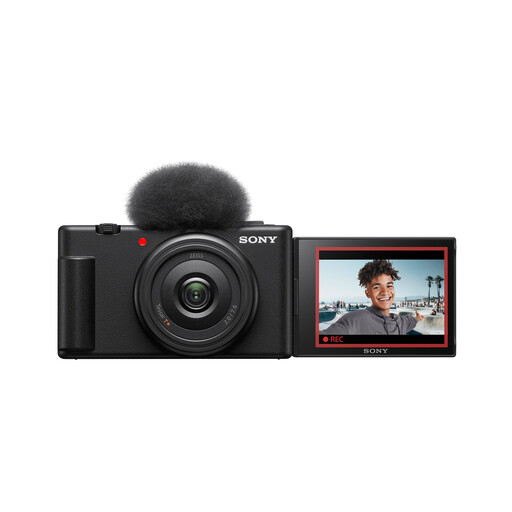
Sony ZV-1F compact camera with 1-inch sensor
Consider this compact camera for toy photographs and short clips if its fixed ultra-wide lens suits your framing. Before relying on it for stitch-level photographs, check the lens’s maximum magnification and minimum focus distance.
View on Joybuy
 No image available
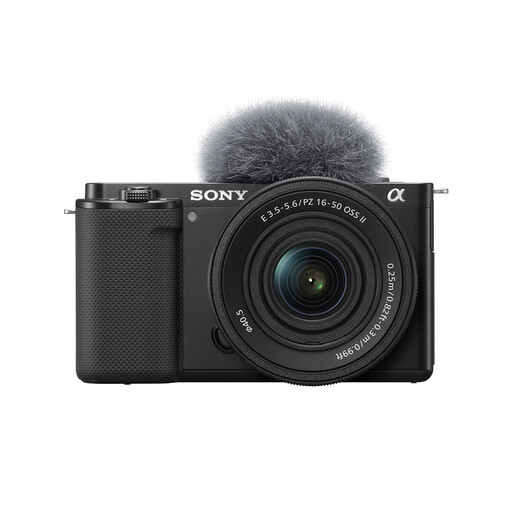
Sony ZV-E10K with 16–50 mm Power Zoom lens
This interchangeable-lens kit is an option if you want to photograph whole toys and make short videos. It includes a 16–50 mm Power Zoom lens; check that lens’s close-focusing specifications for stitch details, and confirm the white-balance controls you need for a repeatable colour routine.
View on Joybuy
Questions about photographing knitted toys
Do I need a true macro lens to photograph knitted toys?
No: a whole toy can be photographed without a true macro lens, but stitch-level crops call for checking how closely the lens can focus and its stated magnification. Canon describes macro magnification of 0.5x to 1.0x at minimum focus distance; a 1.0x lens reproduces a small subject at life size on the sensor.
How can I keep yarn colours consistent between photographs?
Use a repeatable lighting setup and recheck white balance whenever the light changes. Nikon explains that white balance adjusts for colour temperature, and Adobe recommends a neutral matte background to reduce reflections and colour casts in product photography.
Why do some stitches look soft in a close-up?
At close range, only a narrow area may be in focus even when the camera has focused on the toy. Canon advises testing different apertures and using a tripod or other stable support for still-life macro photographs; inspect the parts you need to show before completing a batch.
Where should I take an old camera or battery in the UK?
Take unwanted electrical equipment and batteries to an appropriate recycling collection point rather than putting them in household rubbish, as advised by GOV.UK. Check your local collection arrangements for the camera and its battery.


