
24/7 Customer Support

Free returns

Same-day & Next-day Delivery

Quality Guaranteed

Unlock Your Welcome Offers: FREE Delivery | Up to 80% OFF | Free 30-day JoyPlus trial
Download the APP
A hot meal or a warm cup of tea can make all the difference after a long day of exploring the British countryside. Whether you're planning a multi-day hike through the Peak District, setting up for a weekend festival or enjoying a quiet spot of fishing, a reliable outdoor stove is essential. But with so many options available, choosing the right one can feel overwhelming.
This guide is designed to help you navigate the choices and find a camping stove that fits your specific needs. We'll break down the key features to consider and highlight a few standout models to get you started on your search for the perfect lightweight cooking gear.
Before diving into specific products, it's helpful to understand what separates one stove from another. Focusing on these three points will help you narrow down your options.
The type of fuel a stove uses is one of the most significant factors. The two most common types for portable use are gas canisters and solid fuel blocks.
portable gas stove. They typically use screw-on canisters containing a blend of isobutane and propane. They offer excellent flame control, allowing you to simmer or boil with precision, and generally perform well in a variety of weather conditions.festival cooking kit or as a backup emergency stove.Your planned activities will dictate how much emphasis you place on weight. If you're an ultralight backpacker, every gram counts. A minimalist ultralight backpacking stove that weighs less than a tennis ball might be your priority. For car camping, family trips or fishing, where you aren't carrying your gear for miles, a slightly heavier but more robust or feature-rich stove could be a better fit. Always check the packed dimensions to ensure the hiking stove will fit comfortably in your pack.
A stove's power is typically measured in Watts (W). A higher wattage generally means a faster boil time, which is ideal for quick stops and conserving daylight. For example, a stove with around 2000W can often boil a litre of water in under four minutes, depending on conditions like wind and temperature. While speed is convenient, consider that higher power settings will also consume fuel more quickly.
Based on their features, materials and intended use, here are a few recommendations that cater to different types of outdoor enthusiasts.
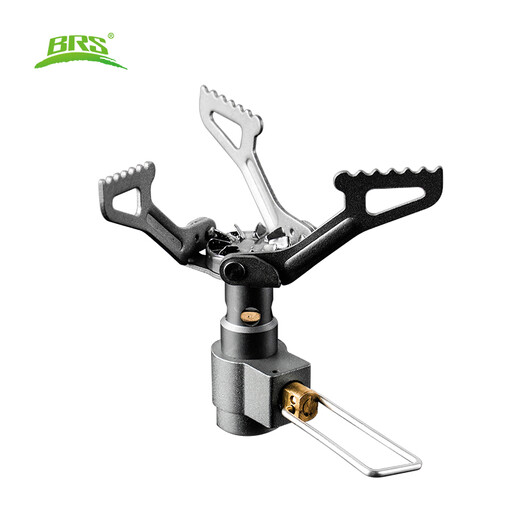
Why It Stands Out This stove is a marvel of minimalist engineering. Constructed from high-grade titanium, it weighs an astonishing 26g, making it one of the lightest options available. Despite its tiny size, it packs a punch with a 1940W power output, capable of boiling one litre of water in approximately 2 minutes and 58 seconds. The foldable pot supports and precise flame control make it a functional and reliable piece of kit for those who prioritise low pack weight above all else.
Pros
Who is it for? This is the ideal ultralight backpacking stove for thru-hikers, minimalist campers and bikepackers where every single gram makes a difference.
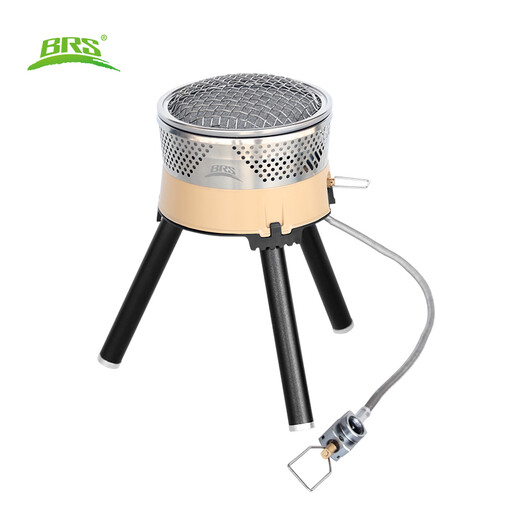
Why It Stands Out The BRS TS19 Reactor is a robust and versatile outdoor stove built for reliability. Made from stainless steel and aluminium alloy, it offers a stable and durable platform for cooking. Its 1900W output ensures efficient cooking, boiling a litre of water in just three minutes. A key feature is its compatibility with both butane and propane gas canisters, giving you more flexibility when sourcing fuel. While heavier than ultralight models at 425g, its sturdy build provides confidence for frequent use.
Pros
Who is it for? A great all-rounder for general campers, weekend hikers and anyone who needs a dependable and powerful portable gas stove that can withstand regular use.
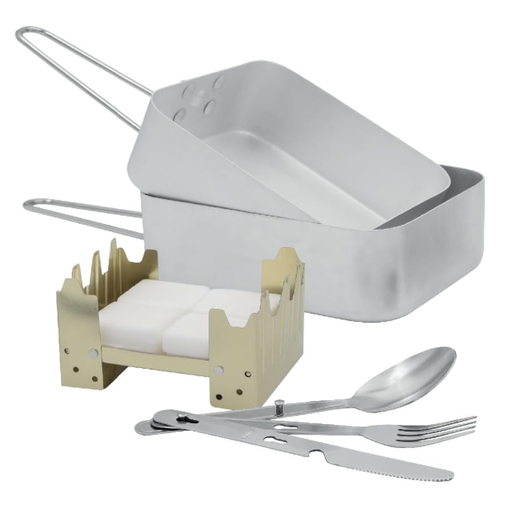
Why It Stands Out For those who value convenience and an all-in-one solution, this camping cooking set from Milestone is an excellent choice. It removes the guesswork by providing everything you need to cook and eat outdoors. The 13-piece kit includes a simple folding solid fuel stove, eight fuel blocks, two aluminium mess tins and a stainless steel cutlery set. The entire system packs neatly together, making it incredibly easy to grab and go.
Pros
Who is it for? Perfect for festival-goers, first-time campers, anglers or as a reliable emergency kit to keep in the car. It's the ultimate festival cooking kit.
Our recommendations cover a range of common needs, but the world of outdoor cooking gear is vast. If you haven't found the perfect match yet, or want to explore different types of stoves and accessories, we have a wider selection.
Browse our full collection of camping cookers to find the right gear for your next adventure.
What is the difference between a camping stove and a backpacking stove? The main difference comes down to weight and size. A hiking stove or backpacking stove is designed to be as light and compact as possible for carrying over long distances. A general camping stove may be larger, heavier and more powerful, as it's typically transported by car and used at a base camp where portability is less of a concern.
Can I use a camping stove inside a tent?No, you must never use a camping stove inside a tent, vehicle or any other enclosed space. All fuel-burning stoves produce carbon monoxide (CO), a poisonous gas that is odourless and colourless. Inhaling it can be fatal. Always cook in a well-ventilated outdoor area, away from flammable materials.
What kind of fuel do I need for a portable gas stove? Most canister-style portable gas stoves in the UK use screw-on canisters filled with a blend of isobutane and propane. These are widely available from outdoor retailers. It is important to check the manufacturer's specifications to ensure you purchase a compatible canister for your specific stove model.